The Autumn E-Commerce Roundup: Agentic AI, Global Expansion, and Next-Gen Logistics Redefine Online Retail
The e-commerce technology landscape is undergoing a structural paradigm shift. As online merchants face rising customer acquisition costs, tightening cross-border regulations, and the relentless demand for instantaneous fulfillment, platform providers are rushing to deliver sophisticated tooling.
In this comprehensive industry roundup, we examine the latest suite of services released for e-commerce merchants. This period’s updates span several vital categories, including cross-border merchant-of-record (MoR) solutions, advanced logistics integrations, buy-now-pay-later (BNPL) expansions, creator commerce integrations, and—most notably—an explosion of agentic artificial intelligence (AI) frameworks designed to automate everything from supply chain decisions to store-level programming.
Main Facts
The current wave of e-commerce software releases focuses heavily on automation, global scalability, and blurring the lines between traditional digital advertising and instantaneous checkout. Key developments include:
The Rise of Agentic AI: Platforms like Runable, Ship.com, Helium 10, Atomic One, and LTK are moving past simple chat-based interfaces. They are deploying autonomous "AI agents" capable of proactive background monitoring, campaign creation, and automated problem-solving.
Global Merchant-of-Record (MoR) Expansion: Enterprises looking to scale internationally gained major infrastructure support with dLocal’s launch of dMoRe, alongside a strategic partnership between Paysafe and FastSpring.
Logistics and Freight Convergence: Traditional parcel-only platforms are scaling up. ShipStation has integrated less-than-truckload (LTL) freight capabilities, while OneRail partnered with NVIDIA to roll out real-time, multi-modal delivery decisioning.
Social Commerce and CTV Innovations: YouTube Shopping integrated Amazon product tagging for U.S. creators, and Broadpeak introduced Click2Cart, bringing direct-response cart-building to Connected TV (CTV) advertising.
Chronology of Releases
The recent surge of platform enhancements reflects a rapid, highly coordinated effort by tech vendors to capture market share ahead of the peak holiday shopping seasons. Below is the chronological progression of notable product rollouts:
Late August 2026:
Blue Yonder expands its Cognitive Solutions portfolio with agentic AI tailored to prevent stockouts and manage retail returns.
Helium 10 (backed by Pacvue) debuts its "Helium" Amazon AI agent alongside Model Context Protocol (MCP) connectors.
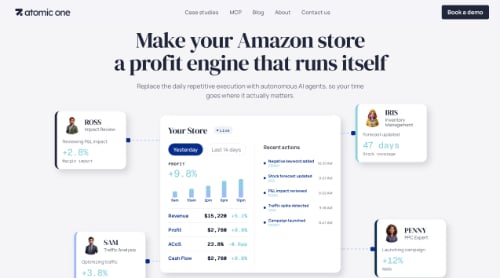
Atomic One launches autonomous AI agents for Amazon store operations, paired with natural-language querying tools.
LTK brings agentic capabilities to creator marketing, allowing brands to launch and optimize multi-creator campaigns using conversational prompts.
Runable closes a $21 million Series A funding round to fuel its small-business AI orchestration platform.
Ordoro and TeamCentral announce a strategic partnership to enhance no-code data synchronization and integration flexibility.
Early September 2026:
ShipStation combines freight and parcel shipping under one platform via its newly merged corporate identity, ShipStation Global.
OneRail launches OmniSTAR, an AI-powered delivery decisioning platform built using NVIDIA AI infrastructure.
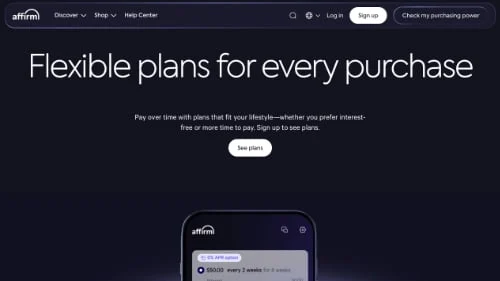
Affirm and Shopify officially launch Shop Pay Installments in the Australian market.
Paysafe teams up with FastSpring to introduce a co-branded merchant-of-record ecosystem.
HoneyBook introduces "Business Phone & SMS" as a paid CRM add-on, bridging telephony and project management records.
Ship.com rolls out Ship AI and Model Context Protocol (MCP) integrations for Claude.
Nitro Commerce releases an AI platform enabling Shopify merchants to build private backend applications using simple text prompts.
Broadpeak releases Click2Cart, transforming standard streaming video commercials into direct-purchase environments.
Cashfree Payments debuts Relay, an operational AI agent designed to automate payment retries, abandoned cart recovery, and cash-on-delivery validations.
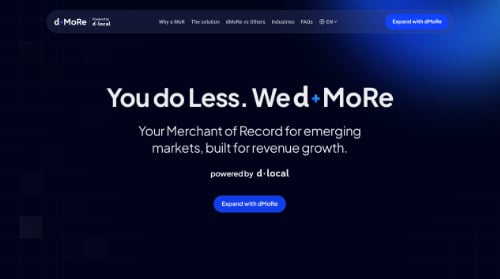
dLocal officially launches dMoRe, a dedicated merchant-of-record service designed to break down regulatory barriers in emerging markets.
Supporting Data and Technical Architecture
To understand the magnitude of these updates, it is essential to look at the underlying technologies powering them—particularly the convergence of Large Language Models (LLMs) with supply chain and financial infrastructure.
The Rise of Model Context Protocol (MCP)
A recurring technical thread in this cycle is the adoption of Model Context Protocol connectors by supply chain and e-commerce tooling providers (such as Ship.com, Helium 10, and Atomic One). By exposing structured store data and operational workflows via MCP, these platforms allow enterprise sellers to query their inventories, analyze advertising ROAS, and execute logistics commands directly inside mainstream AI assistants like Anthropic’s Claude, OpenAI’s ChatGPT, and Google Gemini.
Capital Infusions and Market Valuation
The financial backing behind these tools highlights institutional confidence in autonomous business management. Runable’s securing of a $21 million Series A round—co-led by Susquehanna Venture Capital and Nexus Venture Partners—signals that investors view agentic AI not merely as a feature, but as a foundational operating system for SMBs.
Financial and Operational Reach
Geographic Expansion: The rollout of Shop Pay Installments in Australia by Affirm and Shopify taps into an increasingly mature Asia-Pacific BNPL consumer base.
Multi-Modal Logistics: OneRail’s integration with NVIDIA’s AI processing allows enterprises to evaluate thousands of carrier combinations—spanning owned fleets, third-party couriers, and regional parcel networks—in milliseconds to find the optimal cost-to-speed ratio.
Official Responses and Industry Commentary
Industry leaders have been vocal about the transformative nature of these product releases, emphasizing the transition from manual execution to automated orchestration.
"Enterprises expanding into emerging markets have long faced a fragmented landscape of localized compliance, tax collection hurdles, and disparate banking rails. With dMoRe, we are abstracting that complexity into a single, unified framework where we legally act as the local seller of record, allowing brands to scale fearlessly."
— Representative statement from dLocal leadership regarding the launch of dMoRe.
On the logistics front, executives are pointing toward real-time artificial intelligence as the definitive answer to retail’s most persistent expenditures: stockouts, complex freight, and expensive last-mile delivery.
"Evaluating delivery options has historically been a siloed, retroactive process. By leveraging NVIDIA’s high-performance computing capabilities within OmniSTAR, our enterprise clients can dynamically evaluate owned fleets, national parcels, and local couriers on a per-order basis, achieving unprecedented cost efficiencies without sacrificing delivery SLAs."
— OneRail executive commentary on the OmniSTAR release.
Creator commerce platforms are likewise leaning hard into natural language processing to ease campaign fatigue for marketing teams.
"Brands no longer want to spend weeks manually vetting creators, negotiating rates, and parsing fragmented analytics dashboards. By introducing agentic AI to LTK, we are giving brands an intelligent partner that proactively works in the background to spot cultural trends, surface ideal creator matches, and orchestrate campaigns from conception to optimization."
— LTK product strategy team.
Implications for E-Commerce Merchants
The deployment of this new generation of software carries profound operational, financial, and strategic implications for online merchants of all sizes—from solo Shopify dropshippers to multinational omnichannel enterprises.
1. Democratization of Custom Development
With tools like Nitro Commerce’s prompt-based app builder for Shopify, merchants are no longer bound by off-the-shelf software limitations or high developer costs. Store owners can articulate specific operational needs in plain language and instantly generate private backend applications while retaining full code ownership. This drastically lowers the barrier to entry for highly customized store management.
2. The Operational Shift to Agentic Autonomy
The introduction of autonomous agents—such as Cashfree’s Relay, Helium 10’s Amazon automation agent, and Runable’s multi-departmental SMB platform—marks a transition from software that informs to software that acts. Merchants will spend less time manually executing repetitive tasks (such as chasing abandoned carts, verifying cash-on-delivery orders, or re-indexing SKUs) and more time supervising AI decision-makers. However, this demands a new level of trust and security oversight regarding API access and financial permissions.
3. Frictionless Cross-Border Growth
Regulatory burdens—such as VAT collection, local compliance documentation, and localized payment method integration—have historically choked international expansion for mid-market merchants. The proliferation of Merchant of Record (MoR) solutions, via dLocal’s dMoRe and the Paysafe-FastSpring alliance, effectively outsources legal and financial compliance. Merchants can now deploy localized storefronts abroad with minimal overhead.
4. Convergence of Entertainment and Checkout
The integration of Amazon tagging within YouTube Shopping and the debut of Broadpeak’s Click2Cart on Connected TV signal that the point of inspiration and the point of purchase are finally merging into a single step. For merchants, advertising budgets must increasingly be tied to shoppable media formats that reduce purchase friction to a single click on a remote control or mobile screen.
Conclusion
As the e-commerce sector matures, the winning merchants will be those who successfully delegate tactical execution to autonomous agents while leveraging robust financial and logistical rails to scale globally. Whether utilizing AI-powered delivery decisioning engines, tapping into international MoR frameworks, or deploying custom prompts to build store apps, the modern merchant has access to a technological toolkit that was unimaginable just a few years ago.
Got an e-commerce product release you want featured in our upcoming roundups? Email [email protected].