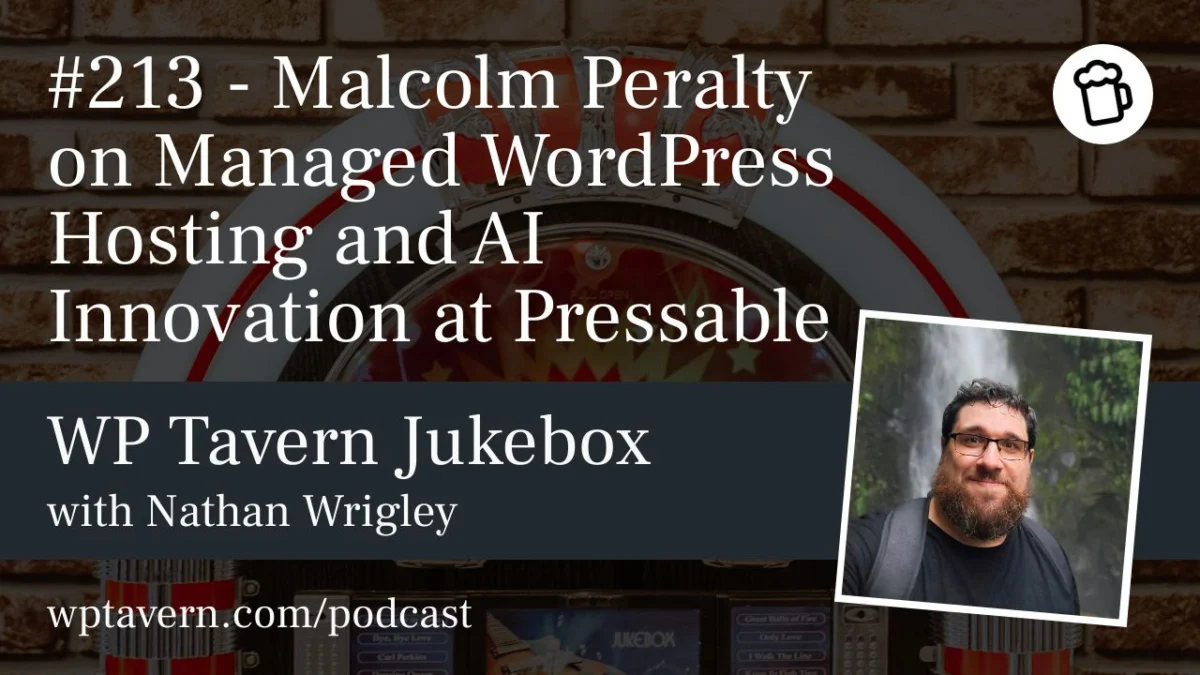
The managed WordPress hosting landscape is undergoing a profound transformation. As demands for speed, security, and scalability intensify, hosting providers are pushing past traditional boundaries to integrate advanced server architectures and cutting-edge artificial intelligence.
Recently, WP Tavern’s Jukebox Podcast host Nathan Wrigley sat down with Malcolm Peralty, a Technical Account Manager at Pressable, to discuss the realities of managing enterprise-grade WordPress environments. With a career spanning two decades in the WordPress, project management, and Drupal ecosystems, Peralty offered a rare behind-the-scenes look at the technical complexities of modern web hosting, the friction points of performance optimization, and the dawn of natural language-driven cloud management.
Main Facts: Inside the Modern Hosting Engine
The conversation between Wrigley and Peralty illuminated several core realities of operating high-performance WordPress infrastructure today:
- The Resource Equation: While brochure and marketing sites run effortlessly on standard managed plans, complex applications—such as WooCommerce stores, membership sites, and Learning Management Systems (LMS)—un-cache significant portions of web traffic, demanding dedicated server resources and meticulous optimization.
- The Worker Architecture Model: Pressable utilizes a distinct resource model allocating one dedicated worker per virtual CPU (vCPU). This differs from traditional hosting frameworks that stack multiple workers onto a single lane, offering improved site resilience under heavy traffic loads.
- The Rise of AI in Infrastructure: Pressable is developing an upcoming Model Context Protocol (MCP), designed to function as an "API for AI." This tool aims to allow developers and agencies to execute complex hosting commands—ranging from sandbox provisioning to multi-site updates—using natural language.
- The Bot Traffic Burden: Automated AI scrapers and crawlers are increasingly flooding client sites with high volumes of un-cacheable requests, creating unforeseen server loads and financial overhead for hosting providers.
Chronology: A Career Shaped by Open Source
Peralty’s path to Pressable mirrors the broader maturation of the Content Management System (CMS) industry over the last twenty years:
- The Early Blogging Era (Mid-2000s): Peralty began his journey with early pre-1.0 iterations of WordPress, working as a full-time blogger discussing the platform’s nascent capabilities before transitioning into project management and digital agency roles.
- The Enterprise Drupal Interlude: Seeking career advancement, Peralty spent time in the Drupal ecosystem working with Acquia—often described as the "Automattic of the Drupal world." He noted that compensation structures in the Drupal enterprise market historically outpaced those in standard WordPress sectors, driving his temporary migration.
- Return to WordPress at Pressable: Attracted by competitive career opportunities and a desire to return to his roots, Peralty joined Pressable as a Technical Account Manager (TAM). He currently helps bridge the gap between customer business needs and Pressable’s proprietary WP Cloud infrastructure.
Supporting Data and Technical Realities
The podcast detailed the technical challenges inherent in balancing consumer-grade expectations with enterprise-level constraints.
Performance Bottlenecks and Page Builders
While marketing often portrays WordPress as universally lightweight, real-world implementations frequently encounter friction. Peralty pointed out that sites bloated with dozens of third-party plugins—particularly heavy page builders like Elementor, Divi, and Beaver Builder—place immense strain on server architecture.
Competitor hosts often attempt to mask underlying inefficiencies by deploying aggressive Redis caching or utilizing ultra-fast CPUs that deliver misleading results during single-user spot checks. However, when subjected to scale tests involving thousands of concurrent checkout or login sessions, these superficial fixes often collapse, whereas resilient, slower-appearing platforms maintain stability.
Database Replication and High Availability
For e-commerce and high-traffic platforms, uptime is paramount. Database replication—syncing primary databases across multiple high-availability servers—remains a persistent technical hurdle across the web hosting industry. Traditional replication introduces micro-latencies. During peak flash sales or high-demand ticket drops, even a one- or two-second replication lag can result in hundreds of lost transactions. Pressable’s infrastructure team continuously works to minimize these windows through real-time data streaming.
Official Responses and Strategic Perspectives
The Role of a Technical Account Manager
Unlike traditional sales or customer support roles, Pressable’s TAM discipline focuses on long-term client strategy, future-proofing, and performance architecture. Peralty emphasized that proactive optimization often benefits clients financially:
"It’s funny because our role helps both the customer because… we’ll come in and be like, here’s the optimizations you need to make. Now you don’t need even as quite a big a plan as you have maybe. Maybe you need to downsize your plan now because we’ve helped you optimize your website."
Conversely, these interventions protect collective server resources on the proprietary WP Cloud network, ensuring capacity remains available for clients experiencing sudden traffic spikes, such as landing on the front page of Reddit.
Introducing the Model Context Protocol (MCP)
Looking toward the horizon, Pressable is preparing to roll out its Model Context Protocol (MCP) to streamline workflows for agencies and high-volume developers. The system treats AI tools (such as Claude, Codex, or local models via Ollama) as interactive terminals connected directly to Pressable’s API-driven backend.
Instead of navigating complex control panels via a mouse, an agency developer will soon be able to use natural language within environments like Visual Studio Code to spin up sandboxes, push code updates, synchronize media files from production, and run batch plugin updates across dozens of client installations simultaneously.
Implications: The Future of Web Development and Hosting
The integration of artificial intelligence into web hosting carries significant implications for the future of digital publishing and agency operations.
The Collapse of Timelines
The friction of web development is vanishing. By coupling AI coding agents with automated sandbox hosting, tasks that once took hours—such as scaffolding a client proof-of-concept site with a custom theme and layout—can now be executed during a single conversation over a cup of coffee.
The Human-First Guardrail Challenge
As AI tooling advances, the risk of cascading errors increases. A single misunderstood prompt could trigger destructive actions across a database or file system. Peralty stressed that reliable mitigation relies on robust infrastructure backups (such as hourly database snapshots and immutable core file symlinks) alongside rigorous audit logs. Furthermore, Pressable maintains a strict philosophy of keeping developments "human first, AI enhanced" rather than replacing human expertise entirely.
The Rising Cost of the Web
Perhaps the most pressing systemic implication concerns automated web traffic. As AI bots increasingly index, scrape, and interact with websites (such as automated agents repeatedly testing e-commerce checkouts), server resource consumption is climbing rapidly. The hosting industry faces an ongoing economic challenge: determining how to absorb or fairly distribute the computational and storage costs associated with AI-driven web traffic without unduly penalizing human site owners.
Conclusion
As managed WordPress hosting evolves, platforms like Pressable are moving beyond simple file storage and database management. By combining dedicated cloud infrastructure, strategic technical account management, and forward-thinking AI tooling like the Model Context Protocol, the hosting ecosystem is preparing for a future where development is faster, infrastructure is more resilient, and the way humans interact with code is fundamentally reimagined.