In the vast, interconnected world of open source, few projects have cultivated an educational ecosystem as robust and diverse as WordPress. What began as a tool for blogging has evolved into a global powerhouse, and today, that power is being harnessed to shape the minds of thousands of students worldwide.
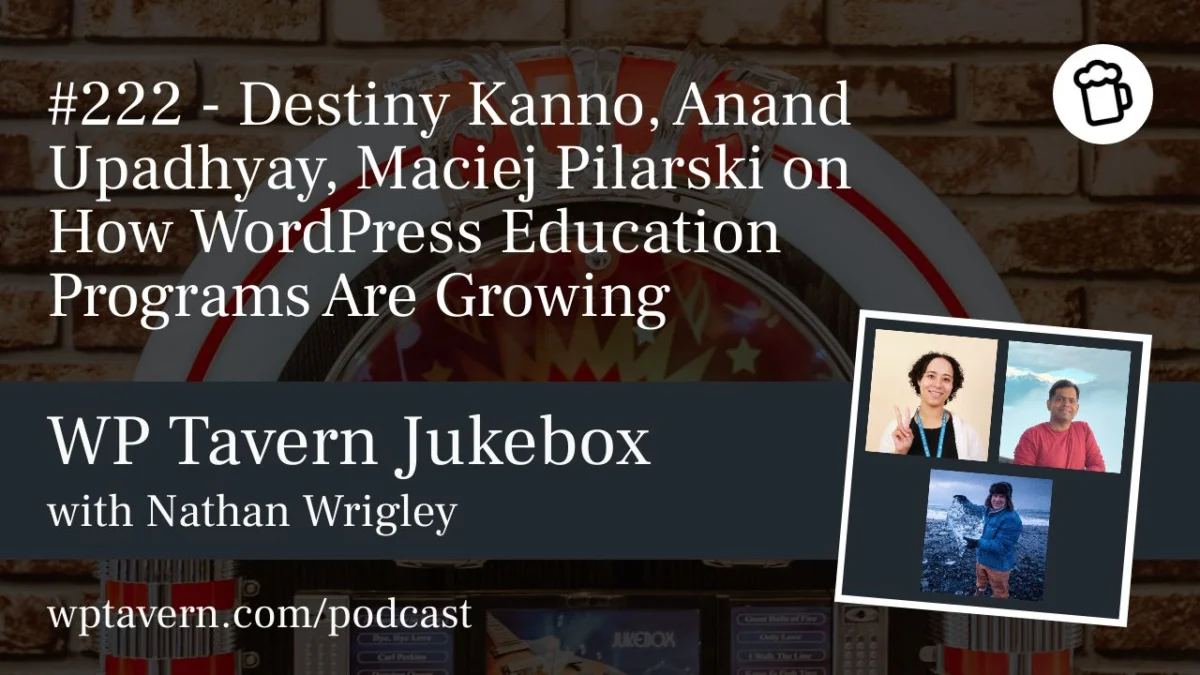
In a recent episode of the Jukebox podcast, host Nathan Wrigley sat down with three leaders of the WordPress Education Initiative—Destiny Kanno, Anand Upadhyay, and Maciej Pilarski—to discuss how WordPress is becoming a cornerstone of modern digital literacy. From high school classrooms to university lecture halls, the project is moving beyond code to foster a sustainable, community-driven future for the next generation of web professionals.
The Triad of WordPress Education: Understanding the Initiatives
To understand the scope of this educational movement, one must first distinguish between the three primary pillars currently driving the initiative: the WordPress Credits Program, Campus Connect, and Student Clubs. While these programs often overlap, each serves a distinct function within the educational lifecycle.
1. The WordPress Credits Program: Bridging Academia and Open Source
The WordPress Credits Program, administered by the WordPress Foundation, serves as a formal internship-style initiative for higher education. It is designed to integrate the rigors of academic study with the practical, real-world experience of open-source contribution.
Students enrolled in the program—which offers 50-hour and 150-hour tracks—are paired with vetted mentors from the WordPress community. Over the course of an academic semester, students choose a contribution area, such as Core development, documentation, or Polyglots, and gain hands-on experience. Upon completion, students receive an official certificate signed by WordPress Executive Director Mary Hubbard and earn a permanent badge on their WordPress.org profiles, creating a verified portfolio for their future careers.
2. WordPress Campus Connect: The Great Gateway
If the Credits Program is the deep dive, Campus Connect is the open door. As an official WordPress event series, Campus Connect is designed to be barrier-free and highly flexible. It caters to learners of all ages—from elementary students to vocational trainees—and can take place anywhere from a traditional university campus to a public library.
These events function as "pop-up" workshops that demystify the platform, demonstrating that WordPress is not just for developers, but also for marketers, designers, and creative thinkers. Since its official launch in May 2025, the program has exploded in popularity, reaching over 5,500 students across 71 institutions in just 42 events.
3. Student Clubs: Sustaining the Momentum
The Student Club initiative serves as the long-term support system for these educational sparks. Once an initial Campus Connect event concludes, the "fire" often needs tending. Student Clubs act as autonomous, peer-led meetups where students gather regularly to practice skills, share knowledge, and support one another in a low-pressure environment. By encouraging students to teach their peers—including incoming juniors—these clubs foster leadership and ensure that the community ecosystem remains sustainable year-round.
Chronology of Growth: From Experimentation to Global Movement
The path to this current level of educational maturity has been organic and deliberate. The journey began with isolated experiments, such as the initial Credits Program pilot at the University of Pisa, which proved that academic institutions were willing to recognize open-source contribution as legitimate coursework.
Following the success of that pilot, the initiative moved into a phase of rapid expansion. The WordPress community realized that the "bottleneck" to adoption wasn’t a lack of interest, but a lack of structured pathways. In late 2024 and early 2025, these disparate efforts began to coalesce.
The coordination between leaders like Destiny Kanno (Education Program Manager), Anand Upadhyay (founder of the WPVibes plugin development company), and Maciej Pilarski (a veteran contributor and Credits Program admin) allowed the community to standardize the "how-to" for these events. The result has been a turbocharged growth phase over the last eight months, with the movement expanding into new regions, including the first partnership in Africa (Uganda) and a burgeoning community in Japan.
Supporting Data: The Impact in Numbers
While the community leaders emphasize that the true success of these programs cannot be measured solely by KPIs, the statistics are nonetheless staggering.
- Campus Connect (Since May 2025): 42 completed events, 71 participating institutions, and over 5,500 students engaged.
- Credits Program: Currently boasts 450 students enrolled globally, with 75 graduates who have completed the full curriculum.
- Retention: Perhaps most impressively, in regions like Ajmer, India, coordinated efforts to bring students into the WordPress ecosystem resulted in student tickets for a Women’s Day event selling out in a single day—a clear sign that these programs are successfully converting students into active community members.
Official Perspectives: The Philosophy of "Joining Hands"
For the leaders involved, these programs represent more than just technical training; they are a moral imperative to preserve the longevity of the WordPress project.
"We are getting older every year," notes Maciej Pilarski. "Getting those students to stay in the community allows us to build the next generation of WordPress contributors."
The focus on "joining hands"—a phrase used by Anand Upadhyay—underscores the collaborative nature of the effort. By providing facilitators with a "Meetup Activity Library"—a collection of kits, slide decks, and facilitation guides—the initiative is actively removing the "fear factor" that often keeps potential organizers on the sidelines.
Destiny Kanno emphasizes that the goal is not just to teach software, but to teach the ethics of open source. "We want to create these systems that not only bring people into WordPress, but also continue this cycle of growth within the community, and ownership by the institution."
Implications for the Future of WordPress
The implications of this educational push are far-reaching. By embedding WordPress in the academic curriculum, the community is ensuring that the platform remains relevant to a generation that might otherwise be funneled into proprietary, walled-garden ecosystems.
Rethinking the "Typical" Contributor
Historically, the WordPress contributor demographic has skewed toward mid-career professionals. The influx of university and high school students threatens to disrupt this status quo, bringing fresh, diverse perspectives on how the community should function. The upcoming introduction of educational tracks and contributor tables at flagship events like WordCamp Europe signals that this change is already underway.
AI and the Evolving Curriculum
The initiative is also proving remarkably agile. As AI technologies reshape the web, the educational leadership is already at work on an "AI Leaders Credential." By tying WordPress to cutting-edge AI development, the project is ensuring that its educational materials remain at the forefront of digital innovation, keeping students engaged and future-ready.
A Sustainable Model
The ultimate measure of success for these programs is the transition from "we taught you" to "you taught yourselves." When faculty coordinators reach out to organizers to ask how they can maintain engagement during summer breaks, or when students begin teaching their juniors, the project has achieved its goal of sustainability.
As the WordPress community looks toward the next decade, the success of these educational initiatives will likely be the primary barometer of the project’s health. By investing in the youth of today, the WordPress community is building a foundation that will ensure the web remains open, accessible, and democratized for the next generation of digital architects.
For those looking to get involved, the path is clear: the doors are open, the resources are ready, and the community is waiting to welcome the next cohort of learners. Whether through mentoring a student in the Credits Program, organizing a local Campus Connect event, or simply encouraging a student to start a club, every individual action serves as a brick in the foundation of the future of the web.