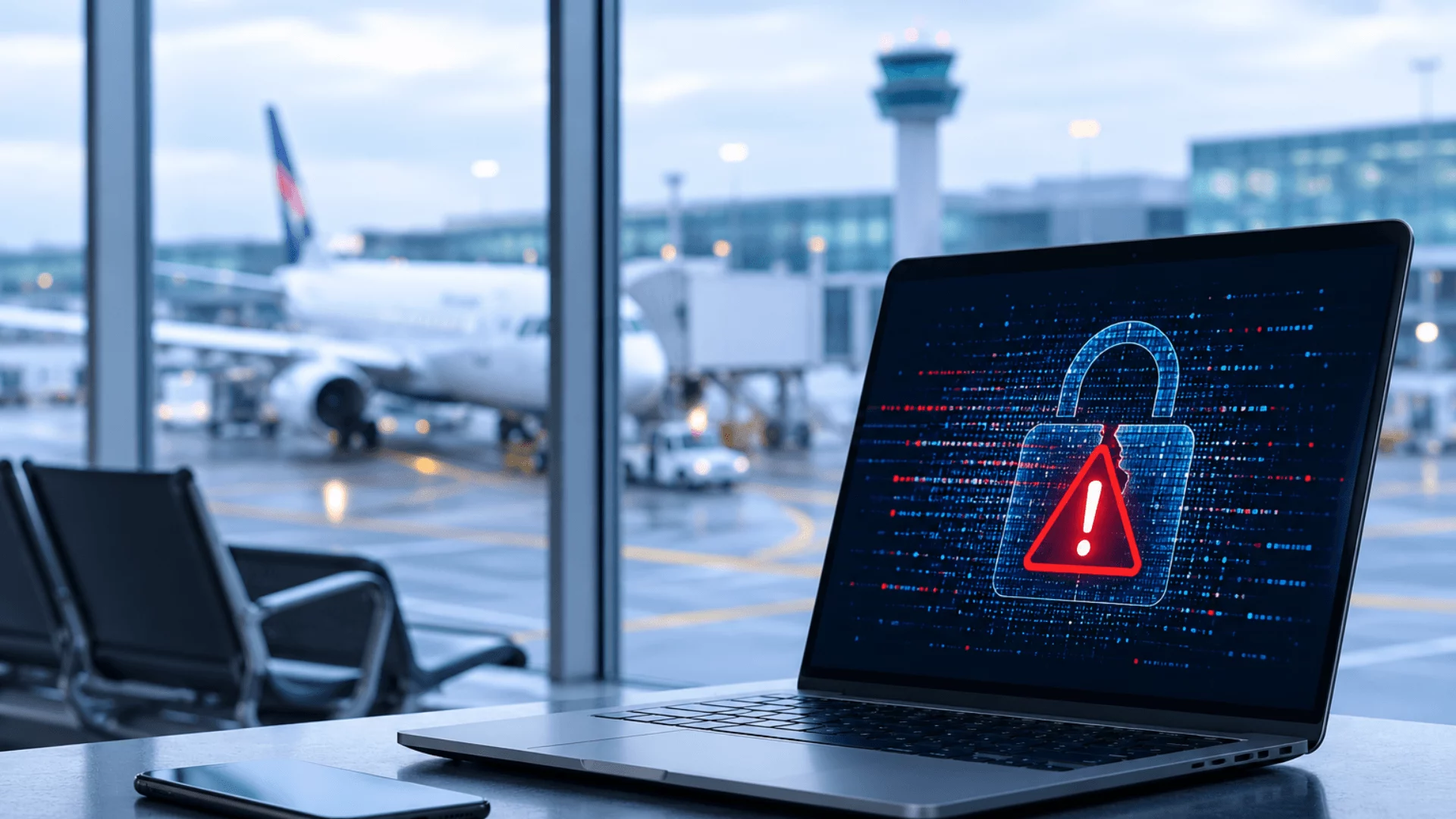
MANCHESTER, UK — In one of the most significant aviation-sector cybersecurity incidents in recent years, the Manchester Airports Group (MAG) has confirmed that personal data belonging to approximately 8.7 million customers has been compromised. The massive breach, which impacts travellers across three of the United Kingdom’s major transport hubs—Manchester Airport, London Stansted Airport, and East Midlands Airport—has triggered intensive investigations by cybersecurity specialists and data protection regulators alike.
While the incident has raised widespread concerns regarding the safety of passenger information, aviation authorities and airport executives have sought to reassure the public, confirming that core airport operations, passenger safety protocols, and aviation security systems remained entirely unaffected throughout the ordeal. Nevertheless, the involvement of a notorious data-extortion syndicate has thrust the vulnerability of third-party digital infrastructure and customer relationship management (CRM) ecosystems back into the spotlight.
Main Facts
The security breach, officially acknowledged by the Manchester Airports Group on August 27, exposed a vast trove of customer information linked primarily to public Wi-Fi registrations and digital bookings for ancillary services such as airport car parking, executive lounges, and Fast Track security passes.
According to official disclosures from MAG, the overwhelming majority of the 8.7 million affected individuals had their email addresses exposed. These addresses were predominantly gathered when passengers registered to log onto public Wi-Fi networks across the three airport facilities. However, a smaller yet significant proportion of the victims had more detailed contact and booking information compromised. This extended dataset potentially includes telephone numbers, home postcodes, vehicle registration numbers, booking references, historical purchase data, travel timings, and customer-engagement metrics.
Crucially, MAG has verified that financial credentials—such as bank account numbers, credit card data, and raw payment-card details—were never stored within the affected system and thus remain safe. The breach did not compromise physical security infrastructure, air traffic control interfaces, or aircraft operations.
The incident has been attributed to a sophisticated, multi-stage cyberattack. According to MAG’s preliminary findings, threat actors successfully breached one of the group’s internal systems before extracting files from a separate database hosted and managed by a third-party vendor.
While the exact scope of the stolen data continues to be evaluated, the breach has brought immediate risks to millions of consumers, particularly regarding targeted phishing campaigns, social engineering scams, and fraudulent communications leveraging genuine travel details.
Chronology of the Incident
Understanding the timeline of the Manchester Airports Group breach reveals a sequence of events that highlights the rapid mobilization of cyber-extortion groups and the complex coordination required between corporate entities, regulatory bodies, and cybersecurity investigators.
- Pre-Incident Phase: Over an undisclosed period, threat actors scouted vulnerabilities within digital interfaces linked to MAG’s customer engagement and Wi-Fi onboarding infrastructure. According to external claims, attackers allegedly targeted exposed application programming interface (API) credentials found within client-side JavaScript.
- The Infiltration: Attackers managed to compromise an internal MAG system, utilizing it as a bridge to access and exfiltrate files originating from a third-party-hosted database containing customer records.
- August 27: Manchester Airports Group formally confirmed the data security incident, issuing public statements and setting up a dedicated informational portal for concerned travellers.
- Late August (Post-Confirmation): The data-extortion group known as "FulcrumSec" publicly claimed responsibility for the cyberattack, boasting to cybersecurity media outlets that they had successfully pilfered approximately 86 gigabytes of customer data.
- Regulatory Intervention: Following the emergence of the ransom note and extortion demands, the UK’s Information Commissioner’s Office (ICO) stepped in, formally requesting that MAG withhold publication of the extortionist’s name, the specific ransom demands, and the contents of the ransom note. MAG subsequently confirmed it refused to pay the ransom, noting that the extortionists’ financial demands were unusually low compared to their typical baseline.
- Ongoing Investigations: MAG restricted access to the affected systems, deployed specialized incident response teams, and engaged with national cyber security authorities and regulatory bodies to contain the threat and ascertain the full extent of the data loss.
Supporting Data and Technical Analysis
The scale and nature of the breach have been subjected to intense scrutiny by independent cybersecurity researchers, media organizations, and threat intelligence groups.
The Volume and Nature of the Data
FulcrumSec, the extortion syndicate claiming responsibility for the hack, asserted in communications with industry publications like BleepingComputer that they exfiltrated roughly 86GB of data. While security researchers were able to independently verify a small sample of the stolen data—matching specific traveller details against genuine Fast Track purchases—the total volume of the leaked cache and the exact mechanics of the initial network intrusion could not be fully verified independently.
The verified sample reportedly included sensitive consumer context: travel itineraries, spending information, IP addresses, and specific booking references. Notably, security analysts highlighted that the compromised material included close to 200,000 records tied to future travel bookings scheduled for the remainder of 2026. This forward-looking data represents a particularly lucrative asset for cybercriminals, as it provides real-time context for imminent journeys.
The Attack Vector Debate
FulcrumSec publicly claimed that their entry point relied upon airport-specific Iterable API credentials that had been improperly exposed via client-side JavaScript implementations. However, Manchester Airports Group has explicitly declined to confirm this claim, and there is no evidence to suggest that any native vulnerability within Iterable’s platform was responsible for the breach.
This aspect of the incident has reignited broader industry conversations regarding the security posture of marketing automation platforms and customer data pipelines. Similar vulnerabilities have plagued the digital ecosystem in the past; for instance, scrutiny was previously drawn to third-party marketing tools like Klaviyo signup forms, which were reported to have inadvertently shared sensitive data elements with external parties. The incident underscores the hidden risks associated with third-party software integrations, client-side scripts, and API key management in modern enterprise architectures.
Official Responses and Regulatory Action
The response to the Manchester Airports Group breach has involved a delicate balancing act between corporate transparency, regulatory compliance, and public reassurance.
Manchester Airports Group (MAG)
In its official communications, MAG has maintained a posture of caution and diligence. The organization emphasized that its immediate priorities were securing its digital perimeter, supporting affected customers, and cooperating fully with investigative bodies.
"We understand that any incident involving personal data causes concern for our customers," a MAG representative noted. "Our teams, alongside leading cyber security specialists, moved quickly to contain the incident, restrict system access, and notify the relevant authorities."
MAG has explicitly stated that it has not yielded to extortion demands. Working in tandem with the Information Commissioner’s Office, the group opted to withhold the specific moniker of the extortion group and the exact financial terms of the ransom note, pointing out that the demands were surprisingly modest for a syndicate of that profile—a detail that hints at potential internal disorganization or a "quick cash" strategy by the threat actors.
The Information Commissioner’s Office (ICO)
The UK’s data privacy watchdog, the ICO, stepped in promptly to manage the information flow surrounding the extortion attempt. By advising MAG not to publish the ransom note or the identity of the threat group, the ICO aimed to prevent public panic, deny the extortionists free publicity, and mitigate the risk of encouraging copycat attacks. The ICO continues to review whether MAG and its third-party vendors met their statutory obligations under the UK General Data Protection Regulation (GDPR) regarding data security and prompt breach notification.
Implications and Consumer Guidance
While the absence of financial data and passwords provides a small degree of comfort, cybersecurity experts warn that the exposure of 8.7 million email addresses and booking histories carries severe downstream risks.
The Threat of Advanced Phishing and Social Engineering
The primary danger facing affected travellers is not immediate account takeover via stolen passwords, but rather highly targeted phishing and Business Email Compromise (BEC)-style scams.
When a malicious actor possesses both an individual’s email address and authentic context—such as knowing they recently booked a flight out of Manchester Airport, utilized a specific airport lounge, or have an upcoming trip scheduled for later in 2026—they can craft convincing fraudulent communications. These phishing attempts can accurately reference booking references, travel dates, and service providers, drastically lowering the victim’s guard.
Security analysts point to recent international precedents to illustrate this threat. For instance, a notable Spanish fraud case demonstrated how malicious actors successfully executed sophisticated financial scams by combining genuine commercial tender details with lookalike domains, completely deceiving targeted personnel. In the context of the MAG breach, travellers could easily fall victim to fake emails regarding parking upgrades, lounge reservation problems, or Fast Track payment processing issues that direct them to malicious credential-harvesting or payment portals.
Recommended Steps for Affected Customers
Manchester Airports Group, alongside independent cybersecurity authorities, has issued clear guidance for anyone who believes they may have been caught in the breach:
- Remain Vigilant: Watch out for unexpected or suspicious emails, text messages, and phone calls referencing airport travel, parking, or lounge bookings.
- Verify Communications: MAG has explicitly stated that it will never unexpectedly contact customers to request passwords, banking information, full payment card details, or security PINs.
- Inspect Links and Senders: Always check the sender’s actual email address rather than just the display name. Do not click on direct links within unsolicited messages concerning travel itineraries; instead, navigate directly to official airport websites via a trusted browser bookmark.
- Monitor Financial Accounts: Even though payment card data was not stored on the compromised system, travellers should exercise general vigilance over their bank statements for any anomalous activity.
As investigations into the Manchester Airports Group breach continue, the incident serves as a stark reminder of the widening attack surface of modern transport infrastructure. With millions of consumer records sitting across complex webs of third-party vendors and marketing platforms, aviation groups face an escalating challenge in safeguarding passenger data against increasingly resourceful cyber-extortion syndicates.