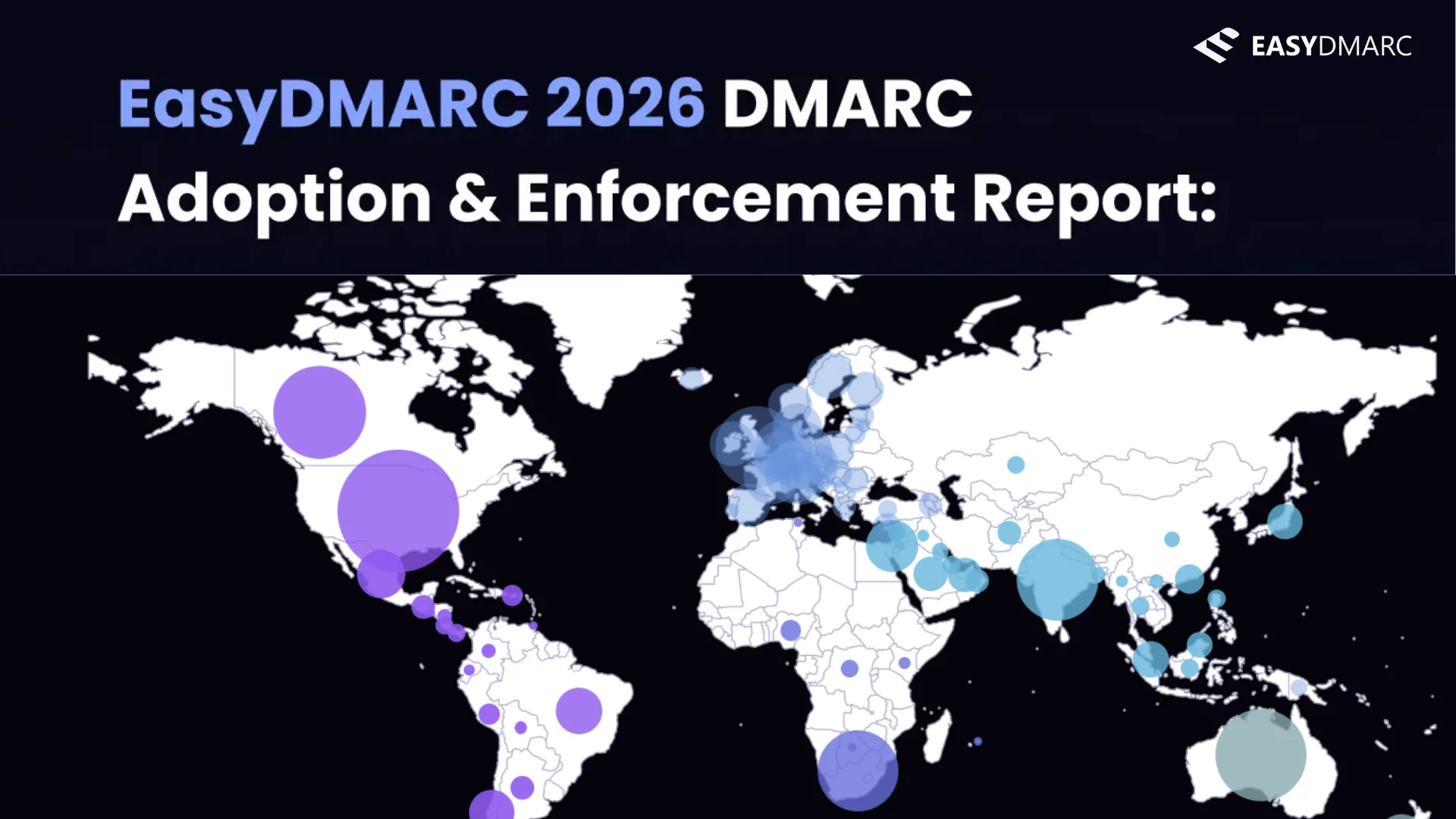
The global state of email authentication has reached a historic inflection point. According to the newly released 2026 DMARC Adoption Report from EasyDMARC, the Domain-based Message Authentication, Reporting, and Conformance (DMARC) protocol has finally crossed the 50% adoption threshold among the world’s top 1.8 million domains.
At face value, this is a monumental triumph for internet security. In just three years, the number of domains publishing a valid DMARC record has surged by 79%, jumping from a mere 27.2% in 2023 to 52.1% in 2026. However, beneath these headline-grabbing statistics lies a troubling reality: the majority of these domains are effectively "faking it." By settling for the lowest tier of protection, hundreds of thousands of organizations have created a false sense of security that leaves them—and their customers—just as vulnerable to domain impersonation as they were before the protocol existed.
The Chronology of Compliance: How We Got Here
The rapid rise in DMARC adoption is not an accident of organic security consciousness; it is the result of a coordinated industry mandate.
2023: The Quiet Years
Prior to 2023, DMARC was an optional best practice, frequently ignored by smaller organizations and treated as a "nice-to-have" by many enterprise IT departments. The burden of implementation—specifically the need to inventory every third-party vendor sending mail on a company’s behalf—was viewed as too operationally expensive for the perceived return.
2024–2025: The Regulatory Squeeze
The catalyst for the current surge was a fundamental shift in the requirements set by the internet’s largest mailbox providers. When Google and Yahoo! announced strict bulk sender requirements, they made DMARC authentication a mandatory entry ticket for any organization wishing to deliver mail to their users. Crucially, these providers set the bar at p=none (monitoring mode).
2026: The "Compliance-Shaped" Plateau
The 2026 data confirms that the industry responded precisely to the prompt. Organizations did exactly what was required of them—publishing a record—and nothing more. The result is a massive "parking lot" of domains that are technically compliant with sender requirements but functionally defenseless against bad actors.
Supporting Data: A Tale of Two Tiers
The EasyDMARC report, which analyzed the top 1.8 million domains by traffic across three distinct snapshots, reveals a stark disparity in implementation maturity.
The Great Parking Lot: The p=none Problem
Of the 937,931 domains that have adopted DMARC, a staggering 525,996—more than half—are configured at p=none. In this state, the protocol acts only as a passive observer. It watches spoofed mail enter the ecosystem and generates reports about the unauthorized activity, but it takes no action to block it.
The Enforcement Gap
The industry’s "real" security metric is found in the move to p=quarantine or p=reject. These policies command receiving mail servers to either route suspicious mail to spam or reject it entirely.
- Enforcement Domains: Only 411,935 of the analyzed domains have moved to an enforcement policy.
- The Elite Few: The stricter benchmark of
p=rejectcombined with active RUA (Reporting URI for Aggregate data) reporting—the gold standard of email security—is present in only 159,691 domains. - The Reality Check: This means that only one in eleven domains that bothered to implement DMARC are actually utilizing it to its full potential. To the rest of the internet, this is merely a rounding error.
Enterprise vs. Growth: The Courage Divide
The report highlights a fascinating divide between the Fortune 500 and the Inc. 5000.
- Fortune 500: 95% have valid DMARC records, and over 80% are at full enforcement. With 97.9% reporting, these giants demonstrate that complex, sprawling mail architectures are not a barrier to security.
- Inc. 5000: While adoption is a respectable 76.2%, only 15.2% have reached the
p=rejectpolicy.
The data suggests that the barrier is not technical literacy or awareness; it is "operational courage." High-growth companies are often terrified that flipping the switch to p=reject will break critical marketing or transactional email streams. Consequently, they remain in a state of permanent monitoring, effectively leaving their digital front doors unlocked.
Official Responses and Industry Context
The broader cybersecurity ecosystem is currently undergoing a reckoning regarding what "authentication" actually means.
This spring saw the publication of DMARCbis, the modernized standard that simplifies and clarifies the protocol. Simultaneously, major mailbox providers like GMX, WEB.DE, and mail.com have begun moving their own domains to p=reject, sending a clear signal that the era of "monitoring-only" is coming to a close.
In a recent assessment, EasyDMARC CEO Gerasim Hovhannisyan noted that while adoption driven by deliverability requirements has arrived, "adoption alone doesn’t protect anyone." The industry is shifting toward a consensus: authentication that doesn’t enforce is simply paperwork. Google’s new Postmaster verdicts reinforce this, treating technical compliance not as a badge of honor, but as the bare minimum requirement for participation.
Implications: The Persistent Threat of "Legitimate" Abuse
The most dangerous implication of the current state of DMARC is the false sense of security it provides to business leaders. While many executives believe their domains are "protected" because they have a DMARC record, they are failing to account for the evolution of phishing.
The Rise of Trusted Infrastructure Abuse
Modern phishing campaigns—from sophisticated device-code kits to hijacked Simple Email Service (SES) accounts—are bypassing traditional filters not by spoofing, but by riding legitimate infrastructure. Because these attackers send mail through authenticated channels, they pass DMARC checks even if the domain owner has an enforcement policy.
However, against the "older, larger, dumber" class of attacks—the direct spoofing of a domain—DMARC enforcement remains the definitive fix. By remaining in p=none, half a million organizations have made a conscious choice to log these attacks rather than stop them.
What Organizations Must Do: A Path to Enforcement
For the 525,996 domains currently idling in the p=none parking lot, the path to security is no longer a mystery. The industry has standardized the transition, and the tools to succeed are widely available.
1. The Inventory Habit
If you are collecting RUA reports, you are halfway there. The next step is a rigorous audit of every platform that sends mail on your behalf. This is not just an IT task; it is an operational necessity.
2. The Staged Ratcheting Process
The industry-standard route remains the most effective:
- Monitor: Use
p=noneto identify all legitimate senders. - Alignment: Fix DKIM and SPF alignment for all authorized platforms.
- Quarantine: Move to
p=quarantineto test the impact on deliverability. - Reject: Move to
p=rejectonce confidence is established.
3. Overcoming the "Boardroom" Fear
If you are advising clients or presenting to a board, use the Fortune 500 as your benchmark. The reality is that the largest, most complex email estates on the planet have achieved full enforcement. If they can manage the operational complexity of a global organization, your company can, too.
The "parking lot" of monitoring mode is no longer a destination; it is a temporary waiting room. As the industry moves toward a zero-trust model for email, those who stay in p=none will find their deliverability—and their security reputation—increasingly compromised.
The 2026 report serves as both a celebration of progress and a stark warning. We have built the fence, but for most of the internet, it is only half-finished. It is time to close the gate.
Source: EasyDMARC 2026 DMARC Adoption & Enforcement Report. The data reflects an analysis of the top 1.8 million domains by traffic, with comparative snapshots from 2023, 2025, and 2026. Disclosure: EasyDMARC is an Enterprise Member of Emailexpert; coverage decisions were made independently.