SAN FRANCISCO — Ten days past its self-imposed final deadline, Twilio SendGrid’s planned retirement of a swath of legacy public IP addresses remains shrouded in operational ambiguity. According to the company’s official incident management dashboard, the deprecation ticket is still marked as "in progress"—a status that has not seen a single administrative update since August 24.
The silence from Twilio’s engineering and communications desks has left developers, system administrators, and enterprise IT teams in a state of suspended animation. While the cloud communications giant originally promised a clean break by the end of August, the lack of transparency regarding whether the endpoints have actually been pulled offline has created a frustrating diagnostic puzzle for the developer community.
Main Facts
The core of the issue centers on how applications, mail servers, and external infrastructure connect to Twilio SendGrid’s extensive email delivery ecosystem.
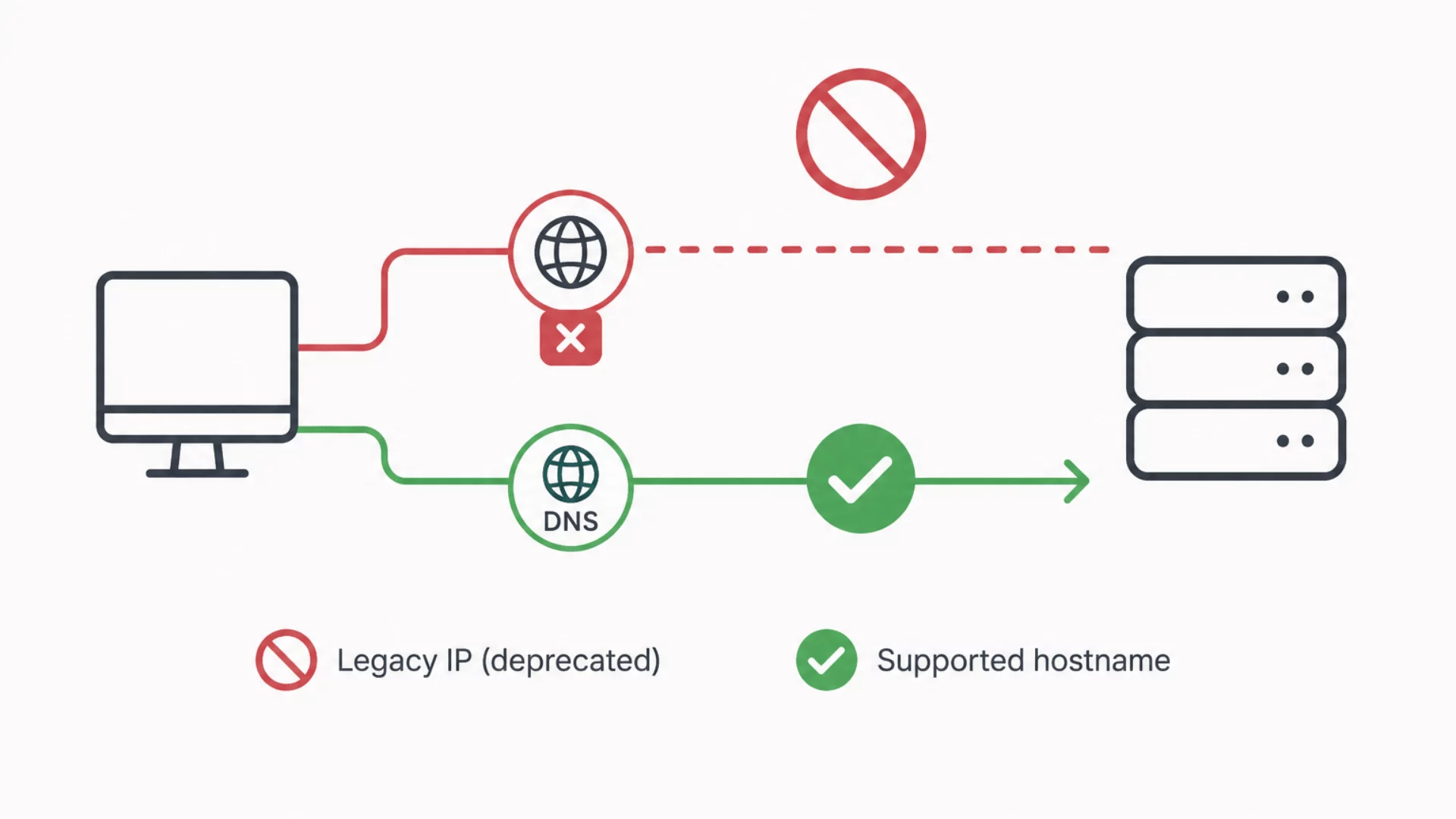
For years, a subset of customers bypassed standard Domain Name System (DNS) resolution, choosing instead to hard-code specific legacy public IP addresses into their applications, API integrations, Simple Mail Transfer Protocol (SMTP) client configurations, and corporate firewalls. Connecting via static IP addresses—rather than dynamic hostnames—is a legacy anti-pattern in modern cloud architecture, as it strips infrastructure of the agility required for elastic scaling, load balancing, and rapid disaster recovery.
Twilio’s ongoing maintenance action specifically targets these inbound connection endpoints used to access SendGrid’s API and SMTP services. It is critical to note that this deprecation event has no relation to dedicated sending IP addresses. Dedicated IPs are individual outbound addresses explicitly assigned to specific customer accounts to help manage and protect sender reputation and deliverability rates; those remain entirely unaffected by this infrastructure cleanup.
Instead, the targeted assets are shared foundational infrastructure components. Twilio has consistently advised its user base to rely strictly on canonical hostnames rather than raw numerical IP addresses:
- Global API and SMTP:
api.sendgrid.comandsmtp.sendgrid.net - European Union Regional Subusers:
api.eu.sendgrid.com
Despite clear developer documentation advocating for hostname usage, the persistence of hard-coded legacy IPs in legacy enterprise codebases forced Twilio’s hand, culminating in an abrupt migration timeline issued in the waning days of August.
Chronology of the Deprecation Event
The timeline leading up to the current state of administrative limbo reveals a compressed, high-stakes notification window that drew criticism from operational teams accustomed to months-long deprecation cycles.
- August 19: Twilio publishes a terse service notice alerting customers to the impending removal of a group of unspecified legacy public IP addresses. The advisory mandates that any client connecting to SendGrid via hard-coded IPs must immediately update their configurations to use standard hostnames.
- August 24: The incident tracking ticket on the official Twilio Status page transitions to "in progress." Concurrently, SendGrid executes the first of three scheduled temporary disablement windows designed to shock unmigrated systems into action by artificially breaking their connectivity.
- August 25: The second temporary disablement window takes place, causing intermittent downstream failures for organizations that failed to heed the initial August 19 warning.
- August 27: The third and final temporary disablement window is executed, leaving a mere 96 hours before the definitive, permanent pull-the-plug date.
- August 31 (9:00 AM Pacific Time): The scheduled permanent deprecation deadline arrives. According to the original notice, all legacy IP addresses are slated to be permanently withdrawn from routing tables and routing infrastructure at this exact timestamp.
- September 1 – September 10 (Present): Ten full days pass past the hard deadline. The status page ticker remains stubbornly frozen at "in progress," with zero post-deadline wrap-up notes, all-clear declarations, or explanations for the extended timeline.
Supporting Data and Technical Context
To fully understand the friction caused by Twilio’s handling of this retirement, one must examine the mechanics of modern cloud networking and API consumption.
The Fragility of Hard-Coded IPs
In cloud-native environments, IP addresses are ephemeral. Cloud providers routinely rotate, reallocate, and drain IP blocks to accommodate hardware maintenance, security patching, network re-architecting, and geographic expansion. When a provider like Twilio SendGrid maintains legacy infrastructure, those old IP blocks represent a technical debt liability. Maintaining them consumes routing table entries, complicates border gateway protocol (BGP) announcements, and increases the attack surface for infrastructure-layer security vulnerabilities.
However, developers frequently violate best practices by hard-coding IP addresses for several flawed reasons:
- Bypassing Local DNS Failures: Engineers sometimes hard-code IPs during past troubleshooting sessions to rule out corporate DNS resolution failures, forgetting to revert the change.
- Strict Firewall Egress Rules: Highly locked-down enterprise environments often require explicit IP allowlisting on outbound firewalls before internal applications can communicate with external third-party APIs.
- Legacy Middleware: Older enterprise service buses (ESBs) and on-premises mail transfer agents (MTAs) written decades ago occasionally lack robust DNS refresh mechanisms, prompting administrators to lock in static IPs.
The Information Black Hole
Compounding the technical challenge is Twilio’s refusal to publish the exact list of deprecated IP addresses. Throughout the notification and deprecation lifecycle, the company has referred only generically to "legacy IP addresses."
This creates a severe information asymmetry. Because Twilio has never disclosed the specific blocks being retired, independent security researchers, network engineers, and affected sysadmins cannot externally probe the endpoints to verify if they are still answering traffic. Without knowing the target IPs, third-party network auditing tools are blind, leaving organizations unable to run basic ping, traceroute, or telnet tests to determine if their internal systems are still secretly relying on ghost infrastructure.
Official Responses and Communication Breakdown
The most striking aspect of the SendGrid legacy IP retirement saga is not the technical complexity of the migration, but the stark breakdown in vendor-to-customer communication.
As of September 10, Twilio has issued no formal statements clarifying the discrepancy between the August 31 sunset date and the active "in progress" status on its dashboard. Media inquiries directed to Twilio’s corporate communications and developer relations teams regarding the delay have gone unanswered.
This communication vacuum has fostered widespread speculation within the developer community. Industry forums and IT subreddits have buzzed with conflicting theories:
- The Phased Rollout Theory: Some engineers surmise that Twilio encountered massive, unexpected error spikes among tier-one enterprise customers on August 31, forcing emergency rollbacks or manual, account-by-account traffic throttling rather than a global switch-off.
- The Abandoned Ticket Theory: Others suggest that the status page ticket was simply orphaned by an operations team that completed the underlying routing changes but forgot to update the public-facing incident tracker—a common administrative oversight in fast-paced DevOps environments.
- The Extended Grace Period Theory: A third camp posits that Twilio quietly extended an unofficial grace period after realizing how short their initial 12-day notification window (August 19 to August 31) actually was, though no such extension has been formally communicated.
Whatever the internal reality within Twilio’s Network Operations Center (NOC), the lack of clarity undermines trust in the platform’s incident management transparency. For enterprise architects tasked with maintaining 99.99% uptime SLAs, ambiguity is often more damaging than a declared outage.
Implications for Developers and Enterprise IT
While the immediate operational impact appears muted—largely because organizations that survived the August 27 disablement window likely fixed their configurations—the broader implications of this botched rollout extend far beyond SendGrid’s email pipelines.
1. The Perils of Short Notification Windows
A twelve-day window (August 19 to August 31) for deprecating core infrastructural routing endpoints is extraordinarily aggressive by industry standards. Major cloud providers like Amazon Web Services (AWS), Microsoft Azure, and Google Cloud Platform (GCP) typically provide months, if not years, of advance warning—complete with deprecation warnings injected into API response headers, extensive blog posts, and direct account-level emails—before pulling support for legacy endpoints. Twilio’s compressed timeline placed an undue burden on engineering teams, particularly those operating under rigid change-management freezes or complex regulatory review boards.
2. The Necessity of Automated Audits
For engineering teams, this incident serves as a sharp wake-up call regarding technical debt and asset discovery. Organizations must implement automated static code analysis tools to scan their codebases, configuration files, environment variables, and infrastructure-as-code (IaC) templates for hard-coded third-party IP addresses. Relying on hostnames is no longer merely a best practice for scalability; it is an absolute prerequisite for surviving sudden infrastructural pruning by SaaS vendors.
3. Strengthening Network Perimeter Governance
Network administrators must audit their corporate firewalls and security groups to ensure that outbound API calls and SMTP relays are governed by domain-level filtering (where supported) or regularly updated dynamic threat and service feeds, rather than static IP allowlists that rot over time.
What Affected Teams Should Do Now
Given that Twilio’s status page continues to report the migration as "in progress," organizations should treat the situation as an active emergency warning. IT teams should immediately take the following remediation steps:
- Search Code Repositories: Execute global grep searches across all active source code, configuration management tools (Ansible, Terraform, Chef), and container definitions for any raw numeric IP addresses communicating outbound.
- Inspect Mail Server Configurations: Review postfix, sendmail, or commercial MTA relay configurations to ensure they resolve SendGrid via
smtp.sendgrid.netrather than pinned IPs. - Verify DNS Resolution: Ensure that local internal DNS servers are healthy, properly configured, and capable of resolving SendGrid’s current hostname records without relying on stale local cache entries (hosts files).
Conclusion
As the calendar pushes deeper into September, Twilio SendGrid’s silent, stalled IP retirement stands as a cautionary tale of cloud infrastructure management. Whether the legacy addresses went dark on August 31 or are lingering in digital purgatory, the episode highlights the vital need for extended deprecation horizons, transparent communication, and strict adherence to hostname-based connectivity across the modern software development lifecycle.