Originally published in “On Background” with Mark Stenberg.
1. Main Facts: The New Reality of Digital Information
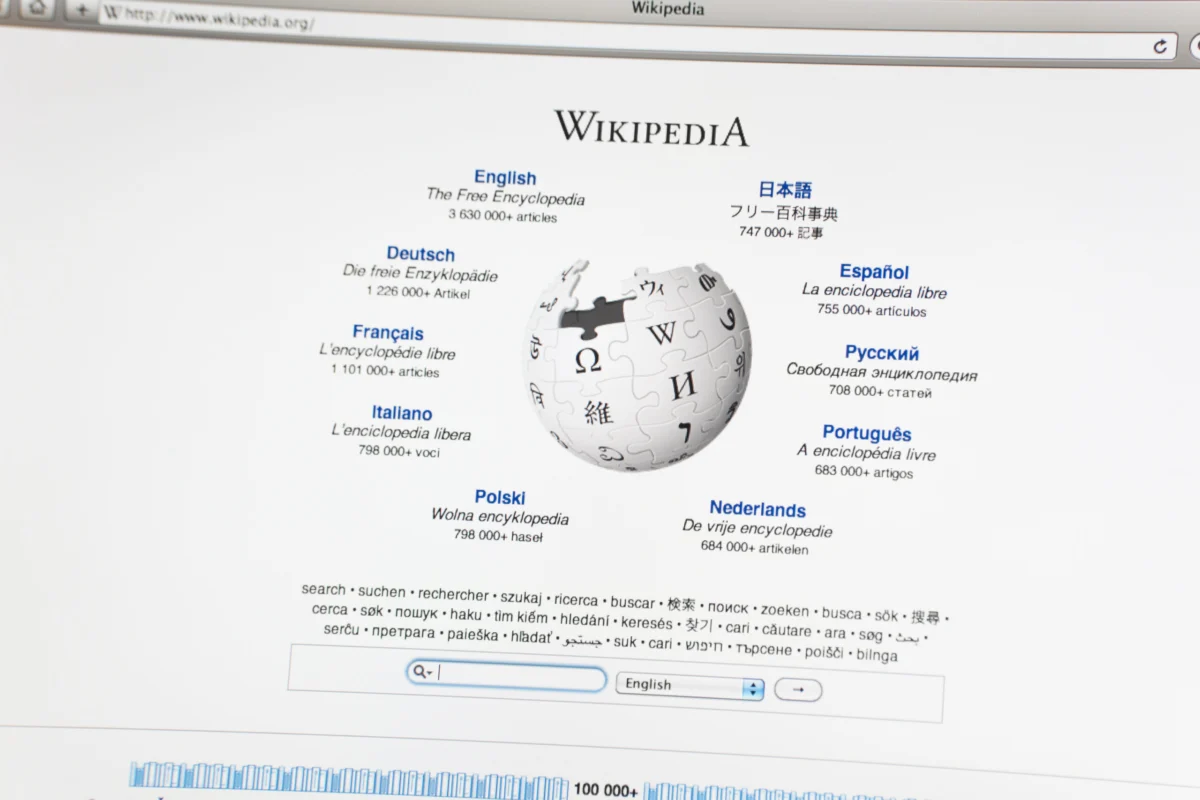
For a quarter of a century, Wikipedia has reigned as the internet’s most dependable public utility—a crowd-sourced digital library providing free knowledge in over 300 languages. Yet, as artificial intelligence fundamentally rewrites how users discover and consume information online, the foundational encyclopedia faces an unprecedented paradox: ultimate ubiquity paired with declining visibility.
According to web measurement metrics from Ahrefs, ChatGPT cites Wikipedia more frequently than almost any other single web domain, second only to Reddit. Generative AI tools, voice assistants, and search engine answer boxes routinely scrape and synthesize Wikipedia’s pages to deliver instant answers to users.
However, this systemic reliance has not translated into traditional web traffic. Human visits to the platform are dropping by roughly 8% year-over-year. While automated bot traffic continues to surge and strain server capacities, fewer human readers are landing on the actual site. For a nonprofit organization built on a community-driven model, this shift threatens the lifeblood of the platform: not advertising revenue, but the human volunteers who fact-check, update, and compose its encyclopedic entries.
2. Chronology: From Search Engines to Answer Engines
The friction between modern tech platforms and legacy publishers is not new, but its stakes have evolved rapidly over the past decade:
- The Early Era (Late 2000s–2010s): Search engines like Google built structured features (such as the "Knowledge Graph") that began pulling direct answers onto search results pages, reducing outbound clicks to publishers. During this phase, platforms collaborated closely with institutions like the Wikimedia Foundation to ensure high accuracy, particularly regarding sensitive topics like health, finance, and living people.
- The Rise of Generative AI (2022–2024): The launch of consumer-facing large language models (LLMs) shifted the internet from a link-based economy to an answer-based economy. AI engines began synthesizing information directly, obscuring attribution and source material entirely.
- The "Woo and Sue" Phase (2023–Present): Media organizations split into defensive camps. Major publishers either entered formal content-licensing agreements with tech giants or launched copyright lawsuits against AI firms for unauthorized scraping.
- The Present Milestone (2025–2026): Wikipedia marks its 25th anniversary by confronting its visibility crisis head-on, launching major domestic brand campaigns in Western markets and developing enterprise-grade API models for AI companies. Concurrently, public media institutions like NPR navigate similar traffic erosion while evaluating their own relationships with big tech.
3. Supporting Data & Industry Metrics
The challenges facing Wikipedia mirror broader shifts across the entire digital media and publishing ecosystem:
- 8% Decline: Wikipedia’s year-over-year drop in human visitor traffic, even as bot requests scale upward.
- $5 Million in Profitable Revenue: Climate news startup Heatmap’s projected earnings for the year, largely propelled by B2B enterprise tiers like Heatmap Pro.
- 33% Target Share: The Daily Mail’s projection for social video’s contribution to direct advertising revenue by 2027, up from its current 20%.
- Sub-$1,000 Pricing: Politico’s strategy for its newly launched "Decoded" subscription product, positioning it as an accessible policy tool compared to its five-figure Politico Pro enterprise tier.
- 8 Million Donors: The baseline community supporting the Wikimedia Foundation, contributing an average of $11 each to sustain its global operations.
4. Official Responses and Industry Perspectives
Zach McCune on Wikipedia’s Brand Rebrand and Enterprise API
At Brandweek, Zach McCune, global head of brand marketing at the Wikimedia Foundation, addressed the organization’s strategic pivot. Reflecting on Wikipedia’s milestone 25th anniversary, McCune noted that the organization partnered with agency Kin to launch a major domestic brand campaign in the U.S. and Europe—a departure from its historic focus on developing regions like India, Nigeria, and South Africa.
"Wikipedia is 25 years old… at the exact time our relationship to knowledge is changing, and Wikipedia is at risk of becoming invisible—invisible to us and invisible to our awareness," McCune said. "Your voice assistant is giving you the answer, or your AI agent is giving you the answer, hiding the fact that, more often than not, the answer is coming from Wikipedia."
To address the financial and structural imbalance of AI scraping, the Wikimedia Foundation is deploying commercial solutions.
"We have an amazing group of people working on an enterprise offering, a real-time API for LLM companies that need tons of data very quickly… designed to do two things: get our content out on these platforms, and create a commercial relationship where the platforms themselves pay us for that usage," McCune explained.
Ryan Merkley on NPR’s Stance Toward AI and Search Erosion
Ryan Merkley, chief operating officer of NPR and former chief of staff at the Wikimedia Foundation, offered a parallel perspective on public media’s uneasy truce with artificial intelligence. Unlike publishers opting to block AI crawlers or file lawsuits, NPR faces structural complexities due to its distributed network of member stations.
"Blocking them is on the table, but it is more complicated for us because we are a distributed network through our member stations, so we would have to block nationwide," Merkley stated.
Merkley also criticized the rapid deployment of consumer AI products, contrasting current industry practices with past tech developments.
"This is the first time where a massive consumer product has arrived half-baked. The public has served as the de facto quality assurance team," Merkley noted, pointing out a stark decline in the rigorous accuracy checks that search engines once maintained.
5. Broader Implications for the Media Landscape
The struggles of Wikipedia and NPR highlight critical vulnerabilities across the modern information ecosystem. As generative AI continues to decouple content creation from direct audience monetization, the downstream effects are reshaping multiple sectors:
The Contributor Economy vs. Audience Consumption
While traditional commercial publishers fret over lost display ad revenue and shrinking programmatic yields, nonprofits face a different structural threat: the evaporation of the contributor funnel. For Wikipedia, fewer casual readers mean fewer active editors to fix typos, fact-check claims, and maintain neutrality. Without human engagement on the primary domain, the underlying data fed into AI models risks stagnation or degradation.
The Evolution of B2B and Niche Subscriptions
As broad-market search traffic declines, media outlets are increasingly doubling down on high-value, defensible niches. Politico’s launch of "Decoded"—aimed at bridging the gap between high-level politics and Silicon Valley tech policy—and Heatmap’s profitable enterprise growth via data-center coverage demonstrate that specialized, actionable intelligence remains viable outside the traditional ad-supported model.
The "Woo and Sue" Crossroads
The media industry remains deeply fractured over how to engage with artificial intelligence developers. While some organizations pursue litigation or aggressively block web crawlers, others seek sustainable licensing frameworks. Yet, as executives like Merkley point out, the rapid commercialization of AI has forced publishers into an untenable position: absorbing the traffic losses of an eroding search economy while serving as unpaid quality-assurance agents for Silicon Valley’s next generation of products.
Ultimately, the survival of trusted information sources will depend on whether tech platforms and information institutions can forge sustainable, reciprocal economic models before public trust and human oversight erode beyond repair.