In the rapidly shifting landscape of modern commerce, the boundary between "marketing" and "sales" is becoming increasingly obsolete. For global powerhouses like Mondelēz International—the company behind household staples such as Oreo, Ritz, and Cadbury—the challenge lies in transforming a vast, historical organizational structure into an agile, unified engine.
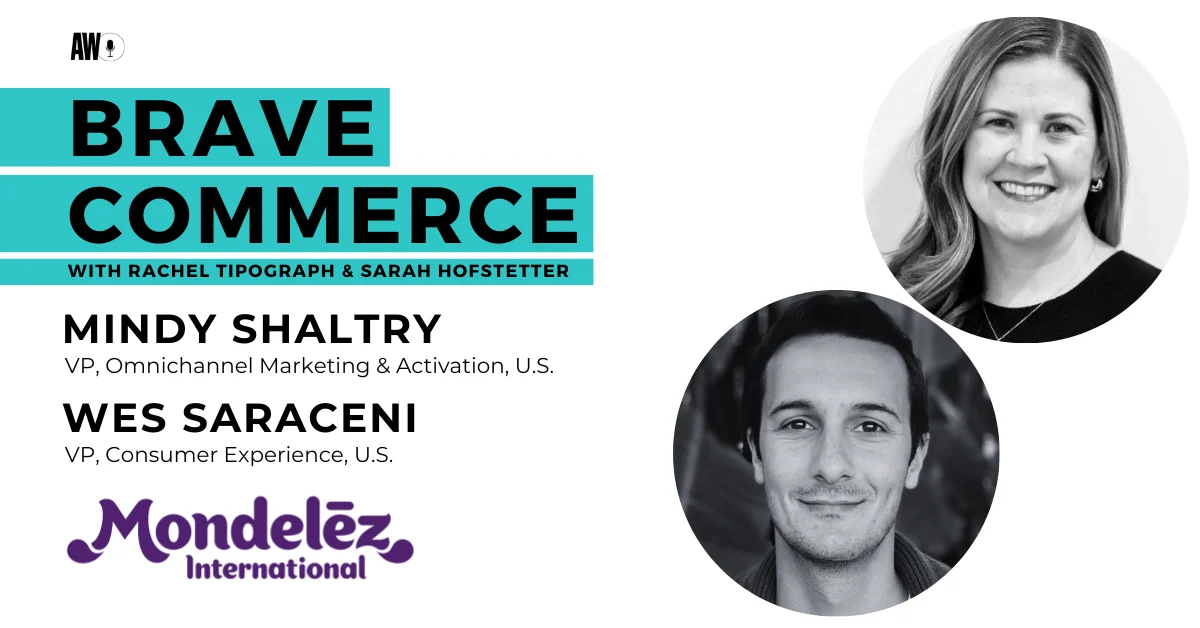
In a recent episode of the Brave Commerce podcast, hosts Rachel Tipograph and Sarah Hofstetter sat down with two of the company’s key architects of this transformation: Mindy Shaltry, VP of omnichannel marketing and activation for Mondelēz U.S., and Wes Saraceni, VP of consumer experience for Mondelēz International. Their discussion centered on a critical evolution in corporate strategy: the total integration of marketing and sales to capture the modern, fragmented shopper journey.
The Strategic Imperative: Breaking Down the Silos
For decades, the standard corporate playbook dictated that marketing existed to build brand equity, while sales existed to move volume. In the digital age, this bifurcated approach is failing. With the consumer path to purchase now spanning social media discovery, influencer endorsements, retail media networks, and traditional shelf-space, the "funnel" has effectively shattered.
Mindy Shaltry and Wes Saraceni argue that the future belongs to organizations that can eliminate the friction between these two pillars. At Mondelēz, the focus has shifted toward a holistic model where marketing efforts are measured by their direct impact on sales performance, and sales strategies are informed by the brand-building data harvested through digital touchpoints.
"The goal is not to have a marketing plan and a sales plan," Saraceni noted during the discussion. "The goal is to have a single consumer journey that we orchestrate, regardless of whether that consumer is currently engaging with an advertisement or standing in the aisle of a grocery store."
Chronology of an Omnichannel Transformation
The shift at Mondelēz did not happen overnight. It was the result of a multi-year internal recalibration aimed at adapting to the post-pandemic retail environment.
- Phase 1: Data Unification (2021–2022): Mondelēz began by consolidating its data streams. Previously, marketing teams relied on brand sentiment and reach metrics, while sales teams focused on inventory turnover and retail sell-through. The initial phase involved creating a "single source of truth" where both teams could view the same real-time consumer data.
- Phase 2: Cultural Integration (2023): Leadership initiatives were launched to encourage cross-functional talent mobility. Shaltry and Saraceni highlighted how employees were encouraged to "step into unfamiliar roles," with marketing professionals spending time in sales forecasting meetings and sales teams participating in creative campaign development.
- Phase 3: Omnichannel Activation (2024–Present): With the infrastructure in place, the company began launching integrated campaigns where digital advertising spend is directly correlated to real-time retail inventory availability, ensuring that a consumer who sees an ad for a new cookie flavor can seamlessly find it in stock at their local retailer.
Supporting Data: Why the "Missing Middle" Matters
A core theme of the conversation was the "missing middle"—a segment of the consumer journey that often falls through the cracks of corporate strategy.
Historically, companies focused heavily on the "top" of the funnel (brand awareness) and the "bottom" (conversion at the point of sale). However, the middle—the consideration and discovery phase—has become a digital battleground. According to industry data, nearly 70% of shoppers use digital tools during their physical grocery shopping experience.
Mondelēz’s research indicates that when the "middle" is neglected, conversion rates drop by as much as 40%. By focusing on this space, Shaltry and Saraceni are deploying "always-on" content strategies that keep the brand top-of-mind during the research phase, whether the consumer is scrolling through TikTok or searching for recipes on a grocery store’s website.
Furthermore, the integration of retail media—where brands buy ad space directly on retail websites—has provided a tangible ROI that proves the effectiveness of this unified approach. Mondelēz has observed that integrated campaigns, which leverage retail data to inform creative content, outperform traditional media buys by a factor of 3-to-1 in terms of customer acquisition cost (CAC).
Official Perspectives: The Leadership Philosophy
On Organizational Agility
Mindy Shaltry emphasized that the primary barrier to transformation is not technology, but organizational psychology. "When you move from a siloed environment to a connected one, you have to embrace discomfort," she stated. Shaltry noted that the most successful initiatives at Mondelēz were driven by leaders who were willing to be "beginners" again, learning the nuances of their colleagues’ domains to ensure a unified objective.
On Lessons from Smaller Brands
Both Shaltry and Saraceni expressed admiration for the agility of smaller, "challenger" brands. They argued that large organizations often fall into the trap of over-complicating processes. "Smaller brands have an advantage because they don’t have legacy systems or legacy thinking," Saraceni explained. "They move at the speed of the consumer. Our goal at Mondelēz is to maintain our scale while adopting that same ‘start-up’ mentality—the ability to pivot based on a single weekend of sales data."
Implications for the Industry
The shift occurring at Mondelēz is representative of a broader industry trend. As retail media networks (RMNs) become a permanent fixture of the marketing ecosystem, companies that fail to align their marketing and sales functions will find themselves at a distinct disadvantage.
1. The Death of the Traditional Funnel
The linear path to purchase is dead. Marketers must now prepare for a non-linear journey where a consumer might be "sold" to, research, and purchase within seconds, or across several weeks. This requires a shift from static campaign planning to dynamic, responsive content strategies.
2. The Rise of the "Retail Marketer"
The skills required of modern marketing and sales professionals are converging. A marketer now needs to understand supply chain logistics and retail inventory, while a sales professional needs to understand digital media buying and creative strategy. The "T-shaped" professional—someone with deep expertise in one area but a broad understanding of the entire business—will become the gold standard for hiring.
3. Data Sovereignty and Privacy
As the industry moves toward a "cookieless" future, the reliance on first-party data captured through omnichannel initiatives becomes critical. Mondelēz’s focus on building direct-to-consumer connections and leveraging retail partnership data ensures they remain resilient even as third-party tracking becomes more difficult.
Conclusion: The Path Ahead
The conversation between Shaltry, Saraceni, and the Brave Commerce hosts offers a masterclass in modern corporate evolution. By treating the consumer journey as a single, continuous experience rather than a series of disparate interactions, Mondelēz is effectively "future-proofing" its market position.
As brands look toward the next decade, the message is clear: The companies that succeed will not necessarily be those with the largest budgets, but those with the fewest internal walls. The ability to pivot, to learn from smaller competitors, and to integrate the disparate functions of marketing and sales into a single, high-performance unit is no longer a competitive advantage—it is the baseline requirement for survival in the age of omnichannel commerce.
For marketers looking to stay ahead of these trends, industry gatherings like Brandweek serve as the essential forums where these strategies are debated, refined, and set into motion. As the industry continues to move at a breakneck pace, the philosophy championed by Mondelēz—of alignment, agility, and a relentless focus on the consumer—will undoubtedly serve as the blueprint for the next generation of global commerce leaders.