SAN FRANCISCO — In the high-stakes, hyper-competitive world of early-stage Software-as-a-Service (SaaS) startups, founders face a labyrinth of existential questions. Among the most vexing is a foundational dilemma that can make or break a fledgling enterprise: How do you price a product before you have achieved true product-market fit?
For decades, conventional entrepreneurial advice has romanticized the idea of disruptive business models, encouraging founders to reinvent the wheel across every facet of their enterprise—including how they monetize. However, industry wisdom, crystallized recently through insights from the global SaaS community SaaStr, suggests a much more pragmatic, disciplined approach.
The secret to early-stage SaaS pricing isn’t found in complex economic formulas or aggressive monetization experiments. It is found in a simple, time-tested retail concept: comparables (comps).
Main Facts: The Economics of Early-Stage Software
To understand why comparables form the bedrock of early-stage SaaS pricing, one must first examine the fundamental cost structure of software.
Unlike traditional manufacturing or service industries, software exhibits a near-zero marginal cost of distribution. While building a robust application requires immense capital, engineering hours, and iterative design—making the initial creation wildly expensive—shipping that software to a new user costs virtually nothing.
For an average B2B application that is not heavily reliant on massive data storage or intensive server computing, the hosting overhead can be as low as $0.10 per user per month. With such negligible variable delivery costs, software companies possess extraordinary flexibility on paper. This begs a critical question: If the cost to serve a customer is negligible, why does one software application command $5 per month while another fetches $150?
The traditional answer points to the intrinsic value delivered to the customer—the exact mechanism that allows enterprise monoliths like Salesforce and Workday to command astronomical pricing. Yet, for an early-stage startup operating in the fog of pre-product-market fit, calculating precise intrinsic value is nearly impossible.
Instead, the baseline for pricing is established by market expectations and comparables. Today’s software buyers are not novices. They are seasoned veterans of the digital economy.
Chronology: The Evolution of the Modern SaaS Buyer
To appreciate why "comps" dominate the early-stage pricing conversation, it is helpful to trace how the software-buying demographic has evolved over the past two decades.
Phase 1: The Wild West Era (Early 2000s)
When cloud computing and the SaaS model first began displacing traditional on-premise software, the market was filled with novelty. Buyers encountered web-based tools for the first time. During this era, SaaS vendors had wide latitude to experiment with pricing models, adoption tiers, and feature gating. Buyers lacked a standardized mental baseline for what a cloud application "should" cost.
Phase 2: Proliferation and Saturation (2010–2020)
As the barriers to entry for software development plummeted, the market flooded with thousands of point solutions. The average small-to-medium-sized business (SMB) or enterprise department began adopting dozens, if not hundreds, of distinct SaaS applications. During this period, the modern software stack was born. Employees and procurement teams grew accustomed to recurring subscription models, tier-based packaging, and per-seat pricing.
Phase 3: The Veteran Buyer Era (Present Day)
Today, the landscape has matured completely. Statistically, every active business buyer has personally purchased anywhere from 1 to over 200 SaaS applications throughout their professional lives.
Because of this exposure, prospective customers possess an intuitive, almost subconscious understanding of what various categories of software ought to cost. They evaluate a new tool not in a vacuum, but in direct relation to the other line items on their software expense ledger. If a project management tool, a CRM light, or an automated email marketing utility deviates too wildly from the established market median without an overwhelmingly obvious justification, the buyer experiences immediate cognitive dissonance—and frequently abandons the purchase.
Supporting Data and Analogies: The Restaurant Test
To illustrate how customer psychology reacts to pricing and comparables, industry leaders often turn to a familiar physical-world analogy: the restaurant industry.
Imagine an entrepreneur opening a brand-new dining establishment.
- The McDonald’s Tier: If the restaurant looks, smells, and tastes like McDonald’s, it must be priced like McDonald’s. A burger and fries should cost $4 to $5 maximum. Attempting to charge gourmet prices for fast-food equivalents will result in immediate commercial failure.
- The Brasserie Tier: If the venue resembles a standard, comfortable neighborhood brasserie, a $20 steak frites is widely accepted by patrons as fair value.
- The Fine Dining Tier: If the establishment delivers the ambiance, service, and culinary precision of a Michelin-starred destination like The French Laundry, customers willingly rationalize a $200 price point for a high-end tasting menu.
The principle translates directly to software: Give your customers context.
When a startup prices its product in alignment with similar apps serving the same functional niche, the price feels fair, organic, and correct. Pricing ceases to be a barrier or a point of friction.
Conversely, when an early-stage founder attempts to "innovate" on pricing by introducing convoluted billing structures, unexpected usage-based metrics, or out-of-market price points before establishing trust, they introduce unnecessary friction into the sales funnel. In the early days of a startup, when traction is fragile and pipeline generation is an uphill battle, there are zero leads to waste. Every hesitant prospect lost to pricing confusion represents a missed opportunity for vital product feedback.
Official Perspectives and Industry Insights
In commentary shared across leading entrepreneurial platforms like SaaStr, veteran founders and investors consistently reinforce a golden rule for early-stage monetization:
"Later, you can raise prices and optimize. But 95 times out of 100, don’t innovate on pricing. Especially in the early days. That’s too clever by half."
Industry experts emphasize that early-stage startups often fall into the trap of over-engineering their business models. Founders spend weeks debating whether to charge per user, per feature, by consumption volume, or via a hybrid model, while their core product lacks clear validation.
According to market practitioners, this is a dangerous distraction. Before achieving product-market fit, the primary objective is not profit maximization; it is learning. You need users logging in, testing the workflows, hitting bugs, and telling you whether the core value proposition resonates. An overly complex or misaligned price tag acts as a gatekeeper, keeping potential feedback locked outside the door.
By anchoring your pricing to established comparables within your vertical, you instantly lower the cognitive load on the buyer. They do not need to evaluate how they are paying; they only need to evaluate if your solution solves their problem better than the alternative they are currently comparing it against.
Implications for Early-Stage Founders
What does this mean for entrepreneurs currently building and launching software products? The strategic implications are clear, actionable, and demand a shift in mindset away from premature sophistication.
1. Benchmark Relentlessly
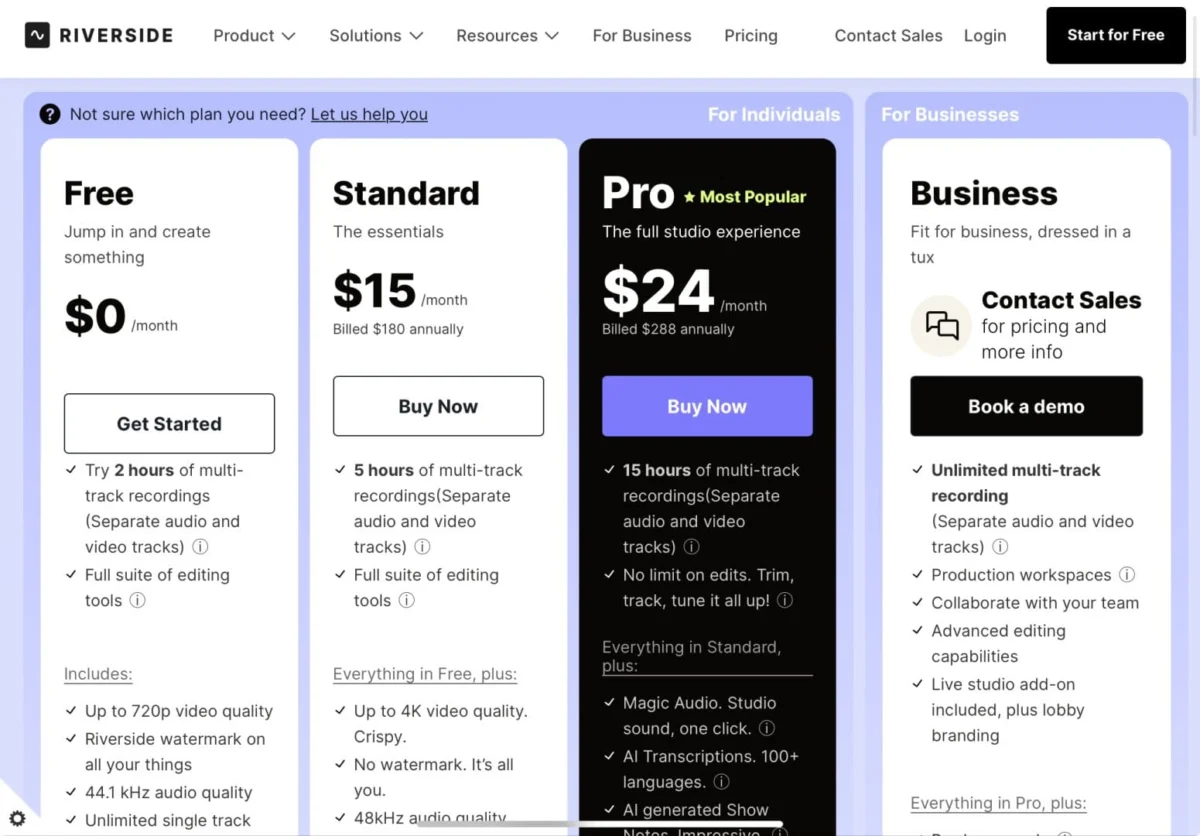
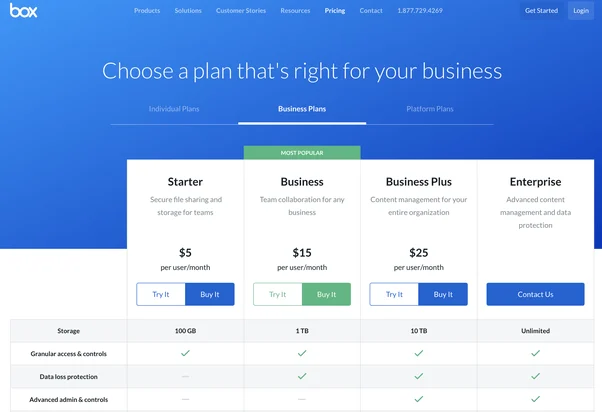
Before setting your price tag, conduct an exhaustive competitive audit. Identify three to five direct or adjacent SaaS applications that your target demographic is already paying for. Note their tier structures, entry-level price points, and packaging strategies. Position your product within that established band.
2. Prioritize Frictionless Adoption Over Margin Optimization
Do not attempt to capture maximum economic value on day one. Your early pricing should be designed to encourage adoption, usage, and rapid feedback loops. If a comparable tool costs $49 per month, pricing yours at $49 removes friction, even if your internal calculations suggest you could theoretically support a $99 price point once fully scaled.
3. Defer Pricing Innovation
True pricing innovation—such as pioneering a novel usage metric or creating an entirely new monetization category—requires immense brand equity, market awareness, and deeply entrenched product-market fit. Save pricing experiments for Series A and beyond. In the seed and pre-seed stages, standardisation is your best friend.
4. Treat Pricing as a Dynamic Instrument
Remember that early-stage pricing is not permanent. Once you achieve true product-market fit—demonstrated by organic inbound demand, low churn, and enthusiastic customer advocacy—you will have ample opportunity to optimize, introduce premium tiers, and raise your prices to reflect your true enterprise value.
Until then, keep it simple. Look at the market, respect the comparables, and let your software do the talking.