Main Facts
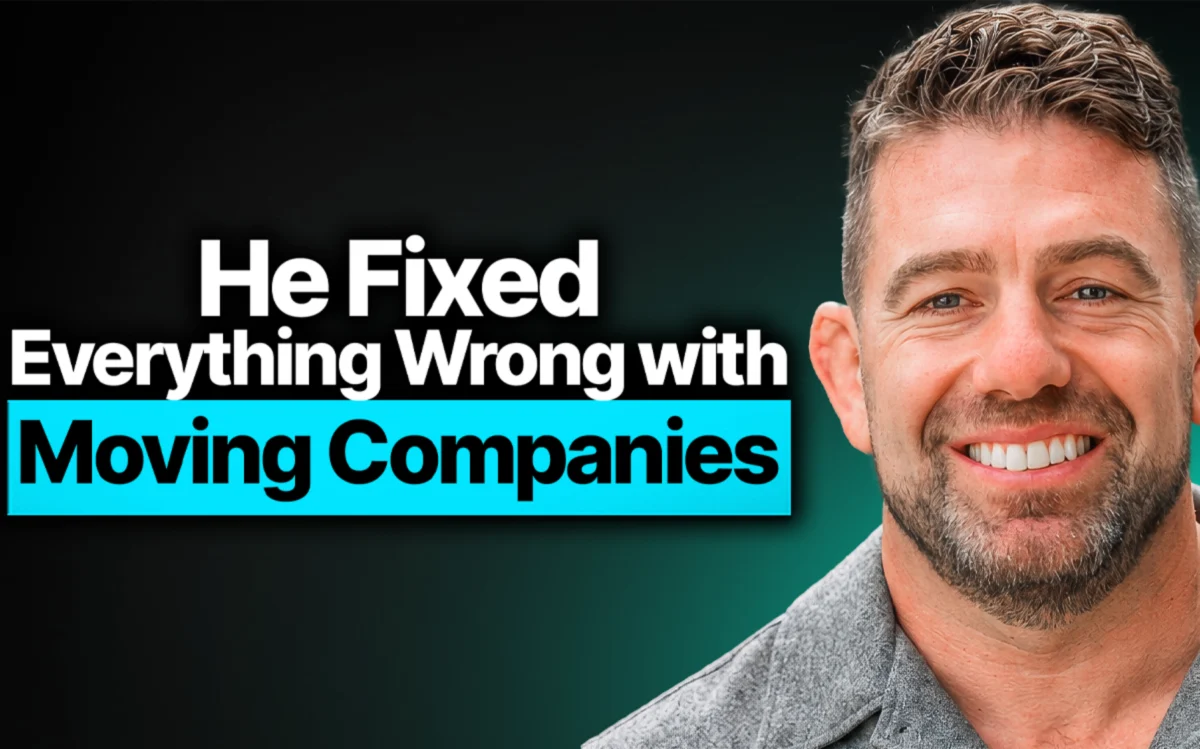
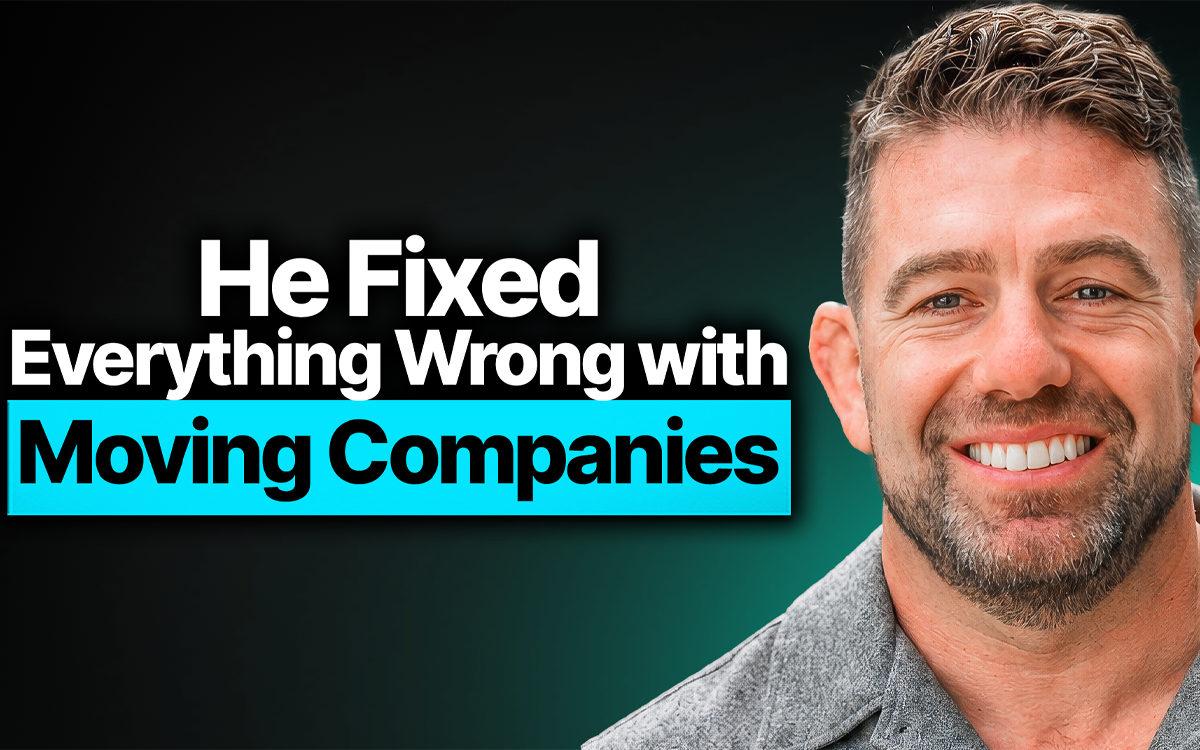
Meathead Movers stands today as an eight-figure powerhouse in the domestic relocation industry, boasting nine strategic operating locations and two multi-unit mini-storage facilities across California. Founded nearly 29 years ago by a 17-year-old high school wrestler named Aaron Steed, the company has broken the traditional mold of the moving and storage sector by replacing transient, unreliable labor with a disciplined, athletic workforce.
Operating out of San Luis Obispo, California—a vibrant community of roughly 50,000 residents complemented by 30,000 Cal Poly students—Aaron transformed a simple lawn-and-labor side hustle into a sophisticated regional enterprise. The enterprise now features a specialized 400-point training program, a unique profit-sharing and branch-ownership model for general managers, and an unwavering commitment to corporate social responsibility, notably providing free moves for victims of domestic violence.
Despite facing catastrophic regulatory setbacks, disconnected communication lines, abandoned marketing contracts, and aggressive regional competitors, Aaron Steed has steered Meathead Movers through nearly three decades of measured, calculated growth. The company’s trajectory is a testament to the power of operational accountability, relentless execution, and a brand identity built on speed, trust, and physical endurance.
Chronology: The Evolution of Meathead Movers
Phase I: The Genesis in San Luis Obispo (Late 1990s)
Aaron Steed was a dedicated high school wrestler in San Luis Obispo, juggling rigorous training sessions, academic commitments, and the need for flexible income. Recognizing an opportunity to assist neighbors and friends’ parents with odd jobs around the house, Aaron began offering basic moving assistance.
Within the first ten jobs, a clear pattern emerged: customers repeatedly praised his meticulous care while venting frustrations regarding established moving companies. Common grievances included movers failing to show up on moving day, damaged property, predatory price-gouging after trucks were already loaded, and an utter lack of accountability when things went wrong.
Capitalizing on his athletic network—recruiting fellow high school wrestlers and football players who understood teamwork, discipline, and grueling physical labor—Aaron established a labor-only model. Because he was only 17 and lacked initial capital, customers rented their own trucks while Aaron and his crew provided the muscle. The name "Meathead Movers" was born organically, originating from the girls’ volleyball team who playfully dubbed Aaron and his wrestling friends "meatheads" for leaving the weight room drenched in sweat before freestyle practice.
Phase II: The Regulatory Crisis and the Phone Disconnection (2000)
As the company gained traction, established local competitors took notice. Traditional moving operators challenged Meathead Movers’ legal standing, arguing that the business operated without a professional moving license. Regulators ultimately sided against Aaron’s labor-only framework.
In the summer of 2000, disaster struck: Meathead Movers’ phone lines were abruptly disconnected. In a pre-internet local service economy where yellow pages and direct phone directories were the ultimate lifelines, a disconnected line meant sudden commercial paralysis. For Aaron, this existential threat served as a watershed moment. He chose to forgo his college wrestling career to focus entirely on saving the enterprise.
With his phone number silenced, Aaron approached New Times, a local weekly publication, to secure alternative advertising, warning them that regulatory pressure might force him to cycle through multiple business names and phone numbers. Over the next several months, Aaron operated under various iterations while aggressively stashing away $25,000. Once the funds were secured, he cleared all licensing hurdles, established formal accounting systems, secured comprehensive insurance, and purchased the company’s first professional permits, allowing Meathead Movers to finally rent and operate its own fleet of trucks.
Phase III: Fleet Financing and the Death of Competitors
Approximately one year after acquiring proper licensing, Meathead Movers was bleeding $8,000 to $9,000 monthly on commercial truck rentals. Recognizing an immense financial drain, Aaron calculated that financing an independent fleet would immediately save the company $2,000 per month.
Despite having limited commercial credit and no co-signer, Aaron successfully pitched Mid-State Bank & Trust, securing the financing needed to purchase a brand-new fleet of five trucks. This infrastructure investment allowed Meathead Movers to compete toe-to-toe with legacy operators. Within a few short years, several of the very legacy competitors that had previously attempted to litigate Meathead Movers out of existence went bankrupt.
Phase IV: Geographic Expansion and the Camarillo Trial by Fire (2005–2007)
True to his philosophy of cautious, sustainable scaling, Aaron waited until 2005 to open his first satellite office in Santa Maria, just 30 miles away from San Luis Obispo. This proximity allowed the primary headquarters to easily absorb and resolve any logistical hiccups.
In 2007, Aaron initiated a much bolder expansion into Camarillo, a move intended to capture Ventura County and northern Los Angeles County. However, disaster struck again just a month before launch: AT&T Yellow Pages reneged on a negotiated, full-page advertising agreement, leaving Meathead Movers without its primary anticipated customer acquisition channel in a brand-new, highly competitive market.
Undeterred, Aaron committed tens of thousands of dollars—funds originally earmarked for print advertising—directly into digital marketing and website development. He personally relocated to Ventura County for a year, orchestrating an aggressive local guerrilla marketing campaign that involved leafleting neighborhoods and promoting the brand directly on the streets. Despite facing immense hostility—including having Slurpees thrown at staff members during promotional pushes—the relentless ground campaign, coupled with a pivot to digital SEO and paid search, firmly established Meathead Movers in the region.
Supporting Data and Operational Metrics
Meathead Movers’ meteoric rise to an eight-figure valuation is underpinned by strict performance metrics, proprietary training frameworks, and an obsessive focus on customer conversion:
- The Speed-to-Lead Advantage: According to company data from 2026, Meathead Movers closes approximately 50% of all prospective clients they successfully reach immediately. Conversely, the close rate for missed leads drops into the low 20% range—a staggering 30-percentage-point performance gap.
- The "Double Tap" Protocol: To bridge this conversion gap, the sales team implemented an immediate text-follow-up protocol alongside initial phone calls. Because modern consumers frequently screen unrecognized numbers, a swift text message identifying Meathead Movers dramatically increases answer rates on subsequent follow-up calls.
- Operational Velocity: Meathead Movers’ athletic crews are trained to jog whenever they are not carrying heavy or fragile items. A residential move that routinely takes traditional movers five to seven hours is routinely completed by Meathead crews in three to four hours, directly lowering hourly labor costs for the consumer.
- Financial Scaling Targets: The company currently manages nine physical moving locations and two mini-storage facilities, with aggressive plans to scale by opening two new offices annually across the West Coast.
Official Responses and Corporate Philosophy
Aaron Steed’s leadership philosophy rejects rapid, reckless growth in favor of organic, highly controlled expansion. Reflecting on the tumultuous early years, Steed emphasizes that endurance outlasts temporary market turbulence:
"We have never been interested in growing just for the sake of headlines or venture capital milestones. Sustainable entrepreneurship is about protecting your reputation, standing by your customers when things go wrong, and refusing to place employees in roles they are not yet equipped to handle."
Central to the company’s corporate identity is its foundational commitment to philanthropy. Since its earliest days, Meathead Movers has maintained an unbroken policy of providing free relocation services to victims fleeing domestic abuse. By partnering directly with local women’s shelters to verify safety protocols, the company ensures that its athletic workforce understands a deeper, socially impactful mission beyond commercial logistics.
Furthermore, the brand’s innovative internal culture is designed to foster long-term loyalty. Branch general managers participate in early-stage profit-sharing programs, culminating in opportunities to purchase up to a 40% equity stake in their respective branches. This ownership model dismantles traditional corporate hierarchies, giving working-class employees a direct pathway to wealth generation and executive ownership.
Implications for the Modern Service Industry
The trajectory of Meathead Movers offers critical strategic lessons for the modern home-services and logistics sectors:
- The Death of Traditional Print and the Rise of Agility: The catastrophic failure of the AT&T Yellow Pages contract in 2007 forced Meathead Movers to pivot early into digital marketing, search engine optimization (SEO), and targeted landing pages. Brands that fail to diversify away from legacy gatekeepers face existential threats when traditional directories collapse.
- Hyper-Responsiveness as a Revenue Engine: In an era of instant gratification, lead decay is rapid. Meathead Movers’ data proves that immediate multi-channel outreach (the "double tap" phone-and-text methodology) is the single most effective lever for closing high-value service contracts.
- Niche Branding and Accountability Over Commodities: By leaning into an unconventional name ("Meathead Movers") and backing it up with bulletproof guarantees—such as partial worker refunds and comprehensive item valuations—the company successfully commoditized a historically untrusted industry. Trust, speed, and accountability remain the ultimate competitive moats in local services.