
In the fast-paced ecosystem of modern technology, product teams frequently fixate on how a digital product is built, often at the profound expense of understanding why it is being created in the first place. For digital accessibility practitioners, this oversight highlights a critical industry blind spot: the failure to deliver equivalent experiences.
An equivalent experience is not merely a technical checklist item or a baseline accommodation. It is a deliberately conceived, thoughtfully executed digital interaction built from the ground up to be seamlessly used by the widest possible range of people, regardless of their physical abilities, cognitive styles, or the devices they use.
Main Facts: The Core of Equivalent Experiences
At its core, delivering an equivalent experience means preserving the fundamental intent of a website, application, or digital service. Intent represents the motivating force behind why a web app was built and what its content and features are meant to achieve.
However, despite living in a multi-device world brimming with smartphones, augmented reality, voice assistants, and IoT sensors, the default paradigm in software development remains deeply entrenched in unexamined biases. Default workflows routinely assume standard desktop or laptop viewports, perfect physical dexterity, and unimpaired vision.
When developers and designers fail to account for alternative interactions, they impose invisible taxes on their users. As accessibility expert Eric Bailey notes, true equivalency means making the meaning behind every interaction, visual component, line of code, and illustration completely understandable and actionable for every user.
Chronology: The Evolution of Digital Inaccessibility and Legal Reckoning
The struggle for digital equality has evolved from grassroots advocacy into a high-stakes legal reality over the past several decades.
- 1984: Early pioneers like Kenny Hitt begin navigating computers using screen readers, laying the groundwork for personal experiences with assistive technology.
- 1990: The Americans with Disabilities Act (ADA) is signed into law, providing a foundational civil rights framework that would eventually extend into the digital realm.
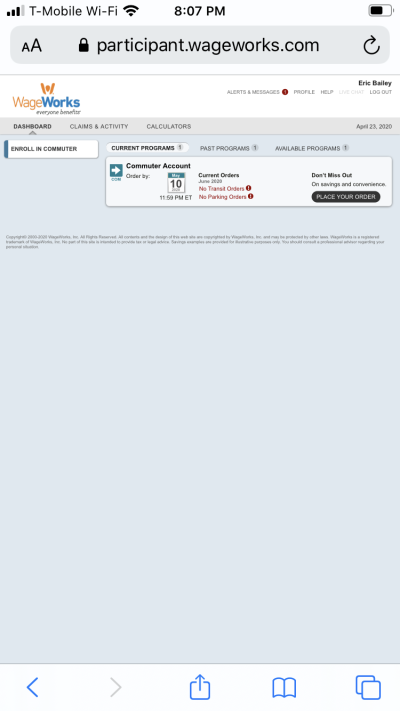
- June 2017: In a landmark legal battle (Winn-Dixie), a federal court rules that a private company’s inaccessible website violates the ADA because it is heavily integrated with its physical storefronts. This sets the stage for future digital compliance expectations.
- September 2019: The U.S. Supreme Court denies Domino’s Pizza’s petition to appeal, firmly establishing legal precedent that preventing visually impaired users from accessing a commercial website or app via screen readers is a violation of civil rights.
- 2016–2019: The Click Away Pound Surveys highlight billions of pounds in lost retail revenue due to basic e-commerce accessibility barriers.
- April 2018: The American Institutes for Research publishes The Purchasing Power of Working-Age Adults With Disabilities, revealing nearly half a trillion dollars in disposable income within the disabled consumer market.
Supporting Data: The High Cost of Inaccessibility
To truly understand why digital exclusivity persists, one must examine how poorly designed interfaces alienate users. Real-world accounts and large-scale economic data paint a striking picture.
The Friction of Non-Responsive Design
Consider standard corporate or municipal web applications that lack responsive mobile breakpoints. Users attempting to access these tools on smartphones are forced to constantly pinch, pan, and zoom. The burden is unfairly shifted onto the user—whose only "crime" is using a mobile device instead of a desktop computer.
Designers frequently fall into the trap of subjective evaluation. A designer remarking, "It has enough contrast for me and my older eyes," is committing the digital equivalent of a developer saying, "It works on my machine."

Screen Zooming and Cognitive Load
Native mobile apps and websites that explicitly disallow screen zooming send a chilling message to prospective users: Unless your vision matches mine, you are not welcome here. This exclusionary design intersects dangerously with cognitive accessibility. Poor user interface choices that dump excessive cognitive load onto users can lead to catastrophic failures—such as military navigation systems with poorly designed touchscreens implicated in fatal operational accidents.
Real User Testimonies
- Brian Moore, a consumer who relies on accessible workflows, notes that he routinely abandons companies—such as audio equipment retailer Fluance—because their checkout flows are fundamentally broken for his needs, and his support inquiries are met with corporate silence.
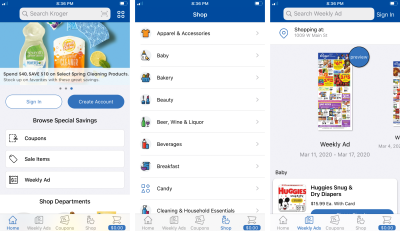
- Soren Hamby, a product marketing manager with fluctuating vision needs, points out the frustration of grocery delivery apps whose carts read out quantities rather than item names, stripping away personal autonomy and forcing reliance on sighted assistance for private tasks like purchasing food.
- Kenny Hitt, a long-time screen reader user, highlights how auto-updating web ads completely break assistive technology compatibility, forcing users to adopt ad-blockers as a form of consumer self-defense against unregulated, seizure- or migraine-triggering animations.
Official Responses and Industry Pushback
How companies respond to accessibility feedback often dictates whether an inclusive community can be built. Unfortunately, the current corporate landscape is plagued by systemic dismissal.
When users report critical accessibility bugs, they are frequently met with stonewalling. Common corporate refrains like "Nobody has complained before" ignore a fundamental reality: users rarely complain twice; they simply leave.

Kenny Hitt points out that when reporting issues to corporate representatives or marketing teams who lack accessibility literacy, the standard response is indifference. Similarly, Brian Moore highlights that while he attempts to provide deep technical details when bugs are found, getting reports routed to the appropriate engineering teams is notoriously difficult.
Industry experts emphasize that a proactive response to accessibility requires treating bug reports with the same urgency as critical security flaws. Designating a generic email inbox or assigning a human proxy to handle tasks on behalf of an assistive technology user is not a sustainable solution—it strips away user autonomy and perpetuates inequality.
Implications: The Multi-Billion-Dollar Incentive
While civil rights compliance and moral obligation should be primary drivers, the economic implications of ignoring digital accessibility are staggering.
- The Click Away Pound Survey demonstrated that over 4 million shoppers abandon retail websites due to accessibility barriers, representing roughly £17.1 billion ($21.1 billion USD) in lost annual revenue.
- The American Institutes for Research identified an estimated $490 billion in disposable income among working-age adults with disabilities.
When digital interfaces are built without equivalency in mind, companies are actively turning away a massive, economically powerful consumer base. Furthermore, with legal precedents established by the ADA and international regulations in Europe and Asia, the cost of defending a civil rights lawsuit vastly outweighs the engineering effort required to build accessible, responsive, and robust digital products from day one.
Conclusion: Shifting the Paradigm
Accessibility is not a puzzle to be solved or a box to be checked off before a product launch; it is an overarching philosophy of empathy and design excellence. Achieving true equivalent experiences requires technology professionals to aggressively question their own biases, listen to lived experiences, and design for the broadest possible spectrum of humanity.
As digital landscapes continue to expand, ensuring that every user enjoys an equivalent, autonomous, and dignified experience is not just good ethics—it is the ultimate benchmark of professional craftsmanship.