The WordPress ecosystem is often viewed through the lens of code, market share, plugin architecture, and enterprise hosting. However, beneath the hood of this global content management system lies a sprawling, highly engaged human network that drives the platform forward.
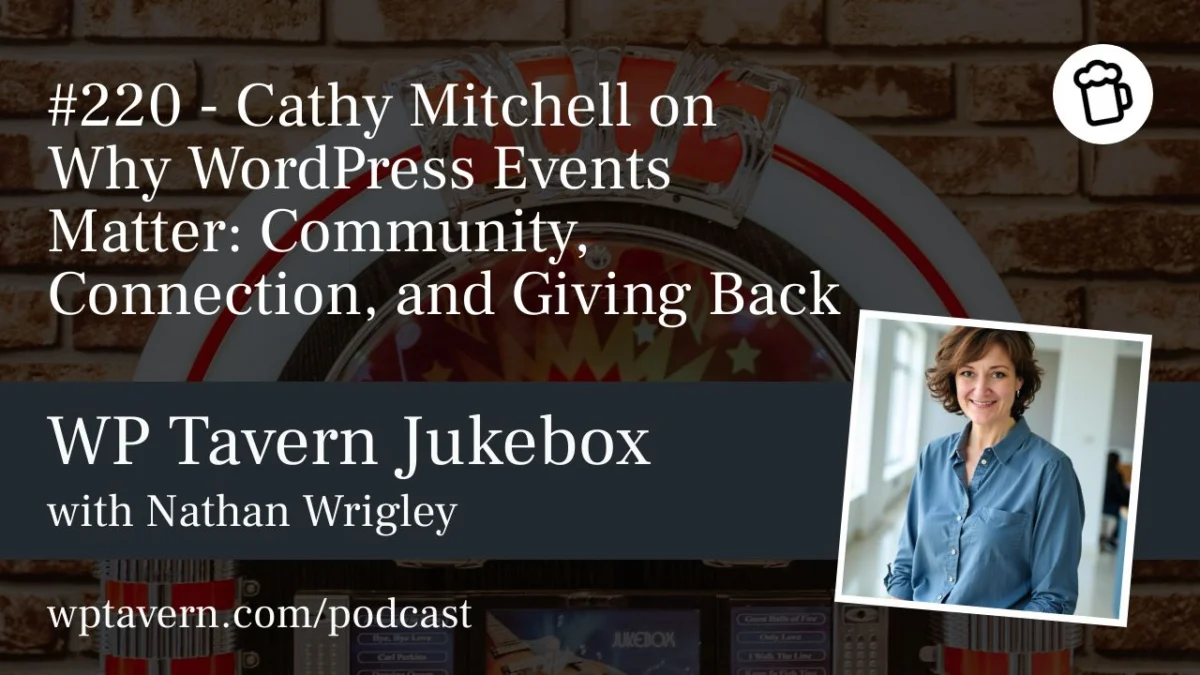
On a recent episode of the Jukebox Podcast from WP Tavern, host Nathan Wrigley sat down with Cathy Mitchell, a veteran WordPress entrepreneur, community advocate, and lead organizer for the upcoming 2026 WordCamp Canada. Their conversation peeled back the layers of technology to explore the profound social impact of open-source communities, the shifting dynamics of corporate sponsorship, the modern epidemic of loneliness, and the vital importance of onboarding the next generation of contributors.
Main Facts: The Evolution of WPBarista and Community Leadership
Cathy Mitchell’s journey with WordPress began nearly two decades ago during a life transition that many entrepreneurs will find familiar.
- Humble Beginnings: Mitchell first encountered WordPress in 2007 as a personal hobby while on maternity leave. What started as casual experimentation quickly transformed into a profession. By 2008, she was fielding client work and launched WPBarista, her dedicated WordPress development and consultation business.
- From Forums to Leadership: Initially learning her craft by reading code and asking fundamental questions in the WordPress support forums alongside some of the platform’s early luminaries, Mitchell spent years operating primarily through a business lens. However, her relationship with the community changed dramatically when she was invited to help organize a local event through the Canadian WordPress Slack channels.
- Scaling Up: Her organizational aptitude quickly surfaced. After assisting with regional events in 2025, Mitchell accepted the mantle of lead organizer for WordCamp Canada 2026, positioning her at the vanguard of the region’s premier open-source gathering.
Chronology: Navigating the Open-Source Ecosystem
The trajectory of Mitchell’s involvement highlights a common pathway for many long-term contributors: moving from passive software consumption to active community stewardship.
Phase 1: The Learning Curve (2007–2009)
As a self-described "absolute noob" with limited knowledge of HTML, PHP, or core web infrastructure, Mitchell relied heavily on community-driven support forums. Early WordPress developers answered her foundational questions without gatekeeping, establishing an early precedent of radical helpfulness.
Phase 2: The Business-First Era (2010s)
For over a decade, Mitchell focused heavily on growing WPBarista while raising a family. Operating under a traditional Return on Investment (ROI) mindset, she viewed time strictly through a financial lens, prioritizing client work over peripheral community involvement during years defined by family commitments and single motherhood.
Phase 3: The Empty Nest and Community Re-engagement (Present)
As her children grew and entered adulthood—a life stage commonly referred to as "empty nesting"—Mitchell sought meaningful avenues to invest her free time. Seeking an antidote to modern isolation, she discovered that the WordPress community offered a unique lack of corporate red tape, immediately welcoming her organizational skills and entrusting her with significant leadership responsibilities.
Supporting Data: The Antidote to the Loneliness Epidemic
A major theme of the discussion centered on the intersection of modern technology, social isolation, and volunteerism. Both Wrigley and Mitchell touched on the paradox of hyper-connectivity leading to unprecedented levels of societal loneliness.
- Surgeon General Findings: Highlighting broader societal trends, Mitchell referenced health data popularized by public health authorities, noting that isolation carries health impacts comparable to smoking 15 cigarettes a day.
- Demographic Vulnerability: Recent studies indicate that younger demographics—particularly individuals aged 18 to 24—report staggering rates of chronic loneliness, heavily correlating with the rise of screen-first environments and social media consumption.
- Service as a Remedy: Drawing from both secular volunteerism and personal community service, Mitchell argued that collaborative, goal-oriented environments like WordCamps provide vital social cohesion. Working alongside peers toward a shared objective supplies the camaraderie and human contact that digital-only consumption lacks.
Perspectives on Corporate Sponsorship and Economic Realities
As WordPress has matured from a scrappy blogging tool into an enterprise-grade ecosystem powering over 40% of the top ten million websites, the financial dynamics supporting the project have shifted.
The Changing Sponsorship Landscape
During the stratospheric growth periods of the 2010s, corporate sponsorships for WordCamps flowed easily. Agencies and product companies viewed contributions as a natural byproduct of a rising economic tide. However, recent economic uncertainties, increased market competition, and rising corporate scrutiny have tightened marketing wallets.
Re-evaluating the Value Proposition
For modern business owners, sponsoring open-source events requires a more calculated approach. Mitchell noted that companies are increasingly looking for tangible value—such as simplified recruitment pipelines, brand trust, and community health.
- Hiring and Vetting: Contributing to open-source ecosystems creates an organic talent pool. Companies that actively sponsor and participate in community events find it significantly easier to source, vet, and hire qualified developers who align with open-source values.
- The Health of the Commons: As Mitchell observed, corporate sponsors are beginning to recognize a fundamental truth: the healthier the broader WordPress community is, the healthier individual businesses will be. When open-source infrastructure thrives, the commercial entities built upon it secure their own long-term viability.
Implications: Engaging the Next Generation
Looking toward the future, both Wrigley and Mitchell emphasized that the sustainability of open source depends heavily on cultivating new blood. The open-source ethos cannot rely solely on the generation that built it; it must systematically pass the torch.
Bridging Education and Open Source
Initiatives such as Campus Connect and university credit programs are paving the way for institutional adoption of open-source contributions. By integrating WordPress and open-source contribution into higher education, institutions can offer students real-world development experience while fulfilling graduation requirements.
Vancouver 2025 and Beyond
Mitchell aims to harness these educational pathways at the upcoming WordCamp Canada event in Vancouver, bridging the gap between academic institutions and open-source contributors. Introducing students to a community defined by openness, lack of arbitrary hierarchy, and collaborative problem-solving provides an invaluable alternative to isolated digital spaces.
Conclusion: The Secret Sauce of WordPress
Despite economic headwinds, industry maturation, and internal debates, the fundamental human element of WordPress remains its most powerful asset. As Mitchell reflected during the podcast, the culture fostered at WordCamps—where defaults lean toward "yes," mentorship is freely given, and strangers quickly become collaborators—remains remarkably unique in the software world.
For those interested in exploring the human side of WordPress, engaging with local meetups, or attending upcoming events, full show notes and episode links can be found by visiting the WP Tavern Podcast archive.