In the high-stakes theater of artificial intelligence, where multi-billion-dollar valuations are often announced with the fanfare of a product launch, a curious trend has emerged among the industry’s most sophisticated players. The sector of "world models"—AI systems designed to perceive, navigate, and interact with the physical and digital space—has become a domain defined not by disclosure, but by profound, strategic silence.
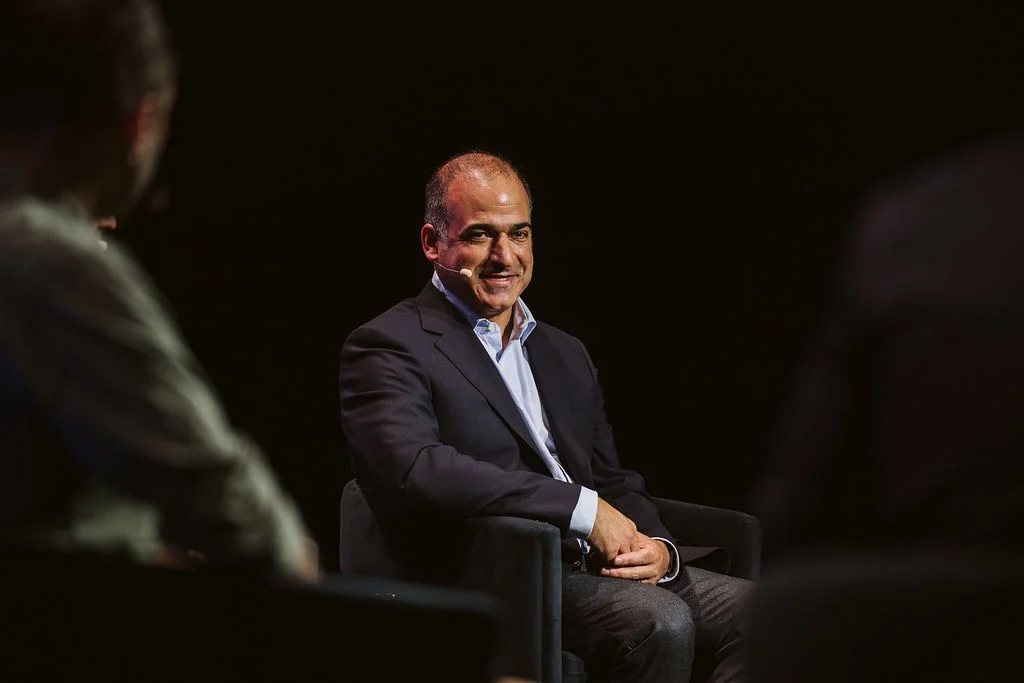
This week, moderating a panel on world models at the All In conference, it became clear that while researchers are building the infrastructure for the next generation of robotics, spatial computing, and autonomous systems, they are simultaneously engaged in a game of competitive hide-and-seek. From Yann LeCun’s AMI Labs to Fei-Fei Li’s World Labs, the industry’s brightest minds are operating in what can only be described as a "dark forest."
The Ambition: Beyond Language and Into Reality
At their core, world models represent the next frontier of artificial intelligence. If Large Language Models (LLMs) are the masters of human syntax and logic, world models aim to master the laws of physics, spatial relationships, and environmental causality.
The potential applications for this technology are staggering. They range from highly sophisticated robotics capable of navigating unstructured human environments to the creation of immersive, generative 3D environments that could revolutionize video games, film, and virtual reality. They are the essential missing piece for advanced self-driving systems that must anticipate, rather than just react to, the world around them.
However, despite the massive influx of venture capital, these companies currently rank quite low on the industry’s "commercial viability" scale. They are research-heavy, capital-intensive, and, to the casual observer, seemingly aimless in their path to revenue.
A Chronology of Concealment
The reticence within the world-modeling space is not accidental; it is a tactical choice. To understand the current climate, one must look at the trajectory of the labs leading the charge:
- Late 2025 – Early 2026: A wave of high-profile funding rounds hits the AI sector. World Labs, founded by computer vision pioneer Fei-Fei Li, begins to generate significant buzz for its "spatial intelligence" initiatives. AMI Labs, led by Yann LeCun’s team, follows suit.
- Mid-2026: Early demonstrations appear. World Labs’ "Marble" platform gains traction for its ability to generate explorable, interactive environments, showcasing CGI and gaming potential. AMI Labs begins exploring diverse, disparate verticals, including manufacturing, biomedicine, and medical AI partnerships like "Nabia."
- September 2026: During the All In conference, the industry’s "secrecy wall" is put to the test. When probed on specific commercialization roadmaps, executives from major labs retreat behind a consistent refrain: "We’ll talk when we’re ready."
This pattern of behavior suggests a collective realization among founders: in the current AI landscape, being first to market with a defined product is often a liability rather than an asset.
The Silence from the Supply Chain
The culture of mystery has bled into the periphery of the AI ecosystem, affecting the suppliers who provide the training data necessary to build these models.
Alex de Vigan, CEO of Physicl, a company specializing in data procurement for the AI industry, finds himself in a position common to many vendors in the space. While Physicl provides the raw information that powers the development of these complex models, they are often kept in the dark regarding the final objective.
"I wish they would tell us more," de Vigan noted on the sidelines of the All In conference. "We could build more useful, targeted data if we knew exactly what they were working on."
This creates a paradoxical bottleneck: the developers of the world’s most advanced AI are so afraid of their competitors gaining insight into their strategy that they are willing to accept less efficient data from their suppliers to maintain operational security.
The Versatility Trap: Why Focus is a Liability
Why, exactly, are these companies so cagey? The answer lies in the sheer, overwhelming versatility of the technology.
A world model capable of understanding the physical world can be applied to nearly any industry that interacts with reality. AMI Labs has already flirted with:
- Robotics: Developing humanoids that can manipulate physical objects.
- Biomedicine: Using spatial intelligence to map protein folding or cellular structures.
- Healthcare Software: Through the Nabia partnership, assisting doctors with diagnostic spatial imaging.
If a company were to pivot exclusively to, say, humanoid robotics, they would immediately invite a massive wave of competition. Every other AI lab, along with giants like OpenAI and Anthropic, would pivot their resources to challenge that position.
In the current fundraising environment, where capital is relatively easy to come by, these labs are incentivized to keep their cards close to their chest. By maintaining a broad, nebulous portfolio, they avoid being categorized. They remain "generalists" in the eyes of their rivals, effectively delaying the moment when a competitor can mount a targeted offensive.
The Dark Forest Hypothesis
For fans of science fiction, this dynamic is a textbook example of the "Dark Forest" theory popularized by Cixin Liu in his Three-Body Problem trilogy. In this scenario, the universe is a dark forest where every civilization is a hunter. If you reveal your position, you are inevitably destroyed by others who see you as a threat.
In the AI sector, the "forest" is the market, and the "hunters" are the well-funded, hyper-competitive labs. By not declaring their ultimate product goals, these labs are effectively staying "quiet" in the dark.
The strategy is simple:
- Avoid the Target: By not defining a specific product, you avoid direct comparison with rivals.
- Conserve Resources: You avoid the need to defend a market share you haven’t yet secured.
- Maximize Flexibility: You keep your options open to pivot should a more lucrative or technologically feasible path emerge.
Implications for the Future
The current state of affairs poses a significant challenge for investors and industry analysts. We are witnessing the maturation of a technology that could change everything from how we commute to how we perform surgery, yet we have no clear view of the roadmap.
There is a looming risk to this strategy, however. While silence keeps competitors at bay, it also slows the feedback loop with the real world. Technology matures fastest when it is subjected to the rigors of user testing and commercial pressure. By staying in a perpetual "research and building phase," these labs risk building elegant, powerful solutions that ultimately fail to solve real-world problems because they were developed in a vacuum.
Furthermore, as the funding climate inevitably cools—as it always does—the luxury of "not having to make money" will evaporate. The labs that have spent their time building in the shadows may find themselves ill-prepared for the transition to a sales-driven, product-focused entity.
For now, the world-modeling space remains a fascinating, if frustrating, mystery. The titans of AI are playing a long game, betting that the ability to keep their intentions hidden is more valuable than the advantage of being a visible market leader. They are building the foundations of a new reality, but for the moment, they are content to keep that reality tucked safely behind a curtain of silence.
Russell Brandom has been covering the tech industry since 2012, with a focus on platform policy and emerging technologies. He previously worked at The Verge and Rest of World, and has written for Wired, The Awl, and MIT’s Technology Review. He can be reached at [email protected].