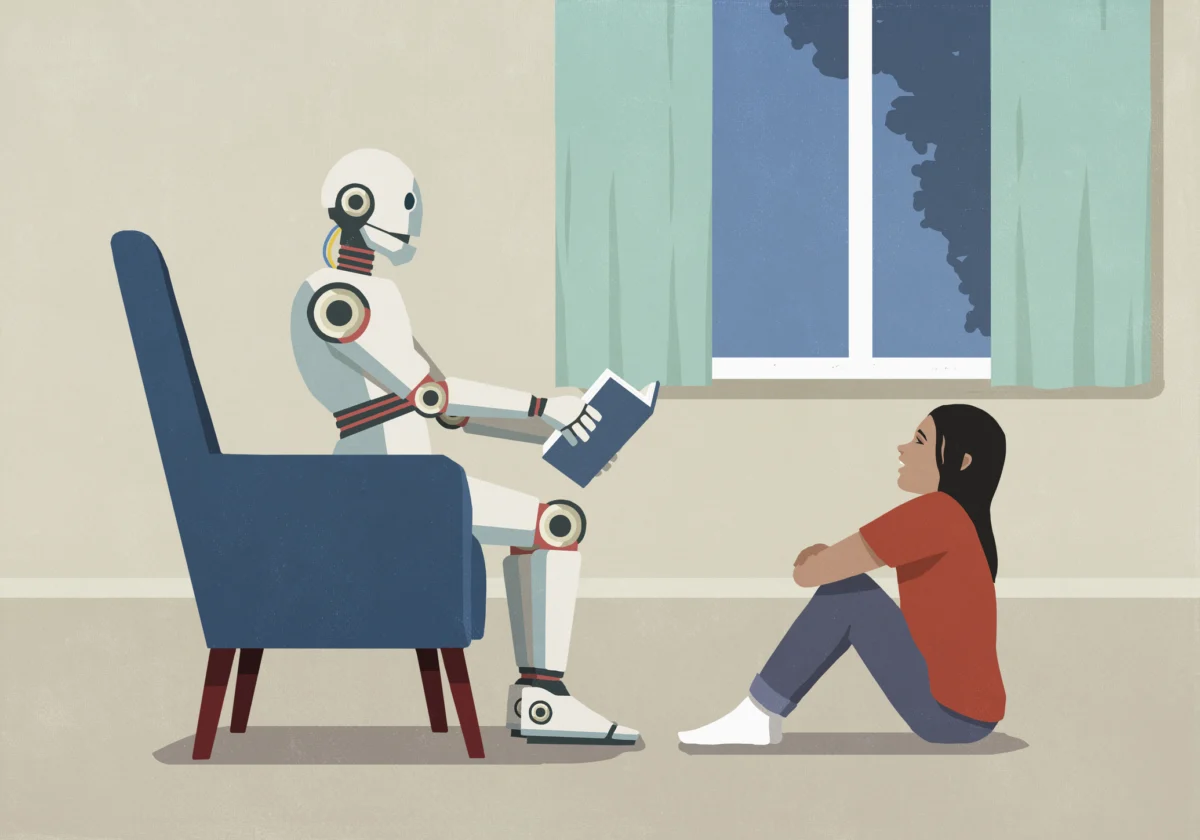
In an era where artificial intelligence is rapidly infiltrating the most intimate corners of human experience, Meta has unveiled its latest venture into the domestic sphere: StoryKit. The new application, currently being piloted in select international markets, promises to revolutionize the nightly ritual of bedtime stories by automating the creative process. With a tagline that boldly declares, “You don’t need to write a single word,” Meta is positioning itself as the ultimate ghostwriter for parents, offering a seamless, generative solution to the age-old challenge of keeping children entertained.
While the app—which allows users to create personalized narratives featuring custom characters, settings, and moral lessons—is framed as a convenience tool for busy families, it has sparked a broader debate about the erosion of human creativity and the consequences of outsourcing the formative moments of childhood to large language models (LLMs).
The Genesis of StoryKit: A Technological Pivot
StoryKit was first identified by tech observers at 9-to-5 Mac lurking within the App Store, marking another entry in Meta’s aggressive push into generative AI consumer products. Unlike previous, more controversial ventures from the social media giant—such as AI-powered deepfake filters or wearable hardware that sparked privacy outcries—StoryKit is presented as a closed, safe environment.
The app’s interface is designed for simplicity. Parents start by creating a "character," a process that invites users to photograph a physical object—a stuffed animal or a favorite toy—to digitize it as the protagonist of the story. Once the character is established, the parent selects a narrative environment and an underlying "lesson" or value to be woven into the plot, such as empathy, courage, or kindness. The app then generates a complete story, accompanied by music and visuals, designed to be read aloud or displayed to the child.
Meta has emphasized that the app is strictly restricted to users aged 18 and older. Furthermore, the company has implemented rigorous AI safety filters to ensure that the generated content adheres to brand-safe guidelines, explicitly removing any social or interactive features that might expose children to online risks.
Chronology of Development and Public Reception
The development of StoryKit follows a turbulent period for Meta’s AI division. Throughout 2026, the company has experimented with various AI integrations across its platforms, including Instagram and Facebook.
- Early 2026: Meta shifts internal resources toward vertical-specific AI applications, moving away from broad, experimental tools toward "utility" apps like StoryKit.
- July 2026: Initial sightings of the StoryKit App Store listing by tech analysts trigger immediate conversation about the boundaries of AI in parenting.
- Late July 2026: Meta confirms to major tech publications that the app is currently in a pilot phase, intended to gauge user interest and test the efficacy of its "value-based" storytelling algorithms.
Despite the relative "safety" of the app compared to other Meta products, the reception has been lukewarm among cultural critics. The technology arrives in a landscape already saturated with AI-generated content, leading many to question whether a tool that removes the friction of creativity is actually a benefit to the family dynamic.
The Data and the Mechanics: How the "Magic" Works
At its core, StoryKit relies on a sophisticated LLM backend that calculates the most statistically probable sequence of events based on the user’s inputs. When a parent selects "kindness" as a lesson and a "space station" as a setting, the model pulls from a vast database of existing children’s literature, archetypal patterns, and moral fables to synthesize a response.
Proponents of the technology argue that this is a democratization of storytelling. For parents who are not naturally inclined toward improvisation, or those who are physically and mentally exhausted by the demands of modern work-life balance, StoryKit provides an immediate, high-quality output. It bridges the gap between a parent’s intent—to teach a child a specific lesson—and the act of storytelling, which can be daunting for the unpracticed.
However, data scientists note that the "predictability" of these stories is exactly what renders them sterile. AI models are trained on the "average" of human output. They excel at replicating the structure of a fable but often struggle with the non-linear, chaotic, and deeply personal whimsy that characterizes human-led storytelling. By definition, StoryKit creates a standardized version of morality and adventure, stripping away the idiosyncratic nuances that often make a parent’s original story memorable.

Official Responses and Corporate Strategy
Meta has defended the app as a creative tool rather than a replacement for human interaction. In a statement provided to TechCrunch, a Meta spokesperson noted:
"StoryKit is designed to assist parents in crafting personalized, imaginative storybooks. We recognize that storytelling is a fundamental part of the parent-child bond, and our goal is to provide a creative platform that makes it easier to share values like kindness and empathy, without the stress of needing to be a professional writer."
The company maintains that the lack of social features is a key design choice, intended to keep the experience focused on the home environment. By keeping the app "offline" in terms of social interaction, Meta hopes to avoid the regulatory scrutiny that has plagued its other platforms, particularly concerning child safety and data harvesting.
Implications: The Erosion of the Human Imagination
The broader implications of StoryKit extend far beyond the app itself, raising existential questions about the role of technology in the development of children.
1. The Outsourcing of Whimsy
The act of telling a bedtime story is not merely about the delivery of a moral lesson; it is an act of co-creation. When a child asks for a story about a turtle in space, they are participating in a collaborative dialogue. They interrupt, they ask questions, and they influence the direction of the narrative. StoryKit, by contrast, is a unidirectional broadcast. It treats the story as a finished product rather than a process. By outsourcing this to an algorithm, we risk turning a moment of human connection into a moment of content consumption.
2. The Standardization of Values
When we rely on AI to teach our children "values," we are effectively delegating our moral authority to the corporate entities that train the models. While the lessons of "courage" or "empathy" might seem universal, the way they are framed and executed by an AI reflects the biases and limitations of the training data. There is a danger in creating a generation of children raised on stories that have been scrubbed of edge, conflict, and genuine human messiness.
3. The Future of Creativity
Throughout human history, our stories have been our most powerful tools for cultural preservation. From the Odyssey to modern blockbusters, we build upon the work of those who came before us, adding our own interpretations and biases. AI models do not "interpret"; they iterate. If we allow our primary storytelling interfaces to be dominated by models that simply aggregate the "most likely" outcome, we risk a stagnation of the creative spirit.
A Choice for the Future
The emergence of StoryKit is a litmus test for society. It is easy to see why a parent, at the end of a long, grueling day, would reach for a tool that promises to handle the heavy lifting of bedtime. The convenience is seductive. However, the true value of a bedtime story has never been the quality of the narrative itself; it has always been the sound of the parent’s voice, the shared silence, and the spontaneous, nonsensical detours that only humans can navigate.
As we move forward, the decision rests with the consumer. We can choose to embrace the convenience of AI-generated scripts, or we can recognize that some of our most "inefficient" human activities—like making up silly, flawed stories for our children—are exactly what make us human. Meta’s vision of the future is one of seamless, automated comfort, but it is a vision we are not obligated to accept. In the end, the most powerful stories are not those that are generated by an algorithm, but those that are lived, improvised, and told by the people who love us.