The rapid proliferation of generative AI has created a "Gold Rush" mentality within marketing departments worldwide. Software subscriptions have been purchased, pilot programs have been launched, and prompt engineering has become a standard line item on professional development agendas. Yet, a significant chasm remains between the simple adoption of technology and the genuine adaptation of organizational culture.
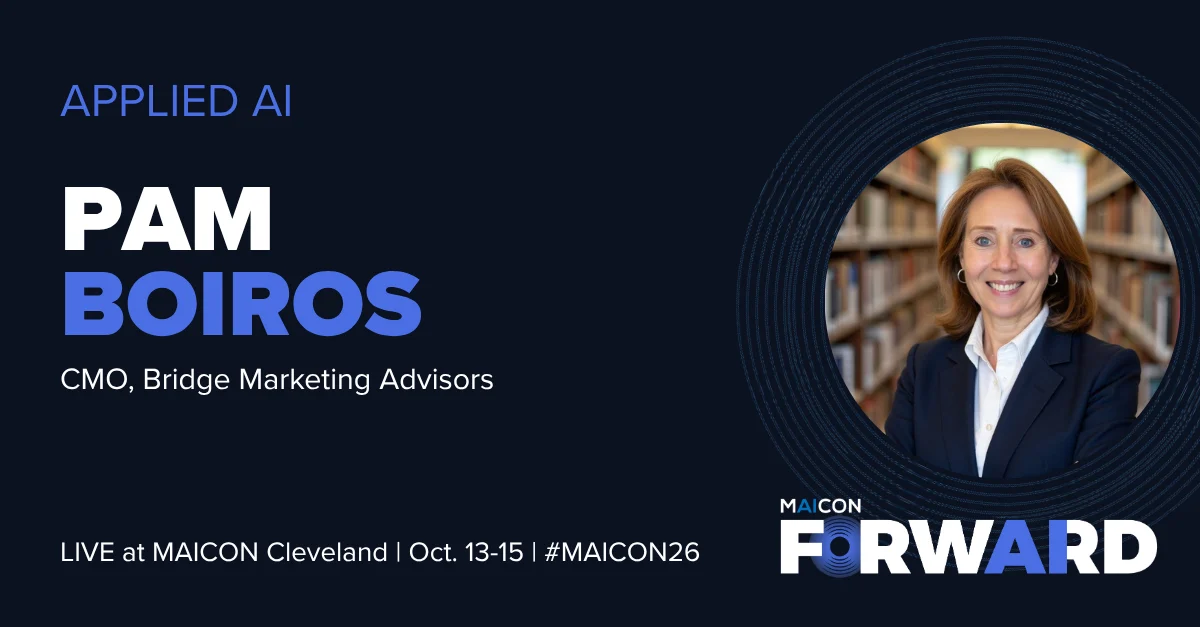
As marketing leaders look toward the horizon of 2026, the industry is reaching a critical inflection point. The novelty of AI is wearing off, and the pressure to deliver tangible, scalable ROI is mounting. Addressing this transition will be the centerpiece of Pam Boiros’ upcoming session at MAICON 2026, titled "AI Adaptation: The People Side of Scale."
Boiros, a fractional Chief Marketing Officer at Bridge Marketing Advisors and a seasoned strategist who has guided marketing organizations at industry giants like Skillsoft and meQuilibrium, argues that the most significant barrier to AI success is not technical—it is human.
The Chasm Between Adoption and Adaptation
For many CMOs, the "hard part" was assumed to be the procurement and integration of AI tools. However, Boiros suggests that this is merely the baseline. "You know you’ve moved from AI adoption to AI adaptation when AI stops feeling like a separate initiative and starts changing how the work itself gets done," she notes.
Adoption vs. Adaptation: A Comparative Breakdown
- Adoption: Characterized by individual software licenses, scattered use cases, and mandatory "Intro to ChatGPT" workshops. It is a tactical deployment.
- Adaptation: A fundamental redesign of workflows. It is the integration of human-AI collaboration into the very fabric of the creative and analytical process.
In an adapted environment, managers shift their focus from policing tool usage to coaching "AI-assisted work." This requires a higher degree of organizational maturity, where team members possess the confidence to experiment, the critical judgment to challenge algorithmic outputs, and the clarity to operate within defined ethical and operational guardrails.
The Five Building Blocks of Organizational Change
While many leaders fixate on the technical architecture of AI integration, Boiros identifies five critical building blocks of adaptation. Perhaps the most overlooked—and frequently underestimated—of these is culture.
"Culture shows up in what people actually feel safe and empowered to do every day," Boiros explains. For many, the introduction of AI triggers a subtle but pervasive anxiety. Employees are asked to learn new skill sets, admit gaps in their existing expertise, and rethink processes they may have spent a decade perfecting.
In organizations that prioritize "polished answers" and avoid vulnerability, employees often retreat into a defensive posture. They may avoid AI entirely to stay within their comfort zones, or, conversely, experiment in secret, siloed away from the rest of the team. This lack of transparency prevents the organization from building institutional knowledge, turning AI from a team capability into a fragmented, individual productivity hack.
The Anatomy of Resistance: Fear as a Subtext
After three years of intensive research and training with marketing teams, Boiros has deconstructed the common forms of resistance that leaders encounter. While employees often couch their reluctance in logistical terms—"I don’t have time," "This isn’t relevant to my role," or "The output is poor"—Boiros views these as symptoms of a deeper, existential uncertainty.
Why "More Training" Isn’t the Answer
A common leadership reflex is to combat resistance with more mandatory training. Boiros warns against this. "That’s why I don’t think the answer is simply more training," she says. "What works better is creating space for people to learn without feeling like they’re taking on a second job."
To overcome this, successful leaders are adopting a "bottom-up" approach to AI integration:
- Prioritize Current Workflows: Rather than assigning new AI-driven projects, leaders should encourage staff to apply AI to the tasks they are already burdened with.
- Protected "Sandboxes": Providing dedicated time for experimentation reduces the pressure to be perfect on the first attempt.
- Collaborative Learning: When peers demonstrate how they use AI, it demystifies the technology and fosters a sense of communal growth rather than individual competition.
Measuring What Matters: Redefining Success
As organizations move into the adaptation phase, the KPIs for success must evolve. Traditional metrics like "time saved" are insufficient. Leaders should instead be asking qualitative questions that reflect long-term value:
- Are we producing objectively better work?
- Has AI successfully offloaded the "drudge work," allowing team members to spend more time on high-level strategy, creative direction, and human relationship management?
- Have we created repeatable workflows that are resilient to the inevitable evolution of AI models and tools?
By shifting focus toward these outcomes, leaders can move the needle from "efficiency" to "effectiveness."
The MAICON 2026 Mandate: From Pilot to Practice
At MAICON 2026, Boiros will provide a practical, hands-on framework for leaders who are ready to move beyond the pilot stage. The session is specifically designed to unpack the complexities of scaling AI across departments.
Key Takeaways for Attendees:
- The Psychological Safety Framework: How to build a culture where experimentation is rewarded, not penalized.
- Workflow Mapping: How to identify where human judgment must remain the "final gatekeeper" in an AI-driven process.
- The Adaptation Playbook: A step-by-step guide to transitioning from ad-hoc tool usage to a standardized organizational capability.
- Guardrails vs. Innovation: Setting boundaries that keep the organization secure without stifling creativity.
The Road Ahead for Marketing Leadership
The narrative of AI in marketing is shifting from "Will AI replace us?" to "How will we evolve to work alongside it?" This transition is not a technological shift, but a leadership one.
The most successful marketing organizations in the coming years will be those that view AI as a catalyst for human potential rather than a replacement for it. By fostering an environment where curiosity is the currency of the team and where the "people side of scale" is treated with the same rigor as the technology stack, leaders can ensure their teams remain relevant in an increasingly automated landscape.
Pam Boiros’ work with the Women Applying AI community and her broader consulting practice highlights a recurring theme: the tools change, but the need for clear strategy, cultural alignment, and empathetic leadership remains constant. As the industry gathers for MAICON 2026, the focus will be squarely on these human elements, providing a roadmap for those who are ready to stop "adopting" and start "adapting."
Join the Conversation
The era of the "AI-curious" marketer is ending, and the era of the "AI-adapted" enterprise is beginning. Whether you are leading a team of five or five hundred, the lessons Boiros presents at MAICON 2026 are designed to provide the clarity needed to navigate this transition effectively.
Don’t miss the opportunity to join Boiros and more than 50 other industry experts who are defining the future of marketing. Registration for MAICON 2026 is now open. The future of your marketing organization depends not on the tools you buy, but on the culture you build to support them.
Cathy McPhillips is the Chief Marketing Officer at SmarterX and the Marketing AI Institute. She continues to advocate for the evolution of marketing leadership through the strategic, ethical application of artificial intelligence.