The WordPress ecosystem stands at a profound crossroads. As generative AI reshapes the boundaries of software development, the foundational repositories of the world’s most popular content management system are experiencing unprecedented growing pains.
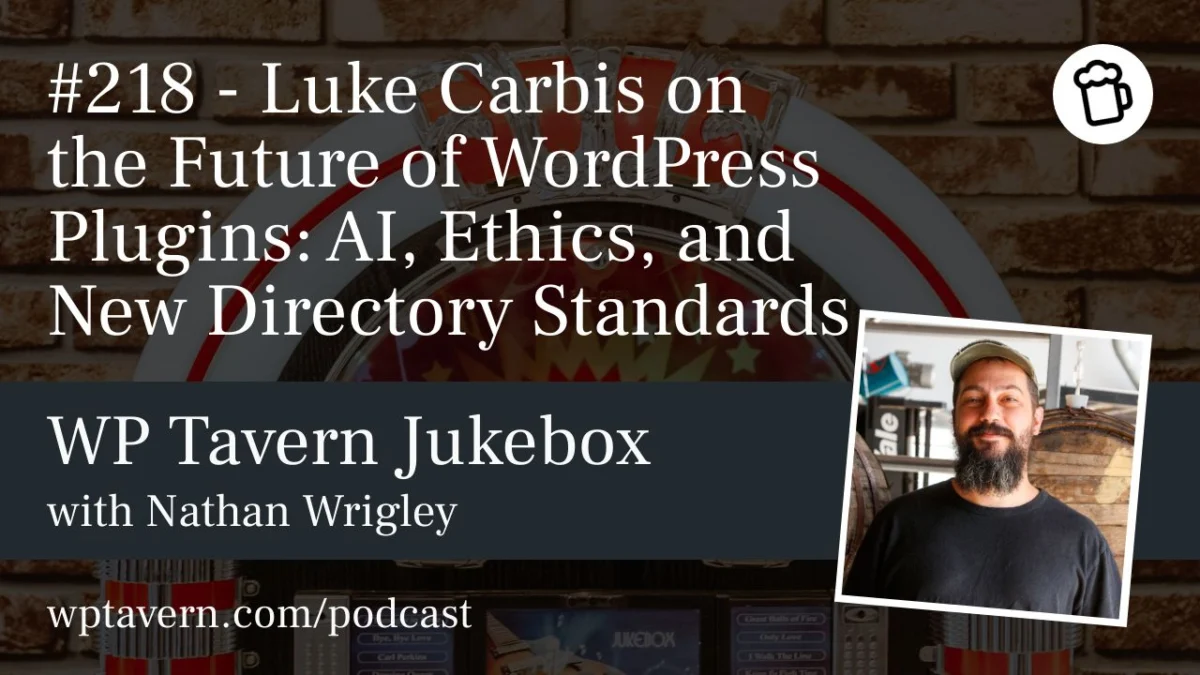
Recently, WP Tavern’s Jukebox podcast welcomed veteran WordPress contributor and plugin reviewer Luke Carbis to dissect these tectonic shifts. Drawing from his recent WordCamp Asia presentation, Carbis—who boasts a 20-year history spanning agency development, core contributions, and plugin curation—offered a candid look at the future of plugin directories, commercial marketplaces, and the cultural friction of artificial intelligence in open source.
Main Facts: A Deluge of Submissions and the AI Dilemma
The primary catalyst for change within the WordPress.org plugin directory is a staggering, AI-driven surge in submissions. Over the past 12 months, the repository has absorbed roughly four times the volume of plugin submissions compared to previous years.
While automated and human review processes have managed to keep wait times hovering around a manageable one-week window, the sheer numerical scale of new products has fundamentally altered the developer and user experience.
- Discovery Crisis: With thousands of plugins offering identical or marginal utility, high-quality tools struggle to break through the noise.
- The "Vibe Coding" Reality: Users face analysis paralysis, risking total alienation from the official directory in favor of self-coded, AI-generated micro-solutions.
- The AI Divide: While leadership pushes for increased AI integration in core development and community contributions, a noticeable generational resistance—particularly among Gen Z contributors—threatens to fracture traditional open-source ethos.
Chronology: From Organic Growth to Algorithmic Overload
To understand the current state of the WordPress plugin ecosystem, one must trace the evolution of its infrastructure against broader technological trends:
- The Pre-AI Era: For nearly two decades, the WordPress plugin directory grew steadily. While long plagued by criticisms surrounding search algorithms and visibility favoring high active-install counts, the system operated on a predictable cadence of human-driven development.
- The Backlog Breakthrough: A few years ago, aggressive optimization by the Plugin Review Team successfully cleared historical backlogs, driving review wait times down to near zero.
- The Generative Explosion: Almost concurrently with this administrative victory, the mainstream adoption of generative AI democratized plugin creation. Developers and novices alike began leveraging AI tools to rapidly prototype and submit dozens of plugins in a single afternoon.
- Post-WordCamp Asia Reflection: Following WordCamp Asia, a renewed wave of centralized directive energy from project co-founder Matt Mullenweg sparked intense community-wide debates regarding speed, governance, and the aggressive implementation of AI tooling.
Supporting Data: Metrics, Wait Times, and Market Realities
Despite common perceptions that the plugin review queue is hopelessly gridlocked, the operational reality tells a more nuanced story.
+---------------------------+------------------------------------------+
| Metric / Indicator        | Current Status / Observation             |
+---------------------------+------------------------------------------+
| Annual Submissions        | ~4x increase year-over-year              |
| Review Wait Time          | ~1 week (historically competitive)       |
| Active Queue Size         | ~800+ plugins pending (higher volume)    |
| Proposed Revenue Split    | 8% total (3% processing + 5% Foundation) |
+---------------------------+------------------------------------------+
As Carbis notes, while the raw number of plugins awaiting review at any given moment is higher than in previous years, the Plugin Review Team’s augmented workflows—utilizing internal tooling and selective AI assistance—ensure that the actual bottleneck is downstream. The true friction point is no longer getting approved; it is getting found.
Furthermore, product developers are witnessing a generalized cooling trend in commercial plugin sales. Innovation fatigue, combined with market saturation, has slowed down independent product launches, leaving many creators hesitant to release new offerings without systemic market reinvention.
Official Responses and Governance Perspectives
The philosophical rift within the WordPress community largely centers on leadership style and commercialization. Historically, WordPress has fiercely guarded its pure open-source, free-at-the-point-of-use ethos. However, the pressures of modern software markets are forcing difficult conversations.
The Commercial Marketplace Proposal
Carbis outlined a provocative, blue-sky structural overhaul to revitalize product development:
- WordPress.org Account Integration: Modernizing core installations to seamlessly connect with user profiles, allowing favorites and personalized configurations to persist across environments.
- Untrusted Sources & Git Interoperability: Enabling users to easily pull custom or premium plugins directly from verified Git repositories (such as GitHub) via native UI flows.
- Official Commercialization: Introducing a regulated, optional commercial tier within the ecosystem. By levying an 8% fee (3% for payment processing and 5% allocated to Five for the Future and the WordPress Foundation), the platform could permanently fund core contributors, event organizers, and review teams.
While acknowledging that project leadership—specifically Matt Mullenweg—remains philosophically opposed to transforming the repository into a commercial storefront, Carbis argues that bold structural evolution is necessary to prevent long-term stagnation.
Leadership and the "Dictator" Paradigm
Reflecting on recent top-down directives within project communication channels, Carbis recalibrated his view of community governance. Comparing leadership styles to visionary figures like Steve Jobs or DHH rather than traditional consensus-driven committees, Carbis suggests that swift, decisive leadership—even when controversial—is vital for survival. In an era where competing platforms move at lightning speed, endless committee deliberation risks steering the project toward irrelevance.
Implications: Ethics, Generational Divides, and AI Disclosure
The integration of artificial intelligence into WordPress is no longer a speculative frontier; it is an active cultural battleground.
The Generational Chasm
A striking theme highlighted during the discussion is the stark contrast in attitudes toward AI across generations. While seasoned developers often view AI through the lens of productivity gains and efficiency, younger demographics—specifically Gen Z—frequently exhibit a fierce, ideological resistance to AI tooling. Citing environmental concerns, the devaluation of authentic human craft, and fears of cognitive atrophy, many younger technologists actively opt out of AI ecosystems. If WordPress mandates or overly prioritizes AI-driven contribution workflows, it risks alienating the very demographic required to sustain the project for the next twenty years.
The Case for Granular AI Disclosure
To combat opacity and help users make informed choices, Carbis proposed a standardized AI Disclosure Framework for the plugin directory. Rather than a simplistic binary label, developers could utilize standardized plugin headers to transparently declare their level of AI utilization:
- Level 0: Human-authored code and assets.
- Intermediate Levels: Use cases spanning idea generation, autocomplete, or localized refactoring.
- Level 100: Fully automated "vibe coding" with zero manual code inspection.
This metadata, surfaced alongside traditional metrics like active installs and support responsiveness, would empower users to navigate the directory according to their personal ethical and operational standards.
Conclusion
The WordPress ecosystem faces a dual challenge: managing an unyielding flood of automated code while navigating a profound cultural evolution. Whether the community chooses to embrace radical structural reforms—such as commercial directory integration and native Git support—or doubles down on traditional open-source ideals, one reality remains clear. As Luke Carbis emphasized, the status quo is no longer an option. Survival in an AI-first world demands robust leadership, transparent standards, and, above all, a renewed commitment to the human beings who build the web.