The integration of artificial intelligence within the WordPress ecosystem has evolved past simple content generation and surface-level automation. Today, agency owners and developers face the complex challenge of embedding AI directly into their core operational workflows, software development cycles, and quality assurance protocols.
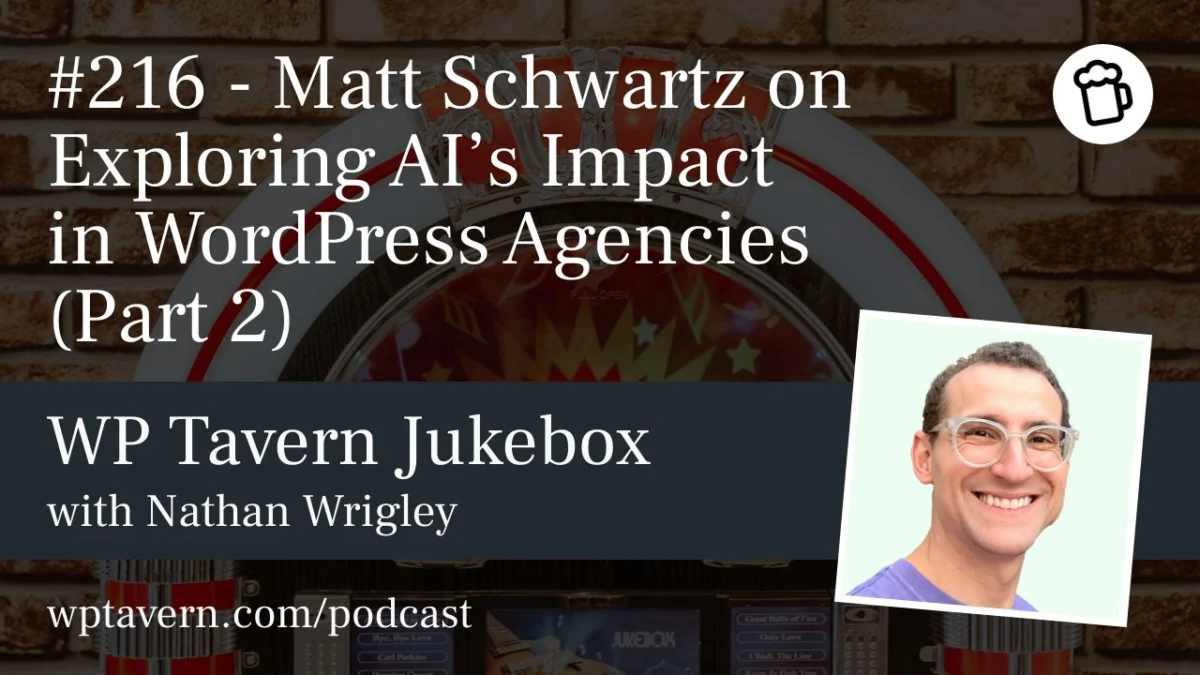
In the conclusion of a two-part special series on the WP Tavern Jukebox podcast, host Nathan Wrigley caught up once again with Matt Schwartz, an Atlanta-based agency founder and creator of the WordPress form and checkout QA tool, CheckView. Following an extensive first session covering foundational operational strategies, Schwartz expanded on advanced tactical methods, security risks, the changing plugin market, and the future outlook for digital agencies navigating the AI landscape.
Main Facts: Practical AI Implementation and Agency Evolution
The discussion centered on actionable methodologies for utilizing artificial intelligence safely and effectively within agency environments. Rather than chasing fleeting tech trends, Schwartz emphasized a structured, risk-assessed approach to digital transformation.
- Connecting Agency Knowledge Bases: Agencies can dramatically cut down on AI hallucinations by linking their chat assistants and large language models directly to project management wikis, such as ClickUp or Asana.
- Model Context Protocols (MCPs): Emerging protocols allow agencies to bridge multiple internal databases and third-party APIs through a secure, unified proxy, minimizing the need for extensive API key distribution among team members.
- Vibe Coding Internal Tools: Using AI to rapidly scaffold bespoke internal dashboards, reporting tools, and workflow scripts carries low operational risk, provided those systems remain internal and non-public-facing.
- Checklist and QA Automation: AI-driven skills can be trained to systematically execute low-risk quality assurance tasks and standard operating procedure (SOP) launches, allowing human reviewers to focus strictly on high-risk technical validations.
Chronology of the Discussion: From Knowledge Bases to Ecosystem Risks
The conversation progressed through a meticulously curated framework of agency strategies, starting from internal knowledge management and scaling up to global macroeconomic impacts on the open-source community.
1. Centralizing the Agency Brain
The discussion opened with point nine of Schwartz’s comprehensive framework: giving AI systems access to an agency’s collective knowledge base. By instructing language models to verify responses against internal project management software, teams eliminate guesswork and reduce factual errors.
"If you already have a project management tool or a wiki, you can add into your AI chatbot of choice when it’s actually answering a question," Schwartz explained. "Whenever I ask a question about the agency, go confirm what I’m doing by visiting our ClickUp or visiting our Asana. It’ll actually go retrieve and confirm it’s using the latest proper information instead of just guessing or hallucinating."
2. Streamlining Infrastructure via MCPs
Moving to advanced technical operations, the conversation shifted to Model Context Protocols (MCPs). Schwartz described MCPs as open-source standards that connect AI agents to external systems via a secure proxy layer. Instead of granting employees direct access to dozens of separate APIs and sensitive credentials, an agency can route all internal AI queries through a single, guarded protocol interface.
3. Vibe Coding and Bespoke Internal Tooling
As agencies explore rapid prototyping—colloquially known as "vibe coding"—Schwartz drew a strict line between internal efficiencies and customer-facing software. While building custom financial reporting aggregators or time-tracking dashboards internally is relatively safe, deploying AI-generated public management tools without rigorous, manual code reviews introduces critical vulnerabilities.
4. Quality Assurance and Automated Testing
Schwartz highlighted how modern AI systems can ingest agency SOPs to drive repeatable testing cycles. By deploying tools like Claude Skills during client onboarding or site launches, agencies can automate repetitive pre-flight checks, freeing up valuable developer hours. However, Schwartz explicitly noted that critical binary checks—such as verifying search engine indexing flags—still warrant manual human oversight.
5. Reshaping the WordPress Plugin Market
The broader economic ripple effects of AI were addressed through the lens of plugin developers. Smaller, utility-based plugins that solve singular problems are experiencing a drop in sales as agencies and freelancers increasingly generate their own custom code snippets via AI. This trend forces developers to focus heavily on complex core platforms—their strategic "moats"—while subtly shifting community engagement dynamics across the ecosystem.
Supporting Data and Technical Insights
As agencies scale their reliance on artificial intelligence, several critical operational metrics, security parameters, and cost considerations emerge:
- Security and Data Privacy: Major foundational AI models treat incoming chat inputs as potential public training data under recent legal frameworks. Agencies handling sensitive client credentials, proprietary business logic, or personal identifiable information (PII) must utilize enterprise-grade, secure private instances.
- Vendor Dependence and API Cost Volatility: Subsidized enterprise pricing models for advanced coding tools (such as Claude Code) are subject to sudden structural changes. Agencies incorporating heavy AI automation into daily pipelines risk margin compression if foundational vendor pricing spikes by factors of 5x or 10x.
- Error Handling Deficits: Rapidly generated custom code frequently lacks robust error logging and edge-case exception handling. Without deliberate human oversight, automated systems risk unhandled exceptions breaking production environments.
Official Responses and Industry Perspectives
The WordPress agency community remains divided on the long-term impact of rapid AI integration. While some independent developers champion the productivity gains of custom code generation, open-source advocates voice concerns regarding the erosion of traditional community participation.
+-------------------------------------------------------------------------+
|                  The Agency Risk-Assessment Matrix                      |
+--------------------------+-----------------------+----------------------+
| Operational Area         | Risk Level            | Recommended Action   |
+--------------------------+-----------------------+----------------------+
| Internal Wikis & SOPs    | Low                   | Connect via MCP      |
| Financial Dashboards     | Low-Medium            | Human review audits  |
| Public-Facing Plugins    | High                  | Strict code reviews  |
| Automated Site Launches  | Critical (No Index)   | Mandatory human gate |
+--------------------------+-----------------------+----------------------+
Industry veterans point out that smaller, single-purpose plugins have historically served as the gateway for new developers entering the WordPress space. As AI absorbs utility-level coding tasks, community leaders must monitor whether the pipeline for fresh open-source contributors will experience a long-term contraction.
Implications for WordPress Agencies and Freelancers
The overarching takeaway for agency owners is clear: AI adoption must be approached methodically, with clear structural boundaries and documented risk profiles.
Strategic Pivots for 2026 and Beyond
- Redefining the Junior Developer Role: As execution-level coding becomes heavily commoditized through automation, hiring patterns are shifting away from junior implementation roles toward higher-level strategic management and quality assurance oversight.
- Productizing Niche Services: Agencies can leverage AI to scale hyper-specific vertical solutions—such as automated digital packages tailored exclusively for specific trades—expanding profit margins without increasing headcounts.
- Maintaining Operational Independence: Businesses must ensure their core operational workflows remain sufficiently decoupled from specific AI vendors to absorb potential future price increases without risking business continuity.
As the digital landscape continues to shift, WordPress agencies that successfully balance the raw speed of artificial intelligence with rigorous human oversight, robust data security, and active community engagement will be best positioned to thrive.