Main Facts
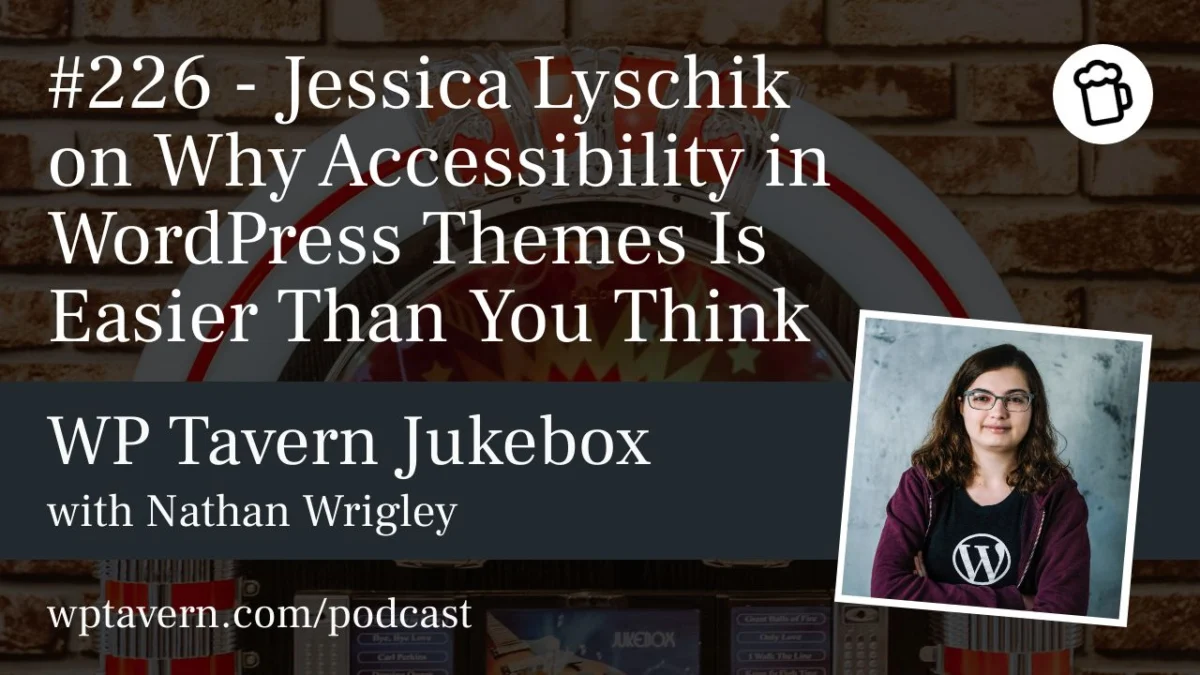
Web accessibility in the WordPress ecosystem is often shrouded in intimidation, with many theme developers viewing the process as an insurmountable technical hurdle. However, according to long-time WordPress community member and developer Jessica Lyschik, creating an "accessibility-ready" theme is significantly more straightforward than conventional wisdom suggests.
Speaking at WordCamp Europe 2026, Lyschik delivered a well-received presentation titled "Accessibility in Themes: Easier Than You Think," aimed at demystifying the WordPress guidelines and showing how both block and classic themes can achieve compliance with manageable effort. Far from being an overly complex burden, achieving web accessibility largely comes down to utilizing correct HTML semantics, implementing native WordPress block features, and embedding inclusive practices into the initial phases of web development.
With the rise of automated web navigation tools, regulatory changes like the European Accessibility Act, and the growing influence of AI agents, accessibility is rapidly transitioning from a neglected afterthought to a critical pillar of modern web development.
Chronology
The conversation around WordPress theme accessibility has undergone a significant evolution over the past two decades.
- 2005–2015: During the early years of the WordPress boom, web accessibility was largely sidelined. Developers focused primarily on visual aesthetics and fundamental functionality, with little to no mainstream focus on assistive technologies.
- 2015: Jessica Lyschik formally entered the professional WordPress ecosystem, beginning a multi-year trajectory of learning, agency work, and community advocacy that eventually brought her to major contributions at agencies like Syde.
- 2012–2014: The initial accessibility requirements for the WordPress.org theme repository were established and standardized, guided by key figures such as Joe Dolson.
- Early 2026: The official WordPress theme accessibility requirements underwent their first major update in over a decade, introducing modernized guidelines and fresh recommendations—such as guidelines on accessible plugin dependencies and documentation files (
accessibility.txt). - WordCamp Europe 2026: Lyschik took to the stage to present her framework on simplifying theme accessibility, highlighting how block-based editing has lowered the technical barrier to entry for developers worldwide.
Supporting Data
While the perception that accessibility is overwhelmingly complex remains widespread, objective data from the WordPress ecosystem reveals a striking reality:
- 14,700+: The approximate number of total public themes available in the official WordPress.org theme repository.
- ~270: The number of themes holding the coveted "accessibility-ready" repository tag.
- 1.5%: The approximate percentage of themes in the official repository that currently meet the stringent accessibility-ready criteria.
- 18: The updated count of core requirements mandated by the WordPress.org theme review team to qualify for the accessibility-ready tag.
- 24 to 300+: A practical illustration of developer scaling—fixing basic semantic oversights (such as missing
aria-labelattributes on icon buttons) early in the development cycle saves hundreds of repetitive manual adjustments across extensive multi-page site architectures.
Official Responses and Perspectives
The Moral Imperative vs. Compliance
During her interview with Nathan Wrigley on the WP Tavern Jukebox Podcast, Lyschik emphasized that her own entry into the accessibility space was driven primarily by a moral journey rather than purely legal pressures. Drawing a parallel to physical architecture, Lyschik noted that just as a physical step preventing a wheelchair user from entering a post office is universally recognized as unjust, invisible digital barriers on websites are equally exclusionary.
Bridging the Technical Gap
Lyschik pointed out that historical hurdles in accessibility adoption were frequently exacerbated by dense, cryptic documentation. While the official WordPress guidelines outline what must be achieved, they have traditionally offered limited guidance on how to execute those requirements technically.
"Right now, the requirements read like, ‘okay, this must be achieved… But you’re not told how to achieve it. What do you technically need to do in order to do that?’" Lyschik noted during her session.
By mapping out clear technical pathways—such as utilizing native HTML5 tags (<header>, <footer>, <main>, <aside>), adding simple alternative text to media libraries, and configuring structural group blocks—developers can demystify the process.
The Power of Core and Block Themes
A major breakthrough in modern WordPress accessibility is the shift toward block themes. Lyschik highlighted that the WordPress core software now handles many heavy-lifting accessibility tasks automatically. For example, simply placing content within a group block and assigning the correct HTML tag prompts WordPress to generate native "skip-to-content" links and structure landmark regions seamlessly. Similarly, core-handled interactive elements like search forms and comment sections come out-of-the-box with built-in accessibility compliance.
Implications
The Rise of AI Agents and Automated Access
Beyond human users relying on screen readers or adaptive keyboards, a powerful new stakeholder is driving the push for web accessibility: AI agents.
Industry developments indicate that search engines and autonomous AI assistants increasingly rely on clean, semantically correct HTML structures to navigate the web on behalf of users—whether retrieving information or completing complex e-commerce transactions like online shopping. As Lyschik observed, an AI agent interacting with a website essentially functions like a screen reader. Websites built with robust accessibility practices in mind will find themselves inherently optimized for AI-driven automation, giving accessible platforms a distinct commercial and functional advantage.
Interdisciplinary Awareness
Accessibility can no longer be siloed as a singular task assigned exclusively to front-end developers. True digital inclusion requires an interdisciplinary approach spanning:
- Designers: Ensuring appropriate color contrast ratios, readable typography, and logical visual hierarchies.
- Content Creators: Maintaining structured heading trees (sequentially moving from H1 to H2 to H3) and consistently writing descriptive alternative text for all imagery.
- SEO Specialists & Developers: Aligning metadata, structural HTML landmarks, and interactive button attributes (such as descriptive
aria-labeltags for icon-only buttons).
Shifting the Narrative from Chore to Habit
Ultimately, the primary takeaway from Lyschik’s advocacy is that accessibility should never be treated as an eleventh-hour patch job. When developers build accessibility into the foundation of a theme from day one, it transforms from an exhausting chore into an effortless second nature. By leveraging modern block theme capabilities and utilizing community-driven educational resources—such as those provided by advocates like Joe Dolson, Rian Rietveld, and Amber Hinds—WordPress creators can build a more inclusive, resilient, and future-proof web for everyone.