Main Facts
Rapid corporate growth is the ultimate stress test for any consumer brand. As footprints expand from a regional cluster of hundreds of locations to a national web of thousands, the very attributes that made the brand special in the first place often face dilution. Operational standardization can strip away local character, and marketing can easily devolve into impersonal, broadcast-style noise.
For fast-casual Mediterranean sensation CAVA, this strategic tightrope walk is the defining challenge of the decade. The brand, currently hovering near 500 locations, is charging aggressively toward a corporate milestone of 1,000 restaurants by 2032.
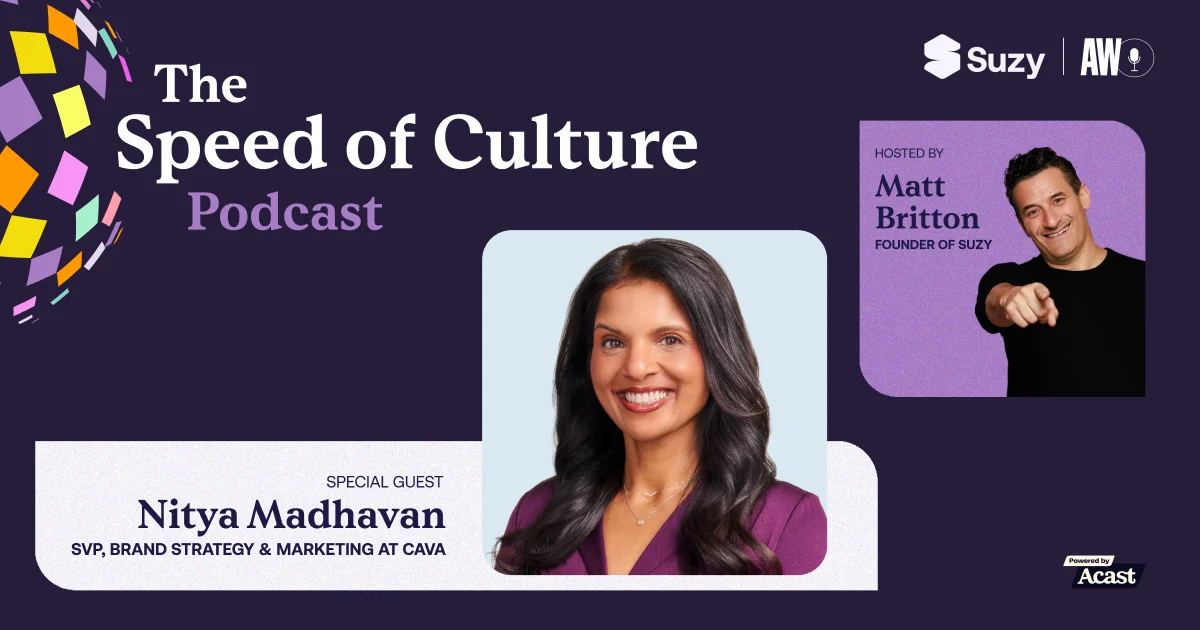
To unpack how a modern restaurant chain manages this monumental transition without sacrificing its core identity, CAVA’s Senior Vice President of Brand Strategy and Marketing, Nitya Madhavan, recently sat down for an in-depth conversation with market strategist Matt Britton.
The core takeaway from their discussion is clear: True brand scale is not merely a matter of opening real estate units; it is about scaling an emotional footprint. Madhavan outlines a modern marketing playbook built on six foundational pillars:
- Rooting product value in an overarching emotional philosophy (Mediterranean hospitality).
- Prioritizing the preservation of physical and emotional restaurant environments.
- Inviting active consumer participation rather than relying on passive broadcasting.
- Pivoting social media strategies toward intimate micro-communities.
- Deploying artificial intelligence strictly for back-of-house efficiency while keeping consumer-facing elements fiercely human.
- Leveraging loyalty data as an instrument of authentic recognition rather than invasive surveillance.
Chronology and Strategic Evolution
From Regional Favorite to National Footprint
CAVA’s journey to becoming a household name did not happen overnight. Founded on the principles of fresh, vibrant Mediterranean ingredients, the brand initially captured local markets by offering a compelling alternative to traditional fast food. However, as private investment and public markets beckoned, leadership realized that a linear trajectory—simply replicating restaurants across state lines—would not suffice.
The strategy required a transformation from a regional food concept into a lifestyle and cultural brand. When Madhavan stepped into her role as SVP of Brand Strategy and Marketing, she inherited a brand poised at a critical inflection point. With nearly 500 units operational and a clear-eyed goal of doubling that footprint to 1,000 locations by 2032, the timeline required a complete reimagining of how marketing interacts with operations, real estate, and digital infrastructure.
The Evolution of the Consumer Touchpoint
Madhavan’s professional lineage—which includes nearly five years at Meta managing initiatives across Instagram and the core Facebook brand, alongside more than a decade at Mattel building heritage giants like Barbie and Fisher-Price—uniquely positions her for this challenge. Her career has been defined by stewardship: understanding why a brand exists, keeping that purpose relevant for modern digital audiences, and protecting its emotional equity for future generations.
At Cava, this philosophy translates into a chronological shift in marketing execution. Phase one relied on introducing consumers to a novel category: fast-casual Mediterranean. Phase two, the current chapter overseen by Madhavan, focuses on deep emotional retention. As the brand opens hundreds of new doors, marketing is no longer just about driving foot traffic for a lunch rush; it is about ensuring that a guest walking into a newly opened location in a midwestern suburb experiences the exact same sense of welcome and abundance as a loyal patron in the brand’s original home markets.
Supporting Data and Strategic Pillars
1. Hospitality as a Competitive Advantage
In the fast-casual sector, marketing campaigns frequently lean on ingredient-led messaging: fresher greens, better proteins, authentic dressings. While product quality is table stakes, Madhavan argues that ingredients alone cannot sustain long-term differentiation.
CAVA anchors its competitive moat in Mediterranean hospitality—a cultural framework defined by generosity, abundance, and making every individual feel welcomed and seen.
The Marketer’s Lesson: Product benefits become exponentially more distinctive when they are embedded within a recognizable emotional experience that consumers can easily understand, relate to, and participate in.
2. Scaling the Feeling, Not Just the Footprint
Physical design is a critical component of this strategy. As Cava scales toward its 2032 targets, the company is deliberately investing in restaurant architectures and environments designed to project warmth. Whether a consumer is using a lunch break to decompress from a stressful workday or gathering with a group of friends for a weekend meal, the physical space must communicate sanctuary and community. Growth, in Madhavan’s view, is an equation where the emotional resonance of the environment must scale in direct proportion to the physical square footage.
3. Participatory Digital Strategy vs. One-Way Broadcasting
The days of pushing polished, top-down advertisements to captive audiences are effectively over, particularly for younger demographic cohorts. CAVA’s digital strategy is built on participation.
Madhavan points to several high-profile initiatives that demonstrate this collaborative approach:
- Creator Partnerships: Collaborating with digital content creators who organically integrate the brand into their daily lives.
- Community Management: Active, conversational engagement across social channels that treats followers like peers rather than demographics.
- Experiential Activations: High-visibility cultural moments, such as the brand’s recent activations in New York City, designed to spark immediate community reaction.
- Menu Co-Creation: Listening directly to fan feedback. A prime example includes the community-driven revival of white sweet potatoes on the menu, proving to consumers that their voices directly alter the physical product.
When consumers are given a role to play—whether through voting, reacting, sharing, or shaping the menu—the dynamic shifts from a sterile financial transaction to an active, relational partnership.
4. The Shift Toward Micro-Communities
Social media algorithms and digital feeds have grown increasingly crowded and overwhelming. In response, Madhavan observes a fascinating consumer behavior trend: people are migrating away from broad, hyper-public social broadcasts and toward smaller, highly niche micro-communities.
Consumers are actively using digital platforms to find "their people"—smaller affinity groups built around shared, relatable interests. For modern marketers, this requires a fundamental pivot. The goal is no longer shouting messages to the widest possible audience; it is about building and nurturing trusted digital spaces where the right people can organically discover one another and bond over shared passions.
5. AI: Speed Behind the Scenes, Humanity at the Surface
Artificial intelligence represents one of the most volatile topics in modern marketing, frequently caught between corporate cost-cutting measures and genuine consumer skepticism. Cava has taken a pragmatic, disciplined approach to integrating AI into its operations.
The brand is actively investing in AI to drive back-of-house productivity, streamline supply chain efficiencies, and sharpen consumer insights. However, Madhavan draws a bright, uncrossable line regarding what the technology is permitted to replace.
Particularly within food marketing, consumer trust is fragile. Cava remains fiercely committed to showcasing real, tactile food and maintaining a genuinely human-created aesthetic. The true power of AI, in Madhavan’s framework, is to make the organization faster and smarter behind the scenes without ever diluting the human warmth and trust experienced by the guest at the front counter.
6. Reframing Loyalty Data: Recognition Over Surveillance
First-party data has become the holy grail for modern retail and restaurant brands, but it is frequently weaponized through invasive tracking and relentless, untargeted promotional spam.
Madhavan reframes loyalty data not as a cold sales mechanism, but as an intimate relationship tool. Cava’s loyalty program is designed to help the company genuinely understand guest preferences: how they eat, what flavors resonate with them, and what unique experiences might enrich their day.
The overarching objective is not merely to algorithmically squeeze a higher transaction value out of every user, but to make guests feel genuinely welcomed into the brand family through exclusive access, personal recognition, and a sincere, two-way dialogue.
Official Responses and Executive Insights
Reflecting on her expansive career spanning Meta, Mattel, and now Cava, Nitya Madhavan emphasizes that modern brand building requires a distinct stewardship mindset.
"The strongest brands do not use growth to dilute their relationships; they use growth to deepen them," Madhavan notes. This ethos serves as an antidote to the common corporate panic that occurs when companies scale rapidly and attempt to appeal to everyone, accidentally ending up meaning nothing to anyone.
By anchoring expansion in a deeply human, culturally resonant emotion—hospitality—CAVA is attempting to prove that scale does not have to be synonymous with sterile corporate uniformity.
Implications for the Industry
The lessons gleaned from CAVA’s rapid expansion trajectory offer a roadmap for marketers across the consumer packaged goods (CPG), retail, and hospitality sectors.
- The Danger of Generic Scaling: Brands that rely solely on operational efficiency and product distribution during periods of rapid growth frequently watch their equity erode. If a brand loses its emotional anchor, it becomes easily replaceable by the next low-cost competitor.
- The Rise of the Relational Consumer: Modern consumers—particularly Millennials and Gen Z—possess finely tuned radar for corporate inauthenticity. They demand to co-create, participate, and feel seen by the brands they patronize. Broadcast advertising must give way to community building.
- Ethical Technology Deployment: As AI and big data analytics mature, marketers face a moral choice. They can use predictive tools to aggressively surveil and monetize their audience, or they can follow CAVA’s blueprint: using technology to quietly improve operational efficiency while keeping consumer-facing touchpoints resolutely human, empathetic, and warm.
As CAVA marches deliberately toward its target of 1,000 locations by 2032, the industry will be watching closely. If Madhavan and her team succeed, they will have authored a masterclass in how a modern brand can conquer national scale while fiercely guarding its soul.