Main Facts
The landscape of enterprise content management is undergoing a significant architectural shift. As global brands and large institutions look to modernize their digital estates, many are moving away from proprietary or traditional enterprise content management systems (CMS) like Sitecore and turning to WordPress. At the forefront of this movement is Human Made, a premier enterprise WordPress consultancy known for managing high-stakes digital transitions.
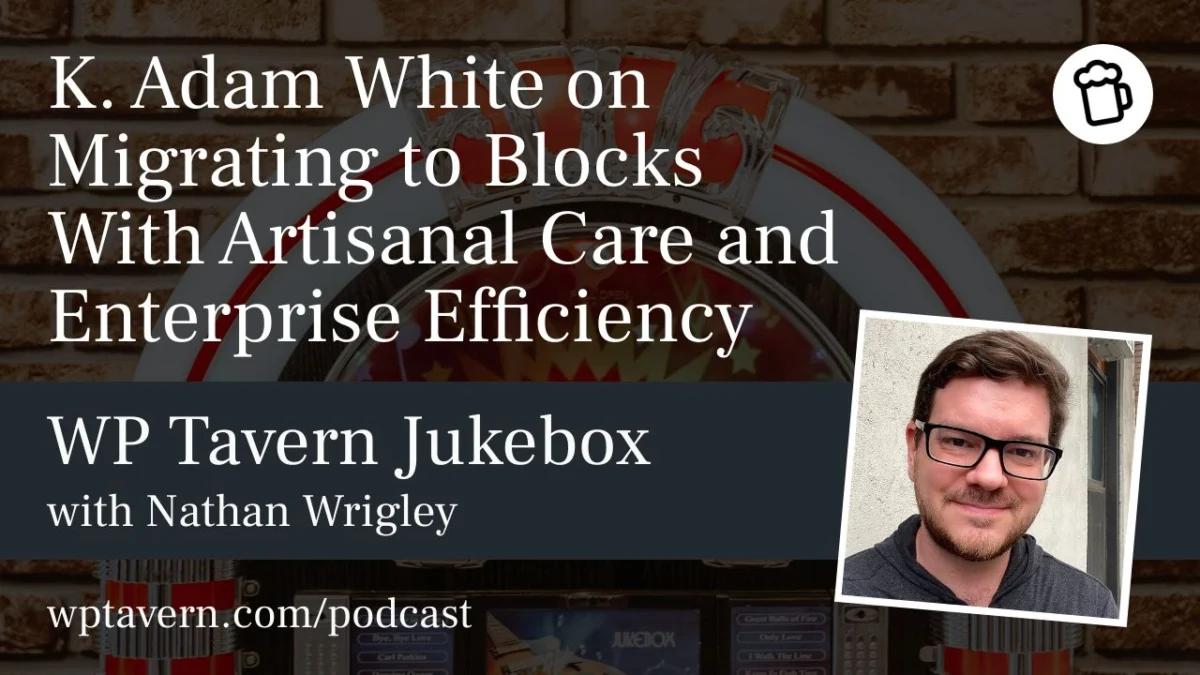
In a recent interview on the WP Tavern Jukebox Podcast, K. Adam White, Principal Engineer at Human Made, detailed the complexities of executing large-scale migrations to the WordPress block editor. Speaking from the floor of WordCamp US, White unpacked the technical and editorial challenges of shifting hundreds of thousands of legacy posts into a modern block- and pattern-driven framework.
The core takeaway from White’s presentation, titled "Migrating to Blocks with Artisanal Care and Industrial Scale," is that simple, manual "copy-and-paste" or basic automated "convert to blocks" features are insufficient for enterprise operations. Instead, modern enterprise migrations require a hybrid approach: combining automated, AI-assisted auditing at scale with precise, custom-engineered template mapping to preserve visual fidelity, brand guidelines, and structural integrity.
Chronology of the Enterprise Shift to WordPress
The journey toward block-based enterprise development has evolved over nearly a decade, transforming how developers approach large-scale platform migrations.
- 2007–2011: Early adoption of WordPress as a personal and community publishing tool. For perspective, engineers like K. Adam White were attending early ecosystem events like WordCamp Boston as early as 2011, establishing deep roots in open-source contribution.
- 2017–2018 (The Gutenberg Era): The introduction of the Gutenberg plugin fundamentally altered WordPress theme development. Early enterprise adopters like Human Made began testing the waters, adapting internal workflows for block-oriented development long before the Full Site Editor (FSE) became a reality.
- 2024 (The Rise of Showcase Days): Enterprise adoption matured significantly. Agencies began showcasing complex integrations tailored for large institutions, emphasizing simplified editorial experiences without sacrificing robust framework security.
- 2026 (The AI-Driven Migration Era): Modern migrations rely heavily on artificial intelligence agents, LLMs, and custom open-source tooling (such as Human Made’s
rehydratorplugin). These tools have drastically reduced the time required to audit, map, and rehydrate legacy content into native WordPress patterns.
Supporting Data and Technical Architecture
Executing an enterprise-level migration involves navigating massive quantities of disparate data structures. When transitioning a client from a complex CMS like Sitecore to WordPress, developers face a distinct set of infrastructural hurdles.
The Sitecore Data Divide
Traditional enterprise CMS platforms often separate content storage from presentation markup. For instance, Sitecore utilizes dual database architectures:
- Content Tree Database: Houses raw textual and media nodes.
- Layout Database: Manages how those nodes are styled and rendered together.
To bridge this divide without introducing visual degradation across 10,000 to 100,000+ posts, Human Made developed a localized SQLite-based auditing pipeline. By feeding database exports and product documentation into large language models (such as Claude), development teams can generate automated Node.js scripts. These scripts query the source data locally to uncover edge cases—such as identifying precisely which press releases utilize media embeds versus accordion FAQs—before a single line of production code is deployed.
Pattern-Driven Development and the rehydrator Tool
Rather than relying on brittle, one-off custom blocks, Human Made champions a "pattern-first" development methodology. By leveraging core WordPress blocks and organizing custom layouts into hierarchical PHP pattern files (ranging from leaf-level elements like styled headings to trunk-level hero sections), developers create a robust lego-like kit.
To automate the injection of legacy data into these clean structures, Human Made built rehydrator—an open-source, GitHub-hosted migration plugin. Instead of duplicating raw markup haphazardly, rehydrator uses existing theme patterns as templates, programmatically mapping source data into the correct HTML structures. This ensures that when an editor opens a migrated post in the admin panel, it loads correctly without block validation errors and renders seamlessly on the front end.
Official Insights and Expert Perspectives
During the podcast discussion, K. Adam White emphasized that despite the technical sophistication required, client sentiment overwhelmingly favors the WordPress block editor over legacy interfaces.
"The editor is so compelling that there’s never any objection to using it… We would recommend going that route rather than adding in another plugin, however good they are," White noted, highlighting that the native flexibility of Gutenberg outperforms external page builders that lack deep platform integration.
However, White also addressed the inherent friction between enterprise demands for granular security and WordPress’s native post-level permission models. While traditional enterprise platforms like Sitecore allow administrators to restrict editing permissions down to individual content nodes (such as locking a single button label while permitting text edits elsewhere), WordPress traditionally relies on binary capability checks (user can edit post 1, 2, 3).
To mitigate this, Human Made relies on features like Partially Synced Patterns, block locking, and strategic UI simplification (such as removing custom color pickers to enforce brand consistency). Rather than chasing draconian permission controls, White advocates for pairing flexible block access with structured editorial workflows and publication checklists.
Implications for the WordPress Ecosystem
The methodologies highlighted by Human Made carry profound implications for the broader WordPress community and enterprise web development at large.
- The Democratization of Complex Migrations: By integrating AI-powered auditing tools and open-source utility plugins into the migration workflow, agencies of varying sizes can now tackle massive content repositories that were once cost-prohibitive or technically out of reach.
- A Call for Core Workflow Enhancements: White pointed out that out-of-the-box WordPress immediately publishes subsequent edits to live posts upon saving—a friction point for enterprise teams requiring multi-tier editorial reviews. The demand for native, opinionated workflow and staging primitives in Core remains a critical frontier for the platform’s future.
- Embracing Native Tooling Over Custom Bloat: The shift toward pattern-driven development demonstrates that developers no longer need to reinvent the wheel with custom blocks for every unique design requirement. By mastering core WordPress blocks, block variations, and partially synced patterns, developers can deliver future-proof, high-performance sites that remain tightly aligned with the official WordPress roadmap.
As enterprises continue to prioritize editorial flexibility and long-term sustainability, the playbook established by consultancies like Human Made proves that WordPress is fully equipped to handle the rigorous demands of the global enterprise stage.