By the Editorial Team
Published: 2026
The landscape of digital discovery has undergone a seismic shift. Traditional keyword-based search engine optimization (SEO) is no longer the sole gateway to online visibility. As artificial intelligence models, ChatGPT, and Google AI Overviews redefine how consumers find products and services, a new paradigm has emerged: Answer Engine Optimization (AEO).
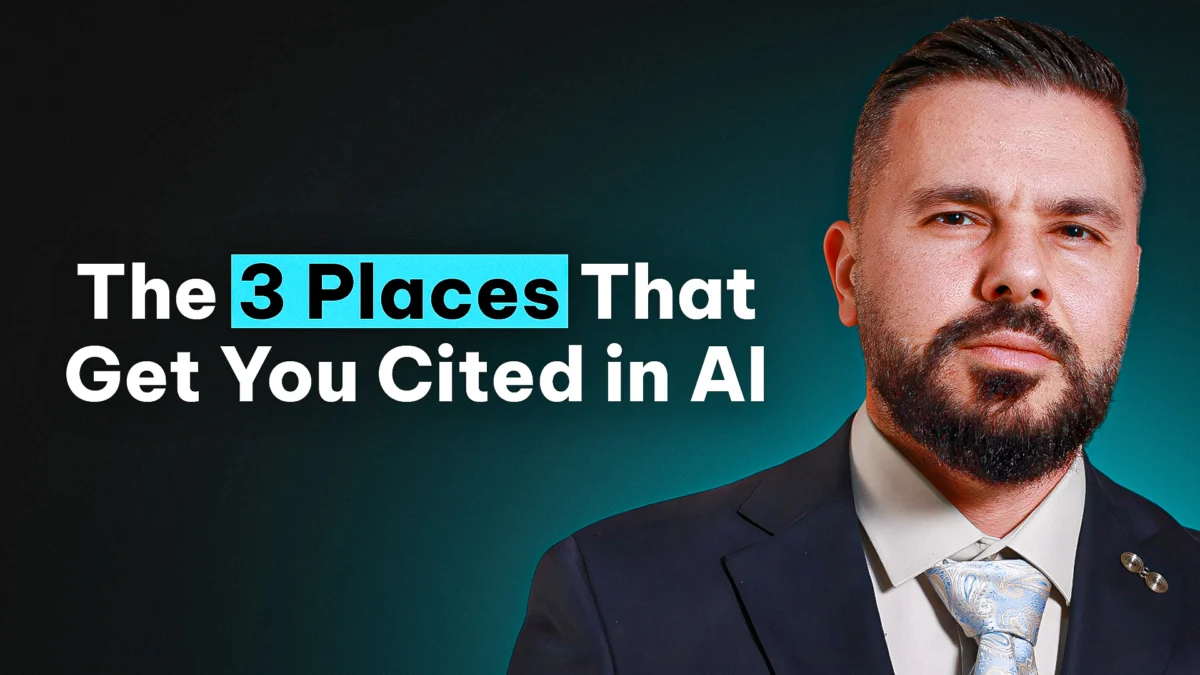
To understand what truly drives brand citations in this new era, we sat down with Besmir Bregasi, founder of ZeroRank. Drawing on visibility data aggregated across thousands of brands, geographical locations, prompts, and platforms, Bregasi offers a rare window into the mechanics of AI-driven search in 2026. Furthermore, his journey scaling ZeroRank from a three-month MVP to a mid-six-figure Annual Recurring Revenue (ARR) business via AppSumo provides a masterclass in modern software-as-a-service (SaaS) growth.
Main Facts: The Shift from SEO to AEO
For nearly two decades, Bregasi’s career was rooted in traditional SEO. He subsequently spent roughly 15 years heavily immersed in paid advertising and affiliate marketing before returning to organic visibility through AEO.
Bregasi views the current migration toward AI-driven discovery as a golden window reminiscent of early digital marketing eras—a time when a brand-new channel offers massive upside with relatively low initial competition. When traffic patterns began shifting away from traditional search engines toward Large Language Models (LLMs), Bregasi recognized an opportunity early enough to pivot entirely. That conviction birthed ZeroRank, a platform designed to measure and optimize how brands appear across AI search platforms.
The Core Drivers of LLM Visibility
According to ZeroRank’s proprietary data, a brand’s inclusion in an LLM response is heavily dictated by off-site activity. While on-page elements remain a baseline requirement, they are rarely the primary growth lever. Instead, LLMs heavily favor external validation:
- Off-Site Discussions: Where and how often people discuss, cite, review, or react to a brand across the web.
- Content Freshness: Recent, highly active content frequently outweighs a massive archive of stale or dated brand mentions.
- Cross-Platform Footprints: Consistent, organic presence on high-weight third-party domains.
Chronology: Building ZeroRank in Three Months
The creation of ZeroRank was executed under an aggressive, high-stakes timeline. When Bregasi and his co-founder, Kelvin Çobanaj—who previously served as CTO of a conference company Bregasi helped build—decided to pursue the idea, they imposed a strict three-month deadline to ship the first version.
The Development Phase
- The Core Partnership: Kelvin walked away from a lucrative CTO position in the cryptocurrency sector to commit to ZeroRank full-time. Concurrently, Bregasi shifted his focus entirely away from legacy projects to back the new venture.
- Overcoming API Limitations: Early in the development process, Bregasi realized that relying solely on standard LLM APIs would yield skewed results. Because AI responses vary drastically by geography and user context, standard APIs failed to capture true international visibility. To solve this, the team engineered a proprietary data-collection architecture capable of mapping geographic variances across countries like the United States, Italy, and Germany.
- The Launch and Validation: Within 90 days, the MVP was live. To rapidly stress-test the product and secure user feedback at scale, the founders turned to AppSumo as an early customer acquisition channel.
Supporting Data: Platforms, Channels, and Local Strategies
ZeroRank’s data paints a clear picture of which platforms carry the most weight in AI citations and how businesses can systematically influence them.
The Big Three: Reddit, X, and YouTube
When evaluating client visibility data, Bregasi consistently points to three platforms that dominate LLM citation pathways:
- Reddit: Despite shifts in its platform prominence, Reddit remains a primary citation source for LLMs. High thread quality, context, and credible community participation matter infinitely more than spammy, promotional drops.
- X (formerly Twitter): X excels at generating rapid, real-time engagement. ZeroRank ran internal experiments utilizing promoted posts on X to jumpstart accounts lacking organic reach. The experiment proved that initial paid exposure could successfully spark organic momentum, provided the content resonated enough to generate immediate user interaction.
- YouTube: Particularly influential within Google AI Overviews, YouTube videos that attract immediate comments, likes, and engagement shortly after publication are heavily indexed and cited by LLMs.
The Power of Niche Editorial Mentions
While user-generated content (UGC) forms a massive portion of the citation pie, niche editorial sites, independent blogs, and industry-specific news sources maintain a vital role. A citation from a hyper-targeted industry blog carries exponentially more weight with an LLM than a generic mention from an unrelated domain. Interestingly, ZeroRank’s client data revealed that LinkedIn does not currently feature near the top of citation sources, trailing far behind Reddit, X, YouTube, and niche editorial publications.
Local Search Case Study
One of ZeroRank’s most compelling case studies involved a vacation rental company struggling to outrank entrenched competitors in traditional Google search for a specific European market. Instead of fighting an uphill battle on-page, the company launched targeted community engagement campaigns in the local language across Reddit and X. By fueling authentic local discussions, the business successfully trained LLMs to associate its brand with regional queries, bypassing traditional SEO bottlenecks entirely.
Official Responses and Strategic Implications
For site owners and digital marketers, the intersection of SEO and AEO requires a nuanced approach. Bregasi estimates the modern information layer consumed by LLMs relies roughly on a 60/70-to-30 split—with the majority driven by dynamic user discussions and off-site signals, and the remainder anchored by traditional search engine structures.
The On-Site Baseline
Rather than abandoning traditional SEO, marketers must view on-site optimization as table stakes. Essential technical elements include:
- Clean site architecture and crawlability.
- Proper schema markup to help AI parsers interpret entity relationships.
- Fast-loading, structured content that reduces technical friction.
However, Bregasi cautions against spending endless hours micro-adjusting page structures when external validation yields superior returns. Off-site signals are inherently harder to manipulate artificially, making them a trusted proxy for quality in the eyes of LLMs.
The Measurement Challenge: Personalization
Because AI search is heavily personalized—two users issuing identical prompts can receive entirely different answers based on location, device, history, and account settings—tracking progress is notoriously difficult.
ZeroRank solves this by scaling queries across massive combinations of variables to establish an aggregate visibility baseline. Rather than obsessing over a single query result, brands can track their overall directional movement over time as they execute off-site marketing experiments.
Implications: Scaling to Mid-Six Figures and Beyond
Following its high-velocity launch and the AppSumo acquisition campaign, ZeroRank crossed 1,000 customers rapidly, becoming one of the platform’s top-selling products in its opening month.
The AppSumo Playbook and Tradeoffs
Bregasi approaches lifetime-deal platforms not as profit centers, but as top-of-funnel marketing expenditures. ZeroRank priced the offer around break-even, accepting potential long-term acquisition costs in exchange for:
- Immediate product stress-testing and invaluable user feedback.
- Rapid brand awareness and word-of-mouth referrals.
- A massive user base primed to convert into recurring revenue tiers over time.
The Next Growth Phase
Operating at a mid-six-figure ARR roughly a year after inception, ZeroRank is expanding its acquisition loops. Future growth strategies include traditional SEO, targeted paid media, podcast sponsorships, editorial outreach, case studies, and a formal affiliate network rollout. Additionally, the company has integrated a viral loop via free AI credits, incentivizing existing users to invite peers to the platform.
Final Thoughts
The overarching takeaway from Besmir Bregasi’s insights is clear: optimizing for AI search is fundamentally a holistic marketing challenge, not a mechanical SEO tweak. While your digital storefront must remain technically sound, the digital footprint you leave across external communities, niche editorial sites, and real-time social feeds dictates whether AI models will choose to feature your brand.
For business owners navigating 2026, the mandate is adaptation. Treat AI visibility as an ongoing, empirical experiment—establish your baseline, test off-site engagement strategies, and invest aggressively in the channels that move the needle.