By WP Tavern Editorial Staff
In the fast-moving world of digital publishing and web development, staying informed is both a necessity and a monumental burden. For professionals working within the WordPress ecosystem—spanning developers, agency owners, and independent freelancers—keeping up with the relentless daily flood of core releases, security patches, theme updates, plugin developments, and community shifts can feel like drinking from a firehose.
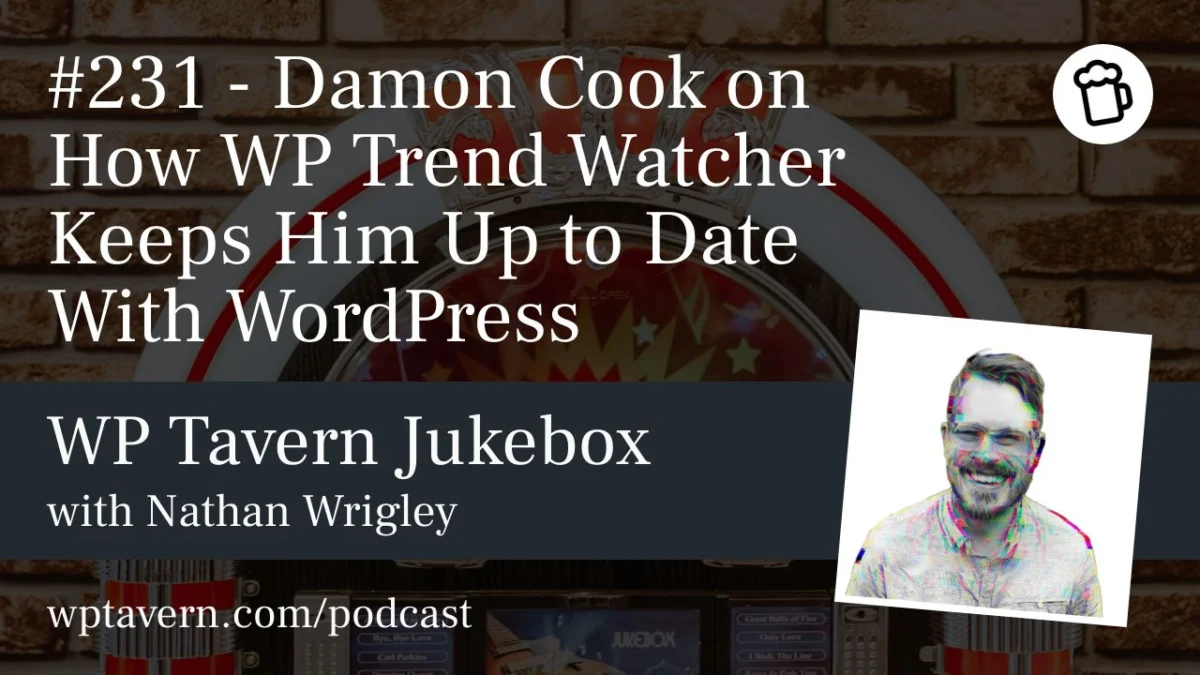
Enter Damon Cook, a veteran WordPress developer, community contributor, and founder of Noma Digital, who has confronted this digital overwhelm head-on. In a recent episode of the Jukebox Podcast from WP Tavern, hosted by Nathan Wrigley, Cook discussed his latest open-source project: WP Trend Watcher. Designed to siphon through the chaos of RSS feeds, summarize industry shifts, and inject a vital layer of critical human review, this tool represents a fascinating intersection of local artificial intelligence and manual editorial oversight.
Main Facts: The Anatomy of WP Trend Watcher
At its core, WP Trend Watcher is a TypeScript-based, open-source application designed to run locally on a developer’s machine. Rather than relying on a fully automated, hands-off cloud architecture that churns out unverified content, Cook’s tool is engineered to function as a collaborative workspace between machine intelligence and human judgment.
Key Components of the Project:
- Local AI Execution: Utilizing applications like LM Studio on macOS, WP Trend Watcher leverages local Large Language Models (LLMs)—such as various iterations of Qwen—to process and summarize data without relying entirely on third-party cloud APIs.
- RSS Aggregation: The tool pulls data from a curated list of reliable WordPress news sources, core updates, and developer blogs.
- Prompt-Driven Summarization: The AI is fed specific prompts instructing it to evaluate articles through the lens of a developer or agency owner, filtering out fluff and highlighting factual, deterministic developments.
- The "Human-in-the-Loop" Mandate: The workflow purposefully halts before publishing, requiring Cook to manually audit, click through, and fact-check every single AI-generated summary.
- Public Transparency: Final reports are published weekly via GitHub Pages, complete with notes detailing how much time the curator spent reviewing the content and which local AI model was utilized for that week’s run.
Chronology: From Community Contributor to AI Tinkerer
To understand why Cook built WP Trend Watcher, it is helpful to examine his trajectory within the WordPress ecosystem over the past decade.
2010s – The Era of Manual Monitoring
Having spent more than ten years working as a developer for various WordPress-centric agencies, Cook was an active participant in community contributions, monitoring communication channels like Slack, Trac, and WordPress.org forums. During this period, staying informed required a disciplined, albeit exhausting, manual routine of scouring individual blogs and forums.
2023–2024 – The Rise of Generative AI and Agency Pivots
Following significant industry shifts—including a transition from agency employment to running his own freelance practice, Noma Digital—Cook observed a dramatic escalation in the volume of digital content. Simultaneously, the explosion of generative AI technologies in late 2022 and 2023 offered new ways to handle data processing, though many early implementations lacked reliability and nuance.
2025–2026 – Developing WP Trend Watcher
Frustrated by the inefficiency of manually sorting through redundant or low-value content, Cook began tinkering with local AI models. Recognizing his own obsession with cutting-edge tech and his need to stay ahead of major core releases (such as WordPress 7.1), he built the foundational code base for WP Trend Watcher. The project evolved from a purely selfish experiment into an open-source utility designed to help others navigate the same information overload.
Supporting Data: The Mechanics of Information Filtration
Managing information overload in an ecosystem powering over 40% of the web requires strict parameters. Cook’s methodology relies heavily on prompt engineering and rigorous deduplication protocols.
When WP Trend Watcher executes its weekly scan, it performs several backend checks before presenting data to the user:
- Deduplication: The AI cross-references incoming RSS items to ensure that multiple blog posts covering the exact same core commit or plugin update are consolidated rather than repeated.
- Fact-Based Filtering: Prompts are tuned to discard superfluous commentary or marketing spin, focusing instead on technical accuracy, architectural changes, and community governance updates.
- Audit Trails: Every published weekly summary includes metadata detailing the exact local AI model used for inference, ensuring absolute transparency regarding how the content was parsed.
However, Cook is quick to point out the limitations of automation. "If I just read the paragraph from the AI summary… it’s not really covering, and might miss something in that full article that actually really interested me," Cook explained during the podcast. Consequently, the software serves primarily as an aggressive triage mechanism, leaving the deep reading and final curation to human eyes.
Official Perspectives and Philosophy: The "Human-in-the-Loop" Imperative
The technology sector is currently flooded with automated content generation tools designed to publish articles, newsletters, and summaries with zero human intervention. Cook’s philosophy stands in stark contrast to this trend.
Guarding Against "Cheap" Automation
When asked how he views the ethical implications of using AI to summarize human-written journalism and community updates, Cook was candid: "It does make me feel cheap."
This self-awareness is precisely why the architecture of WP Trend Watcher mandates human involvement. By refusing to let the AI publish directly to the web, Cook ensures that the final output retains editorial accountability. He notes that the manual act of clicking through links, verifying facts, and writing personal concluding notes is not just a quality control measure—it is a vital cognitive exercise that helps him genuinely retain and process what is happening in the ecosystem.
Transparency Over Illusion
Rather than masking the use of artificial intelligence behind a facade of traditional editorial work, WP Trend Watcher embraces open-source radical transparency. By making the code publicly available on GitHub under his handle (colorful-tones), Cook invites other developers to fork the repository, adjust the prompts, plug in their own RSS sources, or experiment with different local models.
Implications: What WP Trend Watcher Means for the Future of Tech Curations
As we look toward the latter half of the decade, projects like WP Trend Watcher offer a glimpse into how technical professionals may manage information in an increasingly automated world.
1. The Death of the Manual RSS Reader?
For years, tech journalists, podcasters, and developers relied on traditional RSS readers (like Feedly or NetNewsWire) to manually plow through hundreds of unread items daily. Tools that integrate local LLMs to triage, summarize, and deduplicate information may signal a generational shift in how individuals maintain their personal knowledge bases.
2. The Danger of Echo Chambers and Model Hallucinations
While local models offer privacy and flexibility compared to cloud-based APIs, running smaller models on consumer hardware (such as an 18GB memory constraint on a Mac) introduces potential risks regarding nuance and comprehension. Fact-checking remains a non-negotiable step. As Cook demonstrated, the utility of the tool lies precisely in treating the AI output as a draft rather than an authoritative final product.
3. Scaling State and Historical Context
Looking forward, tools that accumulate weekly digests over months and years begin to build a corpus of institutional memory. In future iterations, similar architectures could allow developers to query historical trends—asking an AI not just what is happening today, but why a specific architectural decision was made in WordPress Core two years prior, tracing the digital breadcrumbs across hundreds of disparate commit logs and community discussions.
Conclusion: Getting Involved
For WordPress professionals struggling to keep pace with the relentless evolution of the platform, WP Trend Watcher offers a compelling, open-source glimpse into smarter workflows. Whether you are an agency owner looking to anticipate client questions about upcoming core releases or a developer curious about running local AI models via tools like LM Studio, Cook’s project provides a practical blueprint.
To explore the code, review past weekly summaries, or learn how to set up WP Trend Watcher on your own local machine, you can visit the GitHub repository under the user account colorful-tones, or read Cook’s documentation on his personal site at damonacook.com.
To listen to the full interview with Damon Cook, search for the Jukebox Podcast on WP Tavern or visit wptavern.com/podcast.