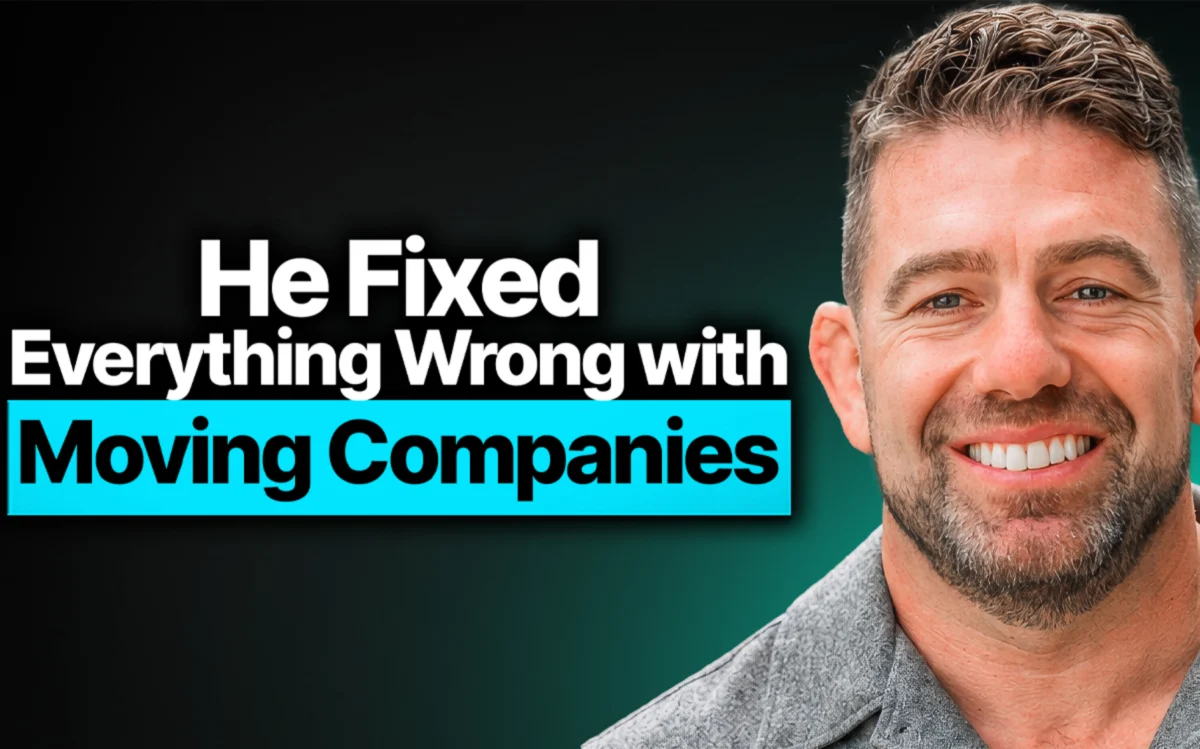
SAN LUIS OBISPO, Calif. — In the landscape of modern entrepreneurship, the dominant narrative often revolves around venture capital, rapid scaling, and disruptive technology. Yet, the 29-year trajectory of Meathead Movers offers a starkly different blueprint—one forged in the weightrooms of a California high school, tested by regulatory crises, and built brick-by-brick through disciplined, boots-on-the-ground execution.
In a recent episode of the Niche Pursuits podcast, founder Aaron Steed sat down to dissect how he transformed a teenage side hustle into an eight-figure powerhouse. Today, the company boasts nine locations, two mini-storage facilities, and a proprietary operating model that has redefined consumer expectations in the notoriously fractured moving industry.
However, behind the multi-million-dollar valuation lies a grueling journey marked by disconnected phone lines, hostile local competitors, regulatory crackdowns, and a marketing disaster that nearly derailed the company’s largest regional expansion.
1. Main Facts: The Blueprint of an Eight-Figure Brand
Meathead Movers stands today as a dominant regional moving and storage enterprise on the West Coast, but its core mechanics remain remarkably true to its humble origins.
- Founding Context: Launched in San Luis Obispo, California, when Steed was just 17 years old and balancing high school academics with competitive wrestling.
- Current Footprint: Nine moving locations and two mini-storage facilities, with a strategic roadmap targeting two new office openings annually.
- Core Differentiator: An athletic staffing model that relies on high school and collegiate athletes—primarily wrestlers and football players—trained to jog on the job when not carrying heavy items.
- Proprietary Operations: A rigorous 400-point training program, an industry-unprecedented accountability and refund guarantee, and localized "Meathead Moments" designed to drive organic referrals.
- Social Mission: A long-standing, embedded initiative providing free moving services for individuals fleeing domestic violence, executed in partnership with local shelters.
2. Chronology: From Weightroom Nickname to Regional Empire
The Genesis in San Luis Obispo
Growing up in San Luis Obispo—a community of roughly 50,000 to 60,000 residents supplemented by approximately 30,000 Cal Poly students—Aaron Steed found his life anchored by wrestling. Needing flexible income to accommodate his athletic schedule, he began knocking on the doors of friends’ parents, offering to help with domestic chores and small moves.
Within his first ten jobs, a pattern emerged. Customers repeatedly praised his work ethic, comparing it favorably to the prevailing industry standard. At the time, consumers routinely complained about traditional movers failing to show up on moving day, damaging property, or inflating prices after trucks were already loaded.
Steed recognized a massive market inefficiency. Furthermore, his athletic background provided an immediate, high-caliber talent pool. As captain of his high school wrestling team, alongside his brother who played football, Steed began recruiting peers who possessed innate discipline, physical endurance, and teamwork skills.
The company’s iconic moniker was born entirely by accident. Members of the local girls’ volleyball team dubbed Steed and his wrestling friends "meatheads" because they routinely left weight equipment sweaty before freestyle practice. Rather than discarding the label, Steed embraced it, turning a casual high school jibe into a memorable, high-retention brand name.
Surviving the 2000 Regulatory Crisis
As Meathead Movers gained traction in its first few years, local established competitors took notice. Traditional moving companies challenged Steed’s right to operate without a professional moving license. At the time, Meathead Movers functioned primarily as a labor service, with customers renting and driving the moving trucks themselves.
Regulatory authorities ultimately ruled against the startup. In the summer of 2000, the company’s phone lines were abruptly disconnected.
In a pre-internet local service economy dominated by print directories, a disconnected phone number was an existential threat. Potential clients calling from the phone book were met with a dead end, threatening not only Steed’s livelihood but also the financial stability of his young employees. Rather than folding, Steed made a pivotal life decision: he de-prioritized his collegiate wrestling career to save the business.
Navigating the $25,000 Hurdle
With his primary communication channel severed, Steed needed an alternative way to reach customers while raising the $25,000 required to secure full state licensing, insurance, and accounting infrastructure.
He approached New Times, a local weekly newspaper, to pitch advertising space. Anticipating that regulators might target these alternative ads as well, Steed preemptively cycled through a series of temporary business iterations and phone numbers as enforcement actions mounted.
After several iterations and months of aggressive local promotion, Steed amassed the necessary capital. He passed the state examinations, acquired proper permits, and transitioned Meathead Movers into a fully licensed professional moving company authorized to lease and operate its own truck fleet.
The Fleet Financing Breakthrough
Operating purely as a labor service required renting commercial trucks at a monthly cost of $8,000 to $9,000. Roughly a year after securing his license, Steed calculated that financing a proprietary fleet would save the company $2,000 every month.
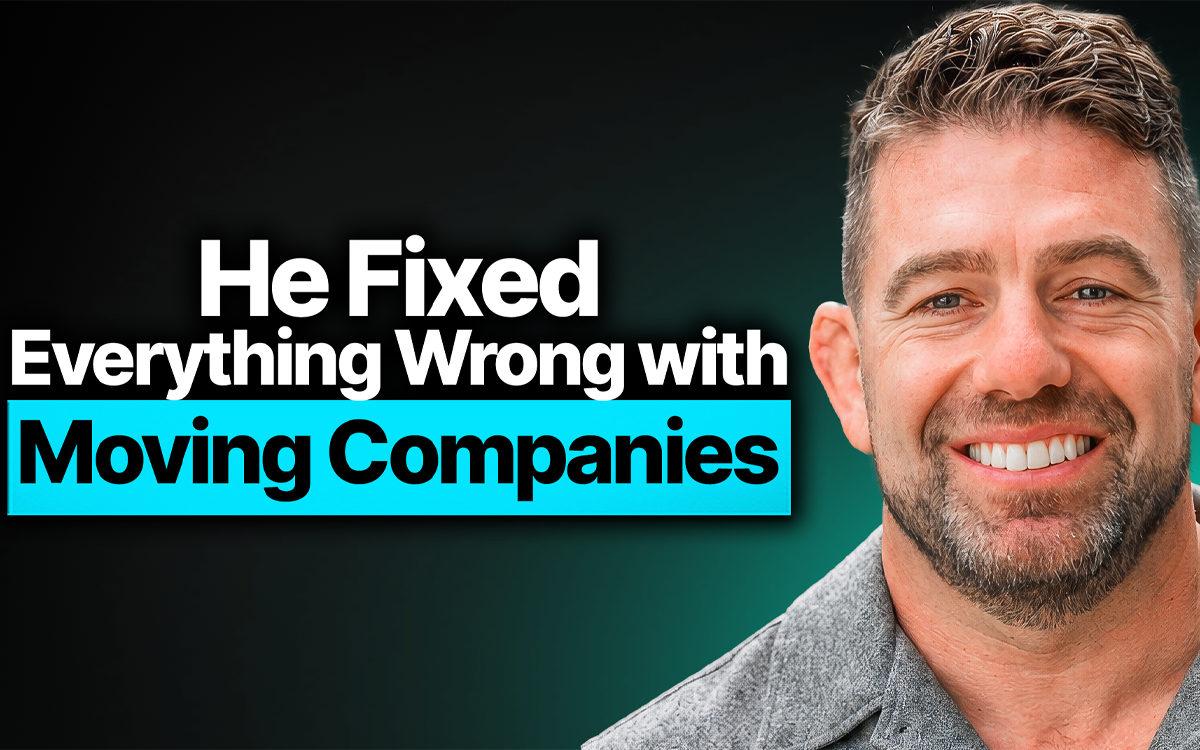
Despite having minimal credit history and no co-signer, Steed successfully pitched Mid-State Bank & Trust. The bank approved the financing, enabling Meathead Movers to purchase five new trucks. This capital expenditure cemented the company’s legitimacy, allowing it to compete directly with legacy operators. Within a few years, many of the very competitors who had attempted to shut him down went out of business.
The Camarillo Expansion and the Yellow Pages Disaster
As the company matured, strategic expansion became the next frontier. Following a successful beachhead in nearby Santa Maria in 2005, Meathead Movers executed a much larger geographic leap in 2007 to Camarillo, positioning itself to capture Ventura County and northern Los Angeles County.
The centerpiece of the Camarillo launch was a major marketing agreement with AT&T Yellow Pages. Steed negotiated full-page advertisements, leased a 7,000-square-foot facility, and relocated six employees to the new market.
Just one month before publication, AT&T informed Steed that it would not honor the contract. The directories printed without a single mention of Meathead Movers.
Faced with a massive overhead and zero directory presence in a market still dependent on print, Steed’s team launched an aggressive, grassroots counter-offensive. Employees engaged in relentless street-level marketing, handing out promotional materials across the region—an endeavor so grueling that team members were occasionally pelted with Slurpees by hostile locals.
Simultaneously, Steed pivoted. He redirected the tens of thousands of dollars originally earmarked for the Yellow Pages directly into digital marketing and website optimization. Steed himself relocated to Ventura County for a year to personally oversee operations. The grueling campaign succeeded; word-of-mouth spread, digital channels took hold, and the Camarillo branch became a cornerstone of the company’s multi-million-dollar growth.
3. Supporting Data: Metrics, Conversion, and Operational Scale
The modern iteration of Meathead Movers relies heavily on sophisticated data analytics, rigorous conversion rate optimization, and refined sales funnels. Steed highlighted several key operational metrics driving the business in 2026:
- Lead Response Dynamics: The company closes approximately 50% of prospects it successfully reaches on the initial interaction. In stark contrast, the close rate for leads the company fails to connect with immediately drops into the low 20% range—representing a massive 30-percentage-point performance gap.
- The "Double Tap" Strategy: To close this gap, Meathead Movers implemented an automated follow-up protocol. If an initial call goes unanswered—often because consumers fail to recognize an unknown caller ID—the system immediately triggers a text message identifying Meathead Movers before initiating a second call. This transparency dramatically increases answer rates.
- Time-to-Task Efficiency: Steed estimates that a move completed by Meathead Movers’ athletic crews in three to four hours frequently takes traditional moving companies five to seven hours. Because moving services bill hourly, this pace directly protects the consumer’s financial investment.
- Expansion Velocity: The company maintains a disciplined growth target of opening two new offices per year, ensuring that capital reserves and internal leadership development never lag behind geographic footprint.
4. Official Perspectives and Industry Implications
Steed’s philosophy challenges long-standing conventions within the service sector, particularly regarding accountability and customer trust.
Redefining Industry Accountability
The moving industry has historically operated under a rigid, liability-limiting valuation of $60 per pound for damaged items—meaning a destroyed 50-pound television might yield a meager $30 in compensation. Meathead Movers was built to aggressively counter this baseline through radical transparency and consumer-first guarantees.
The company instituted a fair refund policy: if a customer feels an individual employee delivered only 50% of the expected value, management has the authority to replace that worker and issue a 50% refund for that specific labor allocation. Furthermore, the company offers a comprehensive property damage guarantee, promising to repair or replace any damaged items through professional restoration or direct replacement rather than relying on depreciated weight formulas.
The Branch Ownership Model
Looking toward the future of West Coast expansion, Meathead Movers is rolling out an innovative employee-ownership structure designed to solve traditional scaling hurdles while creating generational wealth opportunities.
Branch general managers receive profit-sharing during their initial tenure. After several successful years, managers can utilize accumulated earnings to purchase an ownership stake of up to 40% in their respective branch.
"This model creates a tangible pathway to business ownership for employees who may not come from wealthy backgrounds," Steed noted during the podcast. "It keeps ownership tightly aligned with the people on the ground who interact with our customers every single day."
5. Broader Implications for Modern Entrepreneurship
The trajectory of Meathead Movers serves as a masterclass in resilient, compounding entrepreneurship. In an era dominated by hyper-funded startups seeking overnight ubiquity, Steed’s 29-year campaign demonstrates the enduring power of operational fundamentals:
- Brand Identity as a Moat: What began as a derogatory high school nickname was transformed into a memorable, differentiated brand asset backed by visible, physical execution (jogging crews).
- Crisis as a Catalyst: Regulatory hurdles and marketing failures (such as the Yellow Pages breach) were not treated as terminal failures, but rather as forced evolutions that pushed the company into more sophisticated digital marketing and direct-to-consumer infrastructure.
- Values-Driven Culture: Integrating social missions—such as providing free relocation services for victims of domestic violence—creates deep intrinsic motivation among employees, drastically reducing turnover in a physically demanding industry.
- Patience Over Velocity: By refusing to over-expand during periods of limited capital or unproven market readiness, Meathead Movers built a durable financial foundation capable of weathering economic downturns.
As Meathead Movers eyes continued expansion across the West Coast with its innovative branch-ownership model, the enterprise remains anchored to the core promise Aaron Steed made as a 17-year-old wrestler in San Luis Obispo: outwork the competition, protect the customer’s trust, and treat every move as a referendum on the company’s reputation.