The digital landscape is undergoing a profound metamorphosis. Across platforms like Instagram, Pinterest, and Twitter, users are greeted by an ever-expanding ocean of breathtaking visuals, hyper-realistic renders, and surreal concepts. These creations share a common origin: they are the products of text-to-image artificial intelligence engines such as DALL-E, Midjourney, and Stable Diffusion. By simply typing a string of descriptive text—a "prompt"—users can conjure complex visual art in a matter of seconds.
This technological leap has sent ripples of both excitement and existential dread through the global design community. Design practitioners, accustomed to spending years honing their craft, now confront a pressing question: Will artificial intelligence replace designers, or will it redefine the very nature of creative work?
Authored by industry experts Nick Babich and Gleb Kuznetsov, a comprehensive look at the intersection of AI and design sheds light on the current state of the industry, addresses the fears gripping creative professionals, and offers practical guidance on how designers can harness AI as a powerful collaborator.
The Chronology of Craft: From Manual Execution to Algorithmic Acceleration
To understand the current panic surrounding AI, one must first examine the historical reality of the design profession. Mastering design has never been an overnight achievement. It demands years of rigorous practice, an understanding of color theory, typography, composition, and user psychology, and mastery over complex digital software suites.
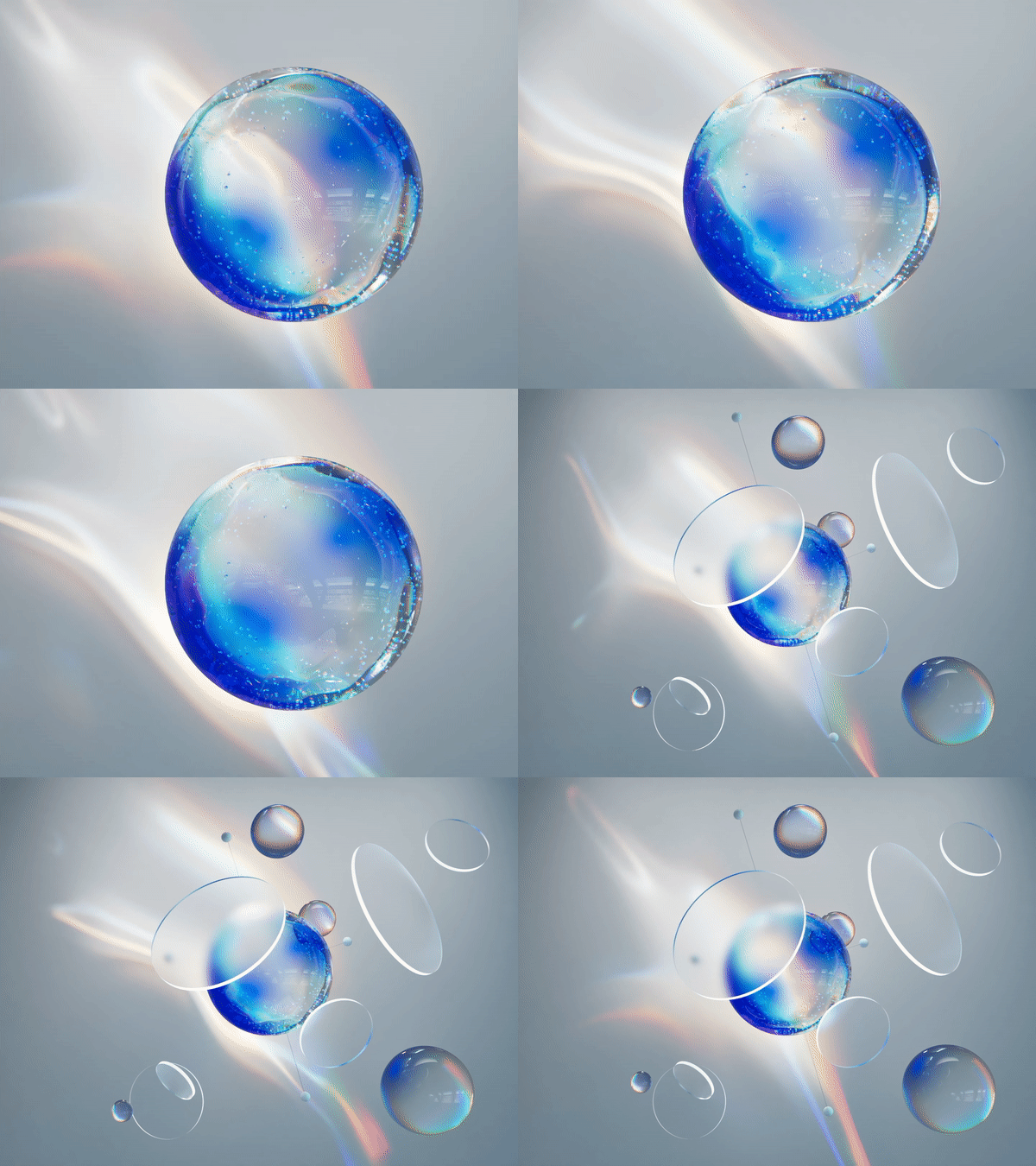
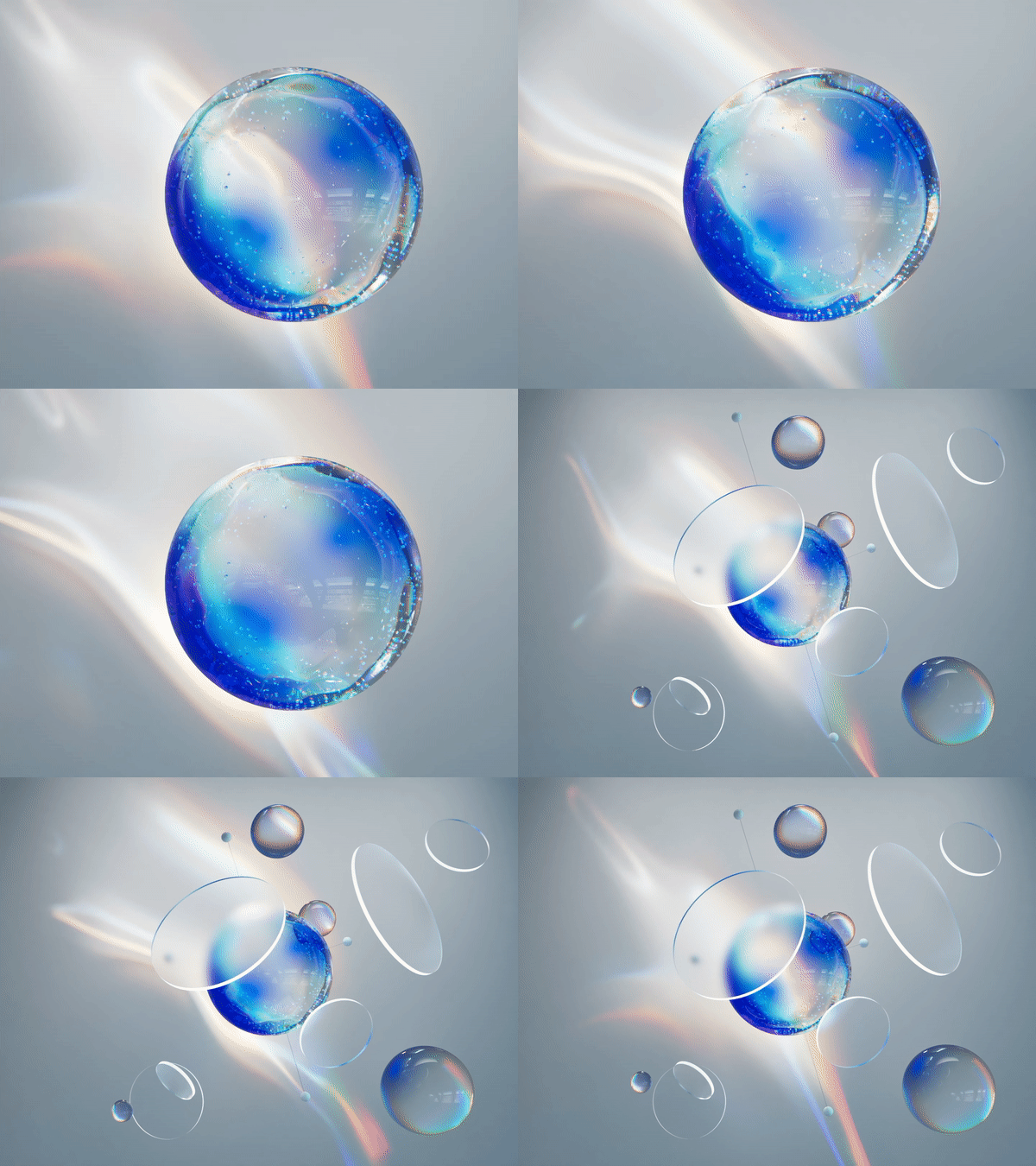
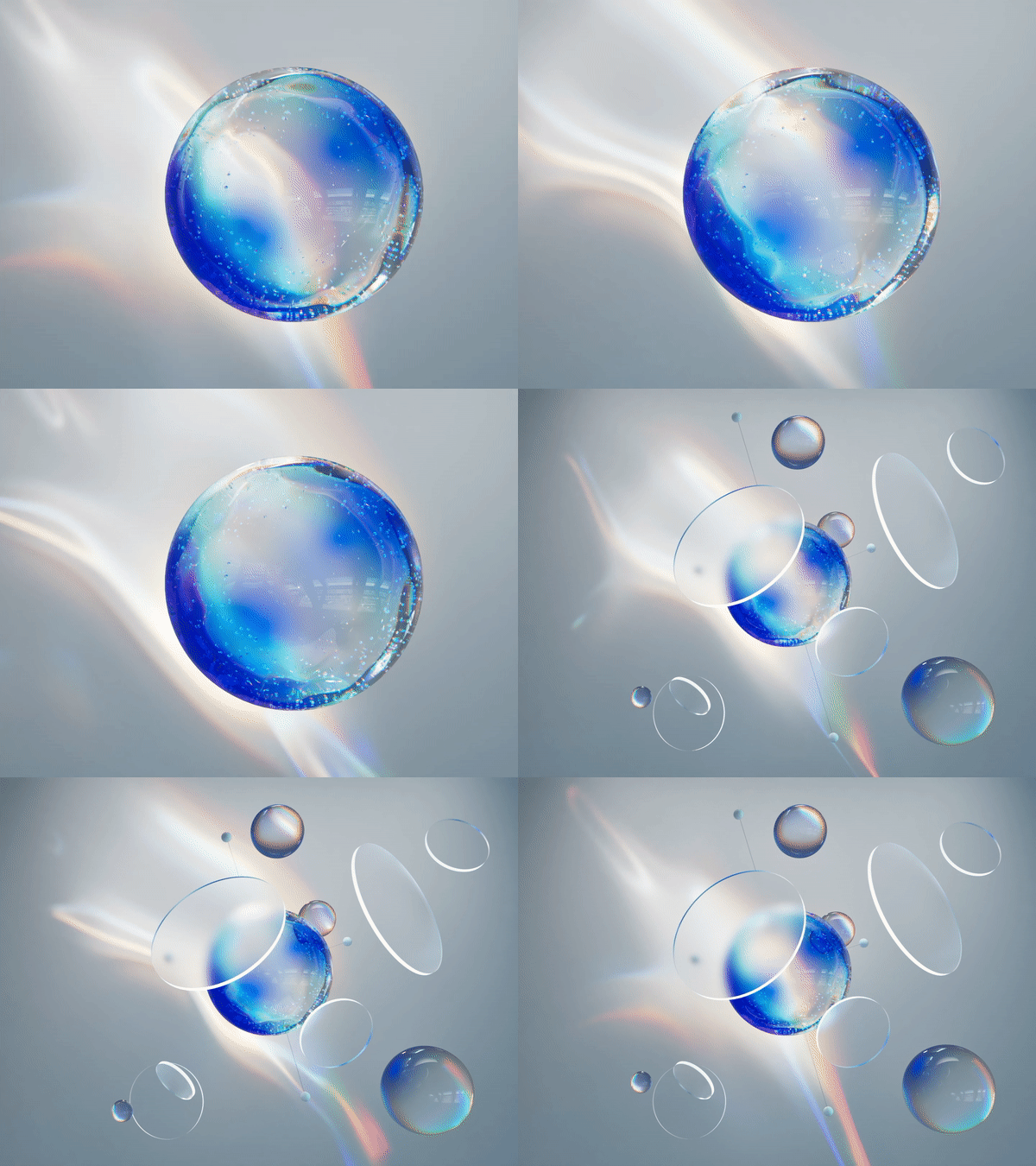
As Kuznetsov illustrates with his work on glass-reflection CGI—a project that required 87 hours of rendering across five RTX graphics cards for just a few seconds of final footage—the visualization of ideas has historically been labor-intensive.
[Traditional Design Pipeline]
Idea Conception (5%) ➔ Tedious Manual Craft & Rendering (95%) ➔ Pitch ➔ Audience Testing ➔ Revision/Discard

[AI-Accelerated Pipeline]
Idea Conception & Vision ➔ AI Rapid Prototyping (Minutes) ➔ Human Curation & Refinement ➔ Final Asset
Designers frequently note that their field is roughly 95% physical craft and only 5% conceptual art. A tremendous amount of energy goes into translating mental images into visual reality. Compounding this frustration is the fickle nature of the market; after pouring days or weeks into a project, a designer might discover that their execution simply fails to resonate with the target audience, sending their hard work straight to the digital garbage bin.
The advent of modern AI alters this timeline dramatically. Tasks that previously consumed hours or days can now be iterated upon in minutes. Rather than spending valuable time pushing pixels, designers are increasingly shifting into the role of visionaries—directors who instruct the computer on what to build and guide the resulting output.
Addressing the Hard Questions: Credit, Copyright, and Career Security
As generative tools saturate the market, industry professionals are grappling with legal, ethical, and professional uncertainties.

Can Designers Take Credit for AI-Generated Art?
The short answer is yes, but ethically, they shouldn’t. Current text-to-image engines offer limited granular control over the inner mechanics of image generation. Users input words and let the system "work its magic," meaning the final output often lacks a distinct human fingerprint or deep personal nuance. While today’s tools function more like black boxes, future iterations are expected to give creators unprecedented precision over every layer of the asset-generation process. Until then claiming unedited AI output as purely one’s own remains ethically ambiguous.
Will AI Take My Job?
The anxiety palpable among digital artists and illustrators is rooted in economics. Businesses, perpetually driven by efficiency and cost-reduction, are increasingly turning to AI to generate functional visual assets for a fraction of the cost of hiring human talent. This trend is actively driving down the perceived market value of illustration and design work.
However, historians of technology urge calm. During the 19th-century Industrial Revolution, English textile workers—known as Luddites—smashed weaving machinery out of fear of displacement. While machines permanently altered the labor landscape by absorbing heavy lifting and monotonous tasks, they did not eliminate human labor; instead, they multiplied productivity.
The introduction of AI follows this exact historical trajectory. AI will not completely replace human ingenuity; rather, it will supercharge human potential. The primary driver behind every technological tool in human history has been work efficiency, and AI is no exception. In the age of AI, a designer’s true competitive edge lies not in execution speed, but in the quality of their ideas, their empathy, and their ability to diagnose and solve genuine human problems.
The Legal Landscape and the Homogenization Dilemma
The rise of AI has also ignited fierce legal battles. In early 2023, a group of artists filed a landmark class-action lawsuit against Midjourney and Stability AI, alleging copyright infringement. The core grievance: these models were trained on billions of copyrighted internet images without the consent or compensation of the original creators. While determining the legality of training datasets remains a complex judicial hurdle, the systems themselves generate novel works based on learned patterns rather than direct copying.
Concurrently, the industry faces the threat of "homogenized design." Just as the "Dribbblisation of design" led to an era where countless digital products mirrored identical aesthetic trends, AI models trained on specific datasets (such as Lexica Aperture v2) frequently churn out visually similar outputs. Overcoming this requires the designer to act as a discerning curator rather than a passive prompter.

Supporting Data: Understanding Text-to-Image Parameters
For designers looking to integrate AI into their workflows, mastering the underlying parameters of tools like Stable Diffusion and Midjourney is essential. Visual exploration generally splits into two methodologies: Text-to-Image and Image-to-Image.
1. Text-to-Image Workflows
When generating images from text prompts, technical configurations dictate the quality and uniqueness of the output:
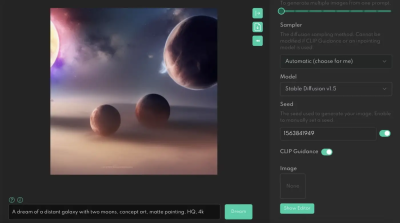
- Sampling Steps: Determines how many iterations the AI model takes to refine the image. More steps generally yield sharper, more coherent details up to a point of diminishing returns.
- Seed Numbers: A numerical value that initializes the pseudo-random noise from which the image is built. Specifying an exact seed number allows a creator to replicate or closely copy an original generated image across subsequent runs.
2. Image-to-Image (Img2Img) Workflows
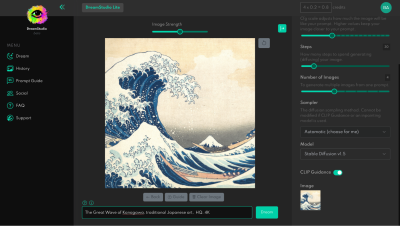
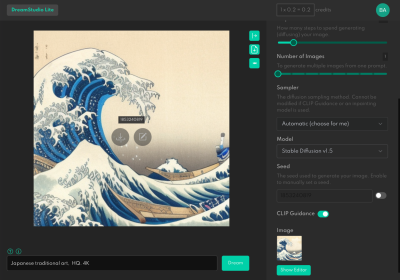
Instead of starting with a blank slate, creators can feed an existing source image—such as Katsushika Hokusai’s classic painting Under the Wave off Kanagawa—into the system and manipulate parameters like Image Strength:
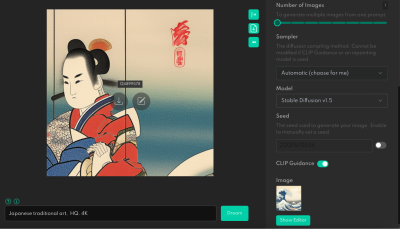
- Low Image Strength (e.g., 5%): Grants the AI high creative freedom. The output will retain very few visual attributes of the source, reinterpreting the concept into something radically different (such as transforming a wave painting into a portrait of a person in traditional costume).
- High Image Strength (e.g., 95%): Restricts the AI, forcing it to produce a subtle variation closely resembling the original source material.
This capability signals a major shift: AI tools are effectively poised to replace traditional mood boards. Instead of manually clipping images from Pinterest or Behance, designers can prompt an AI to synthesize entirely new exploratory directions instantly.
Official Responses and Industry Integration
Major corporate entities are rapidly integrating generative AI into commercial pipelines rather than fighting it. For instance, stock photography giant Shutterstock partnered with OpenAI to integrate DALL-E directly into its platform, ensuring that contributors are financially reimbursed when their work is used to train generative models.
Furthermore, AI is rapidly transforming complete product design workflows:
- Rapid UI/UX Prototyping: Designers using prompts such as "mobile app UI design, hotel booking, Dribbble, Behance –v 4 –q 2" (utilizing Midjourney’s version 4 parameters and high-quality settings) can generate high-fidelity application concepts in seconds rather than weeks.
- Overcoming Common Artifacts: Early-generation AI models are notoriously infamous for anatomical anomalies, such as rendering human hands with extra fingers. However, as model training datasets and algorithms improve, these technical hurdles are rapidly disappearing.
- The Metaverse and Virtual World-Building: As virtual reality and spatial computing expand, content production will rely heavily on algorithmic generation. Designers will transition into directorial roles, shaping sprawling virtual cities and environments through natural language and high-level curation rather than manually modeling every polygon.
Implications: A New Chapter in Co-Creation
Steve Jobs famously described the computer as a "bicycle for our minds"—a tool that dramatically amplifies human capability without replacing the operator. In the modern era, artificial intelligence serves as a bicycle for human creativity, acting as a "second brain" that partners with the creator during the discovery phase.
The future of design is not about human obsolescence, but about enhanced collaboration. Next-generation AI models will learn both about the creator and from the creator, tailoring aesthetics and functionality to match individual tastes and brand identities. By offloading tedious technical execution and manual asset production to algorithms, designers are liberated to focus on what they do best: empathetic problem-solving, strategic vision, and imaginative storytelling.
Ultimately, AI will not replace human creativity; rather, it will democratize it, allowing a broader spectrum of individuals to bring their visions to life and enriching the visual fabric of our world.