
By the Editorial Desk
Published: Insights & Analysis
Executive Summary & Main Facts
In the rapidly evolving digital economy, a persistent misconception continues to undermine product design teams worldwide: the interchangeability of User Interface (UI) and User Experience (UX) design. According to industry expert Paul Boag, treating these two distinct disciplines as one and the same is not only technically inaccurate, but it fundamentally limits the strategic value that designers bring to an organization.
While UI designers focus primarily on the aesthetics and direct interactivity of a screen—the buttons, typography, and visual layouts—UX designers are tasked with orchestrating the entirety of a user’s journey. Nowhere is this distinction more critical, or more frequently overlooked, than in the complex realm of Business-to-Business (B2B) sales and customer engagement.
B2B transactions are rarely instantaneous. Unlike streamlined Business-to-Consumer (B2C) e-commerce purchases, enterprise sales cycles involve prolonged consideration periods, multiple stakeholders, fragmented communication channels, and a blend of digital touchpoints and human-to-human interactions. Consequently, organizations that restrict their UX professionals to wireframing and interface design are missing a vital opportunity to optimize the entire customer lifecycle, bridge organizational gaps, and protect revenue.

The Chronology of a B2B Sale: A Complex Multi-Month Narrative
To truly comprehend why UX design must extend far beyond the boundaries of a computer screen, one must examine the typical timeline of a B2B enterprise engagement. The journey of a corporate client rarely begins with a product purchase; rather, it is a prolonged, phased evolution.
Phase 1: Discovery and Initial Need Recognition
The timeline typically starts months before a contract is signed. A business encounters a systemic bottleneck or strategic challenge—such as scaling operations or modernizing legacy infrastructure. At this stage, the prospective client is not looking for a hard sales pitch. Instead, they are consuming educational content, searching organic queries, attending industry webinars, or reading thought-leadership articles.
Phase 2: Relationship Nurturing and Information Gathering
Once a potential solution is identified, a significant gap often emerges. Securing internal corporate budgets and aligning cross-departmental stakeholders takes time. During this multi-month waiting period, prospective leads can easily drift away if left unengaged. Effective B2B touchpoints during this phase include targeted mailing list subscriptions, informative case studies, and consultative resources designed to build trust without exerting pressure.
Phase 3: Formal Engagement and Cross-Channel Transition
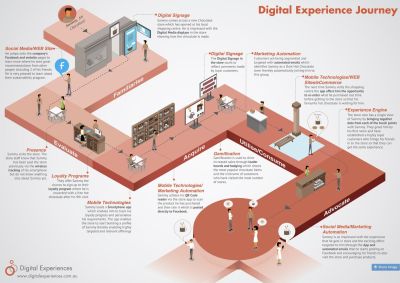
Eventually, the prospect crosses the threshold into active supplier evaluation. This transition frequently involves shifting between devices (e.g., browsing on a mobile phone during a commute and completing an inquiry form on a desktop laptop) and communicating with various company representatives, from customer support agents to senior account executives.
Phase 4: Conversion, Onboarding, and Long-Term Partnership
Only after navigating these layered interactions does the client commit to a formal project. Yet, the UX journey does not terminate at conversion. The onboarding process, account management, and ongoing technical support continue to shape the client’s perception of the brand for years to come.
Supporting Data and Industry Insights: The Anatomy of UX vs. UI
The friction between UI and UX stems from a fundamental misunderstanding of scope. Industry data and qualitative case studies consistently demonstrate that digital interfaces account for only a fraction of a customer’s holistic brand perception.
- The Scope Discrepancy: While a UI designer refines pixel density, color contrast, and component states, a UX designer maps out ecosystem-wide behaviors. They analyze how an ad campaign sets expectations for a landing page, and how that landing page, in turn, prepares the user for a phone call from a sales representative.
- The Cost of Misaligned Touchpoints: Research into conversion rate optimization reveals that premature calls to action—such as aggressive lead-generation overlays deployed before a user has had time to understand a product’s value—lead to severe user drop-off. For instance, forcing newsletter sign-ups or discount offers on first-time visitors before they have explored the core offerings alienates potential buyers and degrades trust.
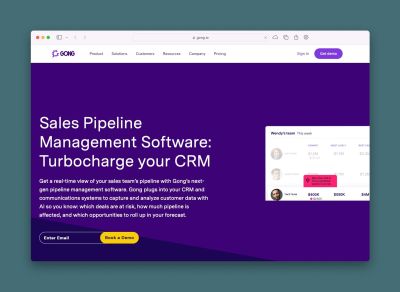
- The Danger of Inter-System Gaps: Gaps in the user journey occur naturally as customers move across time, channels, devices, and internal corporate silos. Companies leveraging advanced customer relationship management (CRM) software and sales pipeline tracking—such as platforms utilized by enterprise sales teams—report significantly higher retention rates because they actively mitigate these transition gaps. A seamless experience is one where data is preserved when moving from mobile to desktop, and where users are not forced to repeat identity verification steps when transitioning from a digital app to a phone support line.
Official Perspectives and Expert Commentary
Prominent design thinkers and digital strategists have increasingly spoken out against the siloed deployment of design talent.
Paul Boag, a noted advocate for holistic user experience, emphasizes the professional hazard of boxing designers into narrow technical roles:

"If you have been hired as a UX designer and yet spend all of your time creating wireframes for websites, apps, and other interfaces, I would suggest your organization or clients are failing to utilize you to the full. You cannot improve the user experience without considering the entirety of the journey."
Furthermore, industry analysts suggest that user experience design is, in many ways, a specialized subset of broader Customer Experience (CX) Design, just as User Interface design is a specialization within UX. When human-to-human interactions enter the equation—such as a sales representative pushing too hard, or a support agent relying on unhelpful, automated stock responses—technology often amplifies the frustration.
According to customer service specialists, digital tools can create a sense of distance and impersonality. Consequently, progressive organizations are beginning to invest in internal sales coaching workshops, empathy training, and communication protocols to ensure that human touchpoints match the frictionless quality of their digital interfaces.
Strategic Implications for Modern Enterprises
The realization that UX encompasses every touchpoint—digital, physical, and human—carries profound implications for corporate structures, hiring practices, and long-term business profitability.
1. Redefining the Designer’s Mandate
Organizations must stop treating UX designers as mere aesthetic decorators or layout technicians. Executives need to empower UX professionals to audit entire business pipelines, identifying friction points not just within software code, but across marketing funnels, sales strategies, and customer support workflows.
2. Bridging Internal Silos
Many of the worst user experiences are born from corporate fragmentation—where the marketing department, the web development team, the sales force, and the customer success division operate in complete isolation. Holistic UX requires breaking down these internal walls to ensure data flows seamlessly from a marketing landing page into a sales CRM without user disruption.
3. Valuing Human-Centric Communication
In B2B environments, deals are ultimately made between people. Enterprises must recognize that emails, chat logs, video consultations, and phone calls are foundational UX elements. Training sales and support teams in empathetic communication is just as vital to the user journey as optimizing website loading speeds.
Conclusion
True user experience design cannot exist in a vacuum bounded by browser windows and mobile screens. By expanding the mandate of UX professionals to cover the entire end-to-end journey—from the first organic search query to long-term post-sale support—businesses can eliminate costly gaps, nurture fragile leads, and build enduring commercial relationships that withstand the test of time.