BERLIN — In the realm of digital product development, language is rarely restricted to the written word. While authors use vocabulary and syntax to connect with their readership, interaction and visual designers rely on an ecosystem of color palettes, typography, scale, shapes, and icons to communicate with users. When executed effectively, this visual design language (VDL) acts as a powerful communication framework, eliminating friction across development teams and ensuring that a brand’s core identity matches its external perception.
In 2016, design agency Fantasy undertook one of its most ambitious assignments to date: formulating a unified visual operating system interface for telecommunications giant Huawei, specifically targeted at the EMUI 5 interface. Spearheaded by visual designer Gleb Kuznetsov alongside a multidisciplinary team, the project shed light on the structural chaos that can plague multinational tech firms lacking a cohesive design baseline.
The initiative offered a rare, transparent look into the mechanics of enterprise-level software design, highlighting both the triumph of structured user experience (UX) methodologies and the persistent barriers to proper software implementation.
The Chronology of Chaos: Before the Blueprint
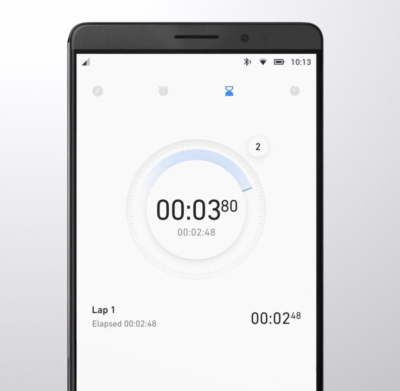
At the outset of the collaboration, Huawei lacked an independent, unified visual design language. Instead, the company relied on a heavily customized iteration of Google’s Android operating system. Rather than projecting clarity, this precursor was plagued by severe visual and functional inconsistencies.
The root cause was a classic enterprise pitfall: the "Tower of Babel" syndrome. Multiple teams, siloed departments, and varied functional roles—including UX practitioners, interaction architects, visual artists, and traditional graphic designers—had previously worked on fragments of the OS independently. Each faction approached the project with distinct skill sets and disparate perspectives, resulting in a fractured user journey. Without a centralized system of communication, integrating iterative changes into a final product became virtually impossible, leaving users navigating a jumbled and confusing digital environment.
Recognizing that digital design lacks the rigid physical constraints of industrial disciplines—thereby empowering designers to experiment wildly—the Fantasy team realized that unchecked creative freedom without a unifying framework leads directly to disjointed user experiences. To counteract this, Kuznetsov and his colleagues deployed a rigorous product development rubric: Research, Ideate, Design, Validate, and Implement.
Supporting Data and Strategic Research
The foundational phase of the Huawei project centered heavily on empirical research, split into three distinct analytical pillars: a comprehensive UI audit, brand perception studies, and competitive analysis.
1. The UI Audit
Before drafting a single new asset, the team systematically disassembled Huawei’s existing Android OS into its atomic components—colors, drop shadows, corner radii, line weights, and system transitions. By breaking down the interface into its fundamental building blocks (buttons, navigation bars, and icon sets), the team mapped out how individual parts formed the greater whole, paving the way for cross-platform consistency.
2. Brand Perception and Cultural Sensitivity
Designing an OS destined for a global market requires acknowledging that digital interfaces are deeply tied to cultural contexts. Partnering with Abigail Brody—former Apple creative director and newly appointed Chief UX Designer and VP of Huawei Devices—Kuznetsov’s team analyzed target demographics across the Americas, Europe, Asia, Africa, and Oceania. They constructed detailed buyer personas mapping demographics, core values, and user expectations to ensure the final product aligned seamlessly with both Eastern and Western design sensibilities.
3. Competitive Intelligence
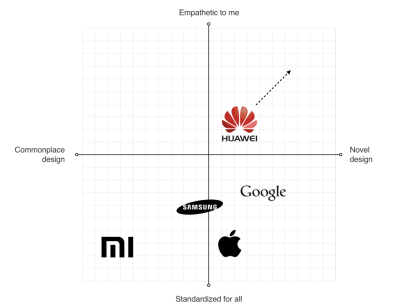
The team conducted a deep-dive analysis of four major market competitors, evaluating their strengths and weaknesses. For instance, while Apple’s iOS was noted for exceptional cross-device scalability and stringent standardization, it simultaneously drew criticism for iconographic inconsistencies and an over-reliance on heavy blur effects. Plotting these findings on a quadrant diagram allowed Huawei to pinpoint untapped strategic opportunities for differentiation.
4. Ergonomics and Visual Hierarchy
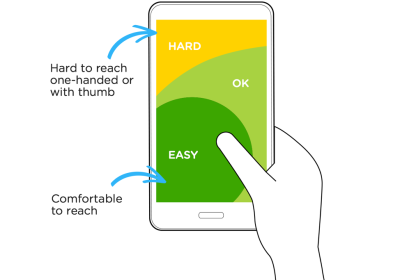
User research revealed a persistent ergonomic complaint: despite mobile screens expanding rapidly in size throughout 2016, critical functional controls on Android devices remained anchored to the top of the display. This forced users to constantly strain their fingers or adjust their physical grip.
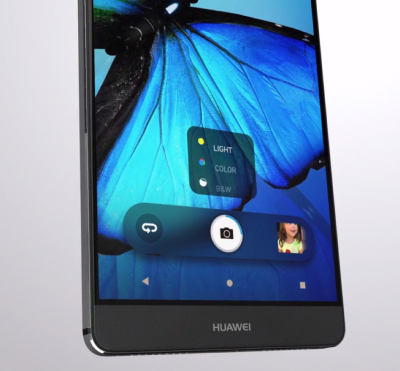
Collaborating with Huawei’s engineering division, Fantasy challenged the status quo. By analyzing the "thumb zone"—the natural radius of a user’s thumb reach—the team successfully lobbied to relocate core functional controls to the bottom of the screen. Today, bottom-area navigation is an industry-standard best practice, but in 2016, securing engineering sign-off for this shift was a watershed moment for mobile accessibility.
Ideation and the Philosophy of Organic Design
With the research phase complete, the ideation phase tackled the intangible elements of the operating system: its personality, philosophy, and motion dynamics.
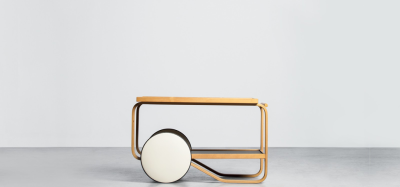
Drawing inspiration from the architectural principles of Frank Lloyd Wright, the team anchored their vision in Organic Design, a philosophy that seeks harmony between humanity and nature. By integrating smooth curves, fluid geometries, and nature-inspired forms into icons, buttons, and layouts, the OS moved away from rigid, sterile corporate aesthetics toward a warmer, more approachable interface.
Simultaneously, motion design was elevated from a purely functional utility to a primary brand pillar. Rather than using animations merely to bridge app states, the team drafted a motion design manifesto focused on delivering "magical moments"—deliberate micro-interactions designed to surprise and delight users, leveraging the aesthetic-usability effect to foster high user tolerance and engagement.
Implementation Realities and Corporate Friction
Despite the meticulous research, rigorous prototyping, and internal "dogfooding" validation cycles, the transition from concept to production-ready software exposed a systemic industry challenge: the gap between design conception and engineering execution.
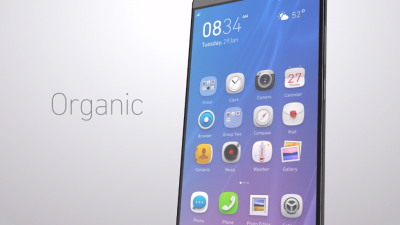
When the final production version of the Huawei EMUI 5 interface reached consumer hands, many of the nuanced visual solutions and fluid animations proposed by Fantasy had been diluted, altered, or omitted entirely.
According to Kuznetsov, this disconnect is common in large-scale corporations. When external design agencies are excluded from the implementation pipeline, engineering teams frequently default to the path of least resistance, trimming complex design elements to fit immediate technical constraints or deadlines.
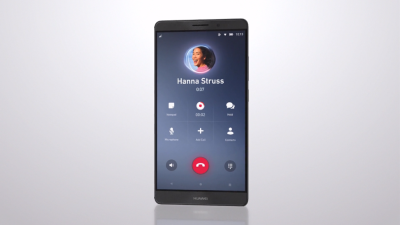
The contrast underscored a vital lesson demonstrated historically by tech luminaries like Steve Jobs during the development of macOS: visionary software requires executive leadership willing to fight for design integrity when engineering teams claim an innovation is "impossible to implement."
Implications and Industry Legacy
Despite the friction encountered during the final deployment phase, the strategic overhaul of Huawei’s interface played an instrumental role in the corporation’s subsequent market ascent. By 2018, Huawei officially surpassed Apple in global smartphone shipments—a milestone where hardware excellence was finally matched by a stabilizing, confidence-inspiring user interface.
The Fantasy-Huawei collaboration serves as an enduring case study in modern product development. It underscores that a robust visual design language is not merely a collection of aesthetic preferences, but the heartbeat of a functional user experience. Without it, companies risk descending into digital disarray; with it, development teams gain a shared vocabulary that bridges corporate silos, unifies global brands, and transforms raw computing power into intuitive human experiences.