In the contemporary digital landscape, the success of a product is rarely determined by the individual talent of a single designer. Instead, it is a byproduct of organizational culture—a phenomenon known as "UX Maturity." As businesses shift from merely shipping features to designing holistic experiences, the ability to scale User Experience (UX) practices across an entire enterprise has become a critical competitive advantage.
Victor Yocco, a seasoned expert in the field, argues that simply being proficient in one’s craft is no longer sufficient. For UX practitioners to drive genuine, systemic change, they must transition from being individual contributors to becoming internal advocates and educators. This article serves as the first in a three-part series exploring how organizations can navigate the complex, often arduous journey of evolving their UX maturity.
Defining the UX Maturity Continuum
UX maturity is a measure of how deeply user-centered design processes, philosophies, and tools are embedded into an organization’s operational DNA. It is not merely a reflection of headcount or the number of design tools purchased; it is a structural characteristic of how a business functions.

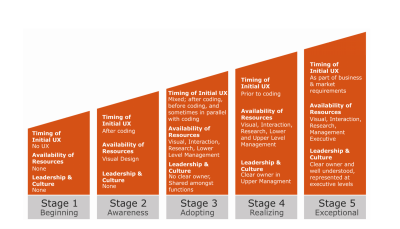
According to the research established by Chapman and Plewes (2014), organizational UX maturity can be mapped across five distinct stages. At the "Beginning" stage, UX is non-existent. Conversely, at the "Exceptional" stage, UX is fully integrated into the business strategy, supported by abundant resources, informed leadership, and a culture that prioritizes the user above all else.
Why Frameworks Matter
Frameworks are not just theoretical exercises; they act as a diagnostic tool. By identifying where an organization currently sits on the continuum—be it the "Awareness" stage or the "Adopting" stage—practitioners can develop a deliberate, long-term strategy for growth. Moving beyond the "Beginning" stage is essential for any company that wishes to remain relevant, as UX maturity directly impacts the quality of end-user outcomes and the company’s long-term profitability.
Tactic 1: The Power of UX Champions
In organizations where UX is in its infancy, the primary barrier is often social and political, rather than technical. To overcome these hurdles, practitioners must identify and leverage "UX Champions"—individuals who act as internal catalysts for change.
Identifying Your Champions
A UX champion does not need to hold a title in design. They are individuals who possess the political capital, networks, and enthusiasm to push for innovation. When scouting for potential champions, look for the following traits:
- Influence: They hold positions that allow them to advocate for budgets and resources.
- Open-mindedness: They are receptive to new methodologies and are often frustrated by the status quo of design processes.
- Connectivity: They have the ability to bridge the gap between disparate departments.
Case Study: Logistics Transformation
In a recent engagement at a large international logistics firm, the challenge was clear: the company spoke about being "customer-first," but the reality was a fragmented, tech-heavy environment with no cohesive UX process.
Within one month of joining, the consulting team identified a key Product Owner who possessed high levels of influence and a strong desire for improvement. By aligning with this champion, the team gained a critical foothold. The champion didn’t dictate change through authority, but rather by opening doors, facilitating access to stakeholders, and providing the necessary political cover to introduce user research. By the end of three months, this partnership had resulted in a defined UX process, a library of research reports, and the hiring of a permanent UX professional—proving that a single, well-positioned champion can trigger an organizational shift.

Tactic 2: Demonstrating the ROI of UX
While passion drives change, data sustains it. To secure long-term funding and executive buy-in, UX practitioners must translate their value into the language of the boardroom: Return on Investment (ROI).
Dispelling the Myths of UX Metrics
A common misconception is that UX value is "too qualitative to measure." However, Nielsen Norman Group highlights that this is a dangerous myth. ROI is not strictly a monetary calculation; it is a measure of how UX impacts key performance indicators (KPIs).
To build a compelling business case, practitioners should align their metrics with the goals of the organization:

- E-commerce: Focus on conversion rates and reduction in cart abandonment.
- B2B/Enterprise: Focus on task completion speed, reduction in training time, and decreased support calls.
- Customer Loyalty: Focus on Net Promoter Scores (NPS) and app store ratings.
Case Study: The Insurance Provider Pivot
A major medical insurance provider provides a stark example of the power of data. When shifting agents to a new platform, the company initially ignored UX. The result was catastrophic: independent agents defected, and the call center was overwhelmed with support requests.
The remediation team took a data-driven approach. They established benchmarks for user satisfaction and call volume. By comparing the performance of the initial rollout (without UX) to the subsequent phases (with UX intervention), they were able to demonstrate a clear correlation: improved usability led to lower operational costs. This data was presented to an executive committee, successfully securing ongoing budget and ensuring that UX became a permanent, "must-have" component of the product development cycle.
Supporting Data and Strategic Implications
The shift toward higher UX maturity requires a move from isolated, one-off projects to a culture of continuous measurement. The data suggests that organizations that invest in UX maturity benefit from:

- Reduced Development Waste: By testing concepts early, companies avoid the high cost of rebuilding faulty features.
- Increased Operational Efficiency: Streamlined interfaces reduce the time employees spend on internal systems, directly impacting the bottom line.
- Improved Market Competitiveness: In a crowded market, the quality of the user experience is often the primary differentiator.
The Financial Reality
When proposing a budget for UX, remember that the cost of inaction is almost always higher than the cost of investment. Whether using standardized ROI calculators or custom dashboards, the objective is to show a ratio where the value generated (in savings or profit) far exceeds the cost of the tools, training, and personnel required.
Conclusion: A Path Forward
Growing UX maturity is not a sprint; it is a systematic, long-term endeavor that requires patience, advocacy, and a strategic application of tactics. By identifying champions who can navigate the political landscape and utilizing data to quantify the business impact of design, practitioners can effectively move their organizations along the maturity continuum.
As we look toward the future of this series, it is clear that individual brilliance is only the starting point. The true challenge—and the ultimate goal—is to build an organizational culture where user-centricity is the default, not the exception. The journey begins with these first two steps: finding the right partners and speaking the language of business through the metrics that matter most.

Note: This article is the first in a three-part series. The upcoming installments will cover internal documentation, mentorship strategies, and educational frameworks to further elevate UX maturity within the workplace.