Main Facts
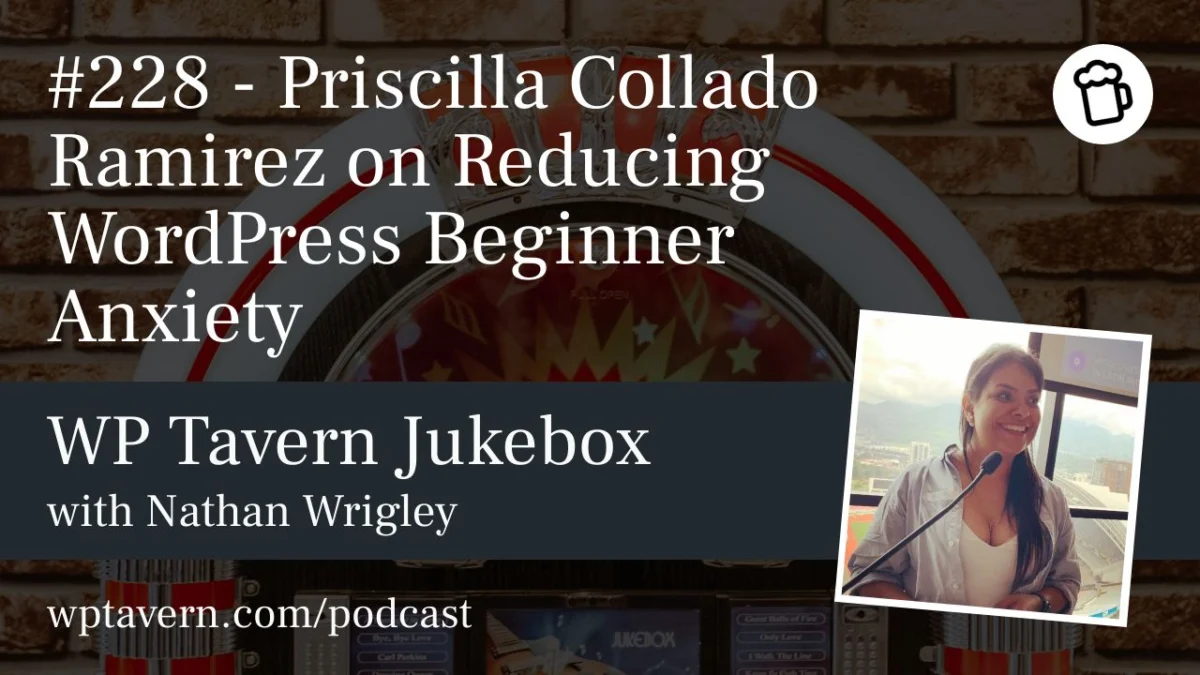
In the rapidly expanding ecosystem of WordPress, the journey from absolute beginner to confident user is often fraught with anxiety, choice paralysis, and information overload. To explore this persistent challenge, Nathan Wrigley of the WP Tavern Jukebox Podcast sat down with educator, fashion designer, and wellness coach Priscilla Collado Ramirez.
Traveling an impressive 14 hours by plane from Costa Rica to attend WordCamp Europe, Collado Ramirez brought a truly global and interdisciplinary perspective to the event. Seventeen years prior, she had actually quit WordPress entirely during her university days due to overwhelming technical options and a lack of supportive guidance. Today, her professional trajectory has come full circle. She now dedicates her career to demystifying the WordPress environment for creatives, entrepreneurs, and adult learners, bridging the gap between rigid technical architecture and human-centric pedagogy.
Her methodology is unique: rather than throwing standard documentation and an intimidating list of plugins at newcomers, Collado Ramirez integrates holistic wellness, breathwork, and targeted learning frameworks into her curriculum. Her core philosophy challenges conventional tech mentoring, asserting that confidence does not precede action—rather, confidence is forged through action, facilitated by safety, patience, and a calm nervous system.
Chronology of an Educational Journey
The First Encounter: Quitting 17 Years Ago
Collado Ramirez’s story within the digital space began nearly two decades ago while she was a university student studying advertising and web design. Faced with early iterations of content management systems and a lack of intuitive onboarding, she experienced profound cognitive overload.
"I saw the options, too many options, too many things… and I feel overwhelmed. And I said, this is not for me. I’m so dumb. I’m slow," Collado Ramirez shared during the podcast.
Convinced that the software was too complex for her creative mind, she stepped away from WordPress entirely, retreating into fields that aligned more naturally with her visual and artistic sensibilities.
The Catalyst: Teaching Fashion Students
Years later, after establishing her own fashion school, Collado Ramirez observed a recurring financial and emotional barrier among her students. Many creative entrepreneurs were being charged exorbitant fees by web agencies simply because they lacked the foundational knowledge to build their own online presence.
Recognizing that her students were facing the exact same intimidation she had felt 17 years prior, she decided to re-explore the WordPress ecosystem. This time, armed with her background in education and wellness coaching, she realized that the barrier wasn’t a lack of intelligence among creatives, but rather a profound mismatch in how technical platforms were being taught to non-technical minds.
Crossing Continents for Community
Determined to expand her impact and share her insights, Collado Ramirez embarked on a grueling 14-hour flight from Costa Rica to Europe. Encouraged by peers within the Latin American WordPress community—notably a colleague at GreenGeeks web hosting—she pursued her dream of speaking on an international stage. Finding her voice within the women’s speaker groups at WordCamp events, she transformed her past struggles into a blueprint for modern mentorship.
Supporting Data and Learning Frameworks
During her presentation and subsequent interview, Collado Ramirez outlined specific psychological and structural frameworks that explain why beginners frequently fail or stall within the WordPress space:
- Linear vs. Spiral Learners: Traditional technical education assumes a linear learning path (Step A leads to Step B, then Step C). However, creative and holistic thinkers often process information in a "spiral" pattern, circling back to concepts multiple times before mastery occurs. Recognizing this distinction is vital for effective mentorship.
- The "It Depends" Paralysis: To an experienced developer, answering a beginner’s question with "it depends" is standard practice. To a beginner looking at tens of thousands of themes and plugins, "it depends" translates to a paralyzing dead-end that breeds self-doubt.
- Confidence Through Action: Borrowing from constructivist educational theory, Collado Ramirez emphasizes that learners cannot think their way into confidence; they must act their way into it through micro-wins, such as successfully installing a single plugin or building a basic page without fear of breaking the system.
- Physiological Regulation (Pranayama): Cognitive overload triggers a stress response. By introducing basic breathwork and stress-reduction pauses, learners lower their cognitive load and enter a receptive state where true learning can take place.
Official Insights and Philosophy
Collado Ramirez’s approach challenges the prevailing culture of overwork and burnout common in the technology sector. While many technical professionals view holistic wellness practices with skepticism—often dismissing them as "hippie" concepts—she maintains that software users are human beings, not machines.
"The learning doesn’t happen in stress," Collado Ramirez noted. "It happens when the mind feels safe enough to explore."
By advocating for the "normalization of confusion," she encourages students to embrace the muddled initial stages of learning rather than viewing temporary setbacks as personal failures. Furthermore, she argues that the broader tech community needs to invest in "educating the educators"—training software engineers and developers in basic pedagogy so they can communicate effectively with non-technical entrepreneurs.
Implications for the WordPress Community
The insights shared by Priscilla Collado Ramirez carry significant implications for the future of open-source communities, agency owners, and independent educators:
- Redefining Accessibility: True accessibility in WordPress extends beyond WCAG guidelines and screen readers; it encompasses cognitive accessibility. Lowering the barrier to entry requires intentional simplification, curated choices, and empathetic onboarding.
- Shifting Agency Client Relations: Agencies and freelancers can apply these principles to client onboarding. By guiding clients through baby steps and eliminating choice overload, web professionals can foster long-term client confidence and reduce post-launch anxiety.
- Mental Health in Tech: By normalizing wellness breaks, breathing exercises, and emotional resets within digital work environments, the WordPress community can take active steps toward mitigating burnout among developers, designers, and beginners alike.
As the WordPress project continues to evolve through the Gutenberg block editor and beyond, voices like Priscilla Collado Ramirez serve as a vital reminder that the heart of open-source is not just code, pixels, or plugins—it is the human beings learning to build their digital futures together.