Main Facts
The WordPress ecosystem is undergoing a quiet yet profound structural evolution. Launched in late December by the WordPress Foundation, the WordPress Credits initiative represents a strategic effort to bridge the widening gap between traditional academic curriculums and the fast-paced realities of the modern digital marketplace.
At its core, the program connects universities and higher education institutions globally with the open-source WordPress project. Students are integrated into the ecosystem through structured contribution pathways—spanning documentation, translation, core development, and marketing—allowing them to earn academic credits, official certifications, and verifiable public recognition on their wordpress.org profiles.
The initiative addresses two critical systemic challenges simultaneously:
- The education crisis: University curriculums often lag years behind industry standards, leaving graduates ill-equipped for remote work and modern digital tools.
- The demographic aging of open-source communities: Long-term contributors are aging, and younger demographics are drawn to alternative platforms like TikTok and YouTube.
By systematically introducing students to remote work culture, collaborative tooling, and hands-on contribution, WordPress Credits offers a viable solution to inject fresh talent into the ecosystem.
Chronology of the Initiative
The inception and rollout of the WordPress Credits program follow a deliberate timeline designed to test, refine, and scale the initiative across international educational markets:
- Late 2023 (December): The WordPress Foundation officially rolls out the WordPress Credits initiative, establishing frameworks for academic integration and mentor onboarding.
- Early to Mid-2024: Digital marketing professional and WPBakery marketing lead Ivana Ćirković applies, trains, and passes rigorous mentor courses to join the pioneer cohort of mentors guiding students through the initiative.
- Throughout 2024–2025: The first generation of student cohorts completes the program. Participants engage in weekly mentorship huddles, async Slack communication, and specialized task execution (such as translating a minimum of 1,500 strings for the Polyglots team).
- June 2026 (WordCamp Europe): The program takes center stage at WordCamp Europe 2026. Mentors like Ćirković present data, challenges, and future trajectories for the initiative, marking a pivot toward engaging broader business networks and web agencies.
Supporting Data and Program Mechanics
The WordPress Credits program is not an informal hobbyist club; it is built on strict accountability, measurable outcomes, and rigorous evaluation metrics.
How the Workflow Operates
- Stream Specialization: When students opt into the program, their tasks are aligned with their university discipline. IT students lean toward core development or plugin reviews, while communications majors engage with translation (Polyglots) or marketing teams. Once a stream is chosen, students must stick to it for the duration of the program.
- Quantifiable Contributions: Success is measured by tangible outputs. For example, students specializing in localization must secure at least 150 approved translation strings. Because translation often requires revising 500 or more words to secure those 150 approvals, the barrier to entry ensures high standards of quality.
- Public Portfolios: Every completed contribution is permanently tied to the student’s public
wordpress.orgprofile. This functions as an immutable, transparent professional portfolio that prospective employers can inspect. - Accountability and Retention: The program enforces professional standards of remote work. Students are required to maintain weekly blogging habits, participate in mentor huddles, and communicate asynchronously via Slack. Missing three consecutive check-ins or failing to show progress results in removal from the program, ensuring that only dedicated participants earn university credits.
Official Responses and Perspectives
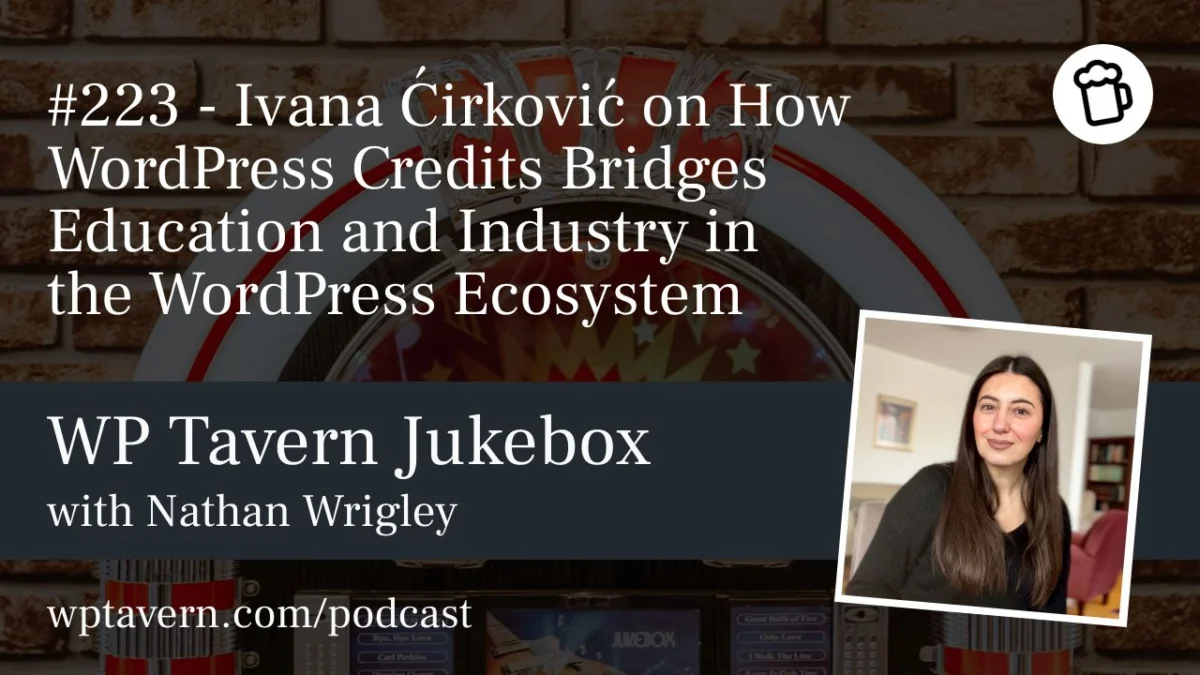
Speaking at WordCamp Europe 2026, Ivana Ćirković shared deep insights into her role as a mentor and the broader vision behind the initiative.
"The WP Credits program is initially made to bring new young people into WordPress, to broaden the ecosystem with new fresh blood, new contributors," Ćirković explained during her interview on the WP Tavern Jukebox Podcast.
Reflecting on the psychological and professional rewards of mentoring, Ćirković noted the transformative impact the program has on students who previously had no idea open-source contribution could translate into real-world career advantages:
"Once they go deep and start to work, it’s like, wow. The whole mind just shifts, and they are amazed by all the possibilities that they can do within WordPress that isn’t talked about."
Ćirković also emphasized that the initiative benefits educators by allowing universities to modernize their offerings without rewriting entire degree structures from scratch. By adopting real-world open-source contributions as part of their grading criteria, academic institutions instantly boost their appeal to tech-savvy applicants looking for practical, highly marketable skills.
Implications for Businesses and the Future of WordPress
While the educational and student benefits are clear, the long-term implications for businesses, web agencies, and the WordPress project itself are profound.
Shaping Future Talent
For web agencies and product companies—such as WPBakery, which actively sponsors mentorship initiatives—recruiting junior developers is notoriously costly and time-consuming. Onboarding a fresh graduate typically requires three to six months of internal training on basic remote work protocols, version control, and team communication.
Graduates of the WordPress Credits program arrive pre-onboarded. They already understand asynchronous communication, navigate wordpress.org workflows, and possess verifiable public track records. Businesses that participate as mentors gain a first-hand look at young talent in action, allowing them to cherry-pick skilled, motivated individuals with zero friction.
Addressing the Demographic Shift
Open-source platforms face a looming existential threat if they fail to attract younger generations. Traditional tech conferences skew older, and digital natives operate within entirely different attention ecosystems.
As Ćirković pointed out:
"We’ve been in the community for 11 years, and for 11 years all the same faces are here. And we really need new faces… WordPress has always been about people. And we need new people, we need young people to get it where it needs to be."
The Roadmap Ahead
As the WordPress Credits initiative moves past its initial rollout phases, organizers are focusing on scaling up business-facing frameworks. Creating standardized, plug-and-play onboarding guides for small-to-medium web agencies will be the next major hurdle.
If successful, the initiative will not only secure academic validation for open-source contributions worldwide but also safeguard the longevity of WordPress by handing the baton to a well-trained, highly motivated generation of digital creators.