In the high-stakes world of digital advertising, there is a prevailing obsession with the top of the funnel. Marketing teams worldwide pour millions into the coffers of tech giants, chasing clicks and impressions to drive traffic to their landing pages. However, the brutal truth, according to industry experts, is that traffic is becoming an increasingly expensive commodity with diminishing returns. As customer acquisition costs (CAC) continue their relentless climb, the most successful companies are shifting their focus from acquiring more visitors to converting the ones they already have.
Conversion Rate Optimization (CRO) has evolved from a niche tactical exercise into a mission-critical strategy. By systematically refining the user experience on landing pages, marketers are discovering that they can double their results without spending an additional dollar on ad inventory.
The Financial Case for CRO: Doing More with Less
The mathematics of CRO are deceptively simple but profoundly powerful. For a business with a landing page converting at 2%, a strategic series of optimizations that boosts that figure to 4% effectively doubles the output of every marketing campaign.
Boosting ROAS Without Budget Inflation
Return on Ad Spend (ROAS) is the metric that keeps CMOs awake at night. In an environment where keyword competition is saturated and CPCs (cost-per-click) are peaking, CRO acts as an efficiency multiplier. When a brand improves its conversion rate, it effectively lowers the cost per acquisition (CPA). These additional conversions—often representing a 50% to 100% lift—are essentially "free" growth, as they leverage existing traffic that has already been paid for.
Improving Overall Marketing ROI
Marketing funnels do not exist in silos. The benefits of CRO ripple throughout an entire organization. When landing pages are optimized, the quality of leads flowing into the CRM improves, sales teams spend less time qualifying low-intent prospects, and the overall customer lifetime value (CLV) often trends upward due to a smoother initial user experience. This "engine tune-up" analogy holds true: instead of pouring more fuel into an inefficient engine, CRO optimizes the machinery to extract maximum mileage from every gallon.
Scaling Without Exponential Cost
Scaling traffic is subject to the law of diminishing returns. The first 1,000 visitors are often the cheapest to acquire; however, as companies reach for the next 10,000, they are forced to bid on less relevant keywords and reach colder audiences. CRO flips this challenge. By increasing the efficiency of the landing page, companies can sustain growth while maintaining, or even reducing, their reliance on expensive, high-volume ad buys.
5 High-Impact CRO Practices for Modern Marketers
The landscape of CRO has shifted away from complex, developer-dependent coding toward agile, user-centric design. For teams looking to move the needle immediately, these five pillars are essential.
1. Prioritizing Mobile-First Experiences
Despite the ubiquity of smartphones, many landing pages remain desktop-centric. This misalignment is a primary driver of high bounce rates. Mobile users operate under different constraints: limited screen real estate, reliance on thumb-navigation, and varying connection speeds.
Optimization should focus on "thumb-friendly" design. This includes increasing button tap targets to a minimum of 44×44 pixels and ensuring that critical value propositions appear above the "thumb scroll" fold. Data suggests that companies failing to prioritize mobile UX lose significant market share to competitors who offer seamless, fast-loading mobile transitions.
2. A/B Testing: Moving from Guesswork to Science
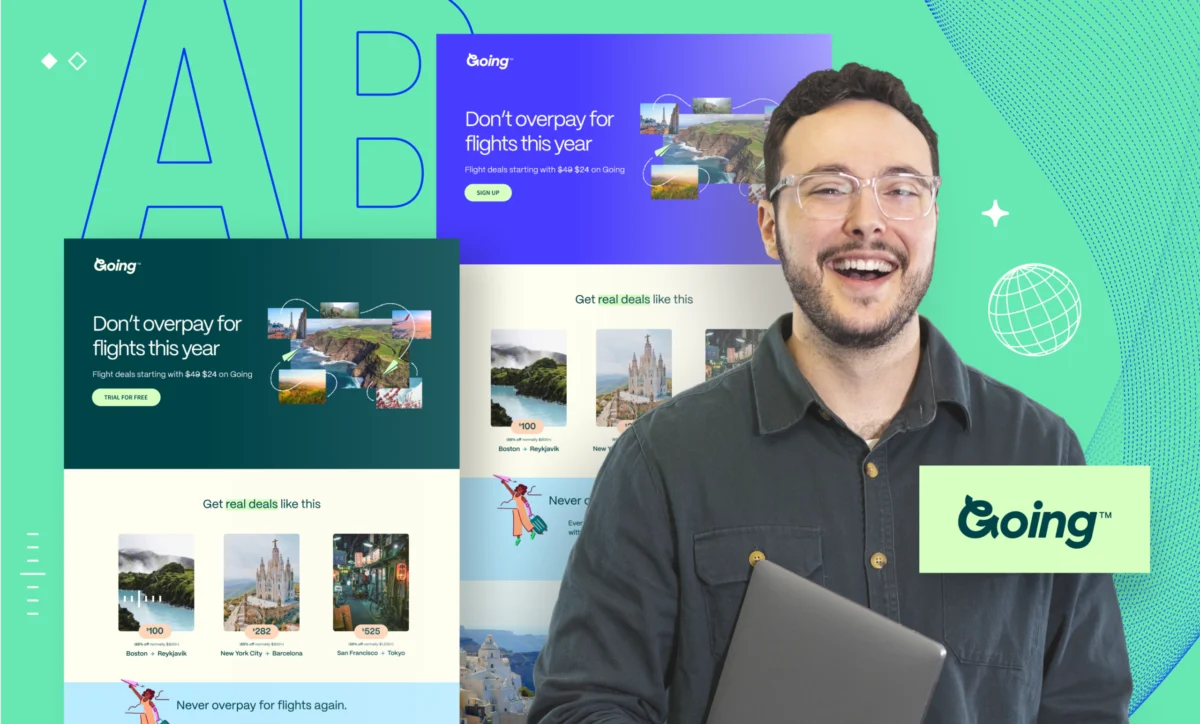
"Best practices" are merely starting points. What works for one industry or audience often fails for another. A/B testing allows marketers to make data-driven decisions by isolating variables—such as headline copy, CTA button color, or imagery—and measuring their direct impact on conversion.
Modern testing tools have democratized this process, allowing marketers to run experiments without a deep technical background. The golden rule of testing is to maintain a clear hypothesis: “Changing [X] will improve [Y] because [Z].” By documenting these tests—both the successes and the failures—organizations build a proprietary knowledge base of what truly resonates with their customers.
3. Friction Reduction: The Art of Subtraction
Friction is any element in the conversion path that causes hesitation. This includes long forms, mandatory account creation, or confusing navigation menus. Research consistently demonstrates that reducing form fields from 11 down to 4 can increase conversion rates by over 100%.
An effective "friction audit" involves a walk-through of the conversion path by a neutral third party. By removing unnecessary obstacles, companies can streamline the path to purchase, ensuring that motivated visitors are not derailed by administrative clutter.
4. Crafting a Resonant Value Proposition
A visitor has approximately three seconds to answer one question: "Why should I care?" If the answer is not immediately apparent, they will navigate away. A strong value proposition must be specific, benefit-oriented, and differentiated from competitors. Whether a company chooses to focus on problem-solving ("Never miss a deadline again") or outcome-based benefits ("Save 5 hours every week"), the messaging must be clear, concise, and prominently displayed in the headline and subhead.

5. Leveraging Social Proof to Build Trust
In the digital age, trust is the currency of conversion. When a potential customer is on the fence, social proof acts as the final nudge. This includes client testimonials, trust badges, industry-recognized logos, or usage statistics. However, placement is critical. Social proof should be deployed near high-friction areas—such as lead capture forms or pricing tables—to provide reassurance at the exact moment of hesitation. Authenticity is paramount; raw, specific feedback from real customers will always outperform generic marketing hyperbole.
Building a Culture of Continuous Experimentation
The most successful companies view CRO not as a one-time project, but as an organizational habit. Building a culture of experimentation requires a shift in mindset: seeing failed tests not as losses, but as valuable data points.
Institutionalizing Insights
To sustain growth, marketing teams should establish a regular cadence for testing. This involves:
- Creating a backlog of ideas: Maintain a document of potential tests based on user feedback and analytics.
- Prioritizing high-impact changes: Focus on pages with the highest traffic first, as these provide the most statistically significant results in the shortest time.
- Sharing learnings across the company: Ensure that sales, product, and marketing teams understand the results of these experiments.
The Role of Technology in the Modern Stack
While tools like Unbounce, Google Optimize (and its successors), and various heatmap software provide the infrastructure for testing, the strategy remains human-led. The best marketers use these tools to gain deep insights into visitor behavior, such as where they click, how far they scroll, and where they drop off. By combining qualitative insights (what users say) with quantitative data (what users do), teams can create a loop of continuous improvement that keeps them ahead of the competition.
Conclusion: The Path Forward
The era of "growth at any cost" is fading. As ad platforms become more expensive and customer privacy regulations tighten, the ability to convert traffic is becoming the ultimate competitive advantage. By embracing a data-driven, user-centric approach to landing page optimization, marketers can stop leaving money on the table and start building sustainable, high-growth funnels.
The strategy is straightforward: stop obsessing over traffic volume and start mastering the art of the conversion. In a crowded digital marketplace, those who optimize best will ultimately win the most.