In the fast-paced world of digital marketing, one question haunts every strategist and business owner: "Is my conversion rate good enough?"
The pressure to hit a universal benchmark is intense, but as new data from Unbounce’s 2024 Conversion Benchmark Report reveals, the concept of a single "good" conversion rate is a myth. By analyzing a massive dataset of 57 million conversions across 41,000 landing pages and 464 million pageviews, industry experts are dismantling the idea of one-size-fits-all metrics. Instead, success is defined by a nuanced understanding of industry, audience intent, and the specific channels through which traffic arrives.

The Benchmark Breakdown: Separating Fact from Fiction
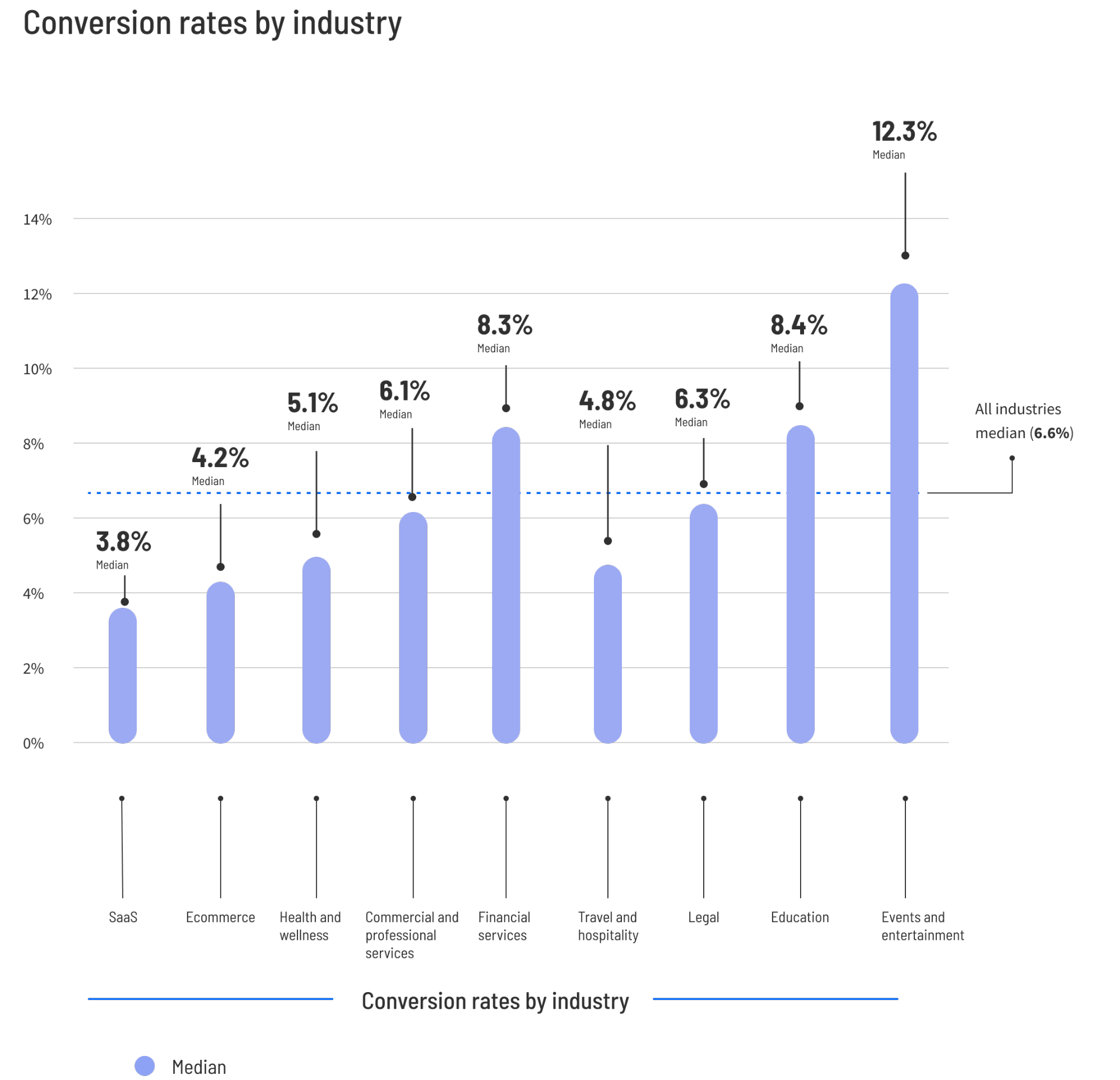
At the heart of the latest industry research is a critical distinction: the difference between an average and a median. While the all-industry median landing page conversion rate sits at 6.6%, this figure serves only as a starting point—a baseline that, on its own, offers little actionable intelligence.
"Comparing your conversion rate to some generic internet average is like comparing apples to the entire fruit section at the grocery store," says Josh Gallant, founder of Backstage SEO. By utilizing median values rather than simple averages, the data remains unskewed by "unicorn" pages that convert at 90% or struggling pages that fail to move the needle at 0.001%. This provides a realistic, achievable target for the average marketer.

Defining "Good" Performance
The industry standard for "good" is not a static number. According to the 2024 report, a high-performing conversion rate—the threshold for the top 25% of pages in a given sector—starts at 11.4% and can soar as high as 40.8%. Achieving these numbers requires more than just luck; it demands a strategic alignment of messaging, user experience (UX), and campaign intent.
Industry-Specific Realities: A Comparative Analysis
The data illustrates a clear divide between sectors, driven largely by the nature of the purchase and the urgency of the consumer.
Ecommerce: The Volume Game
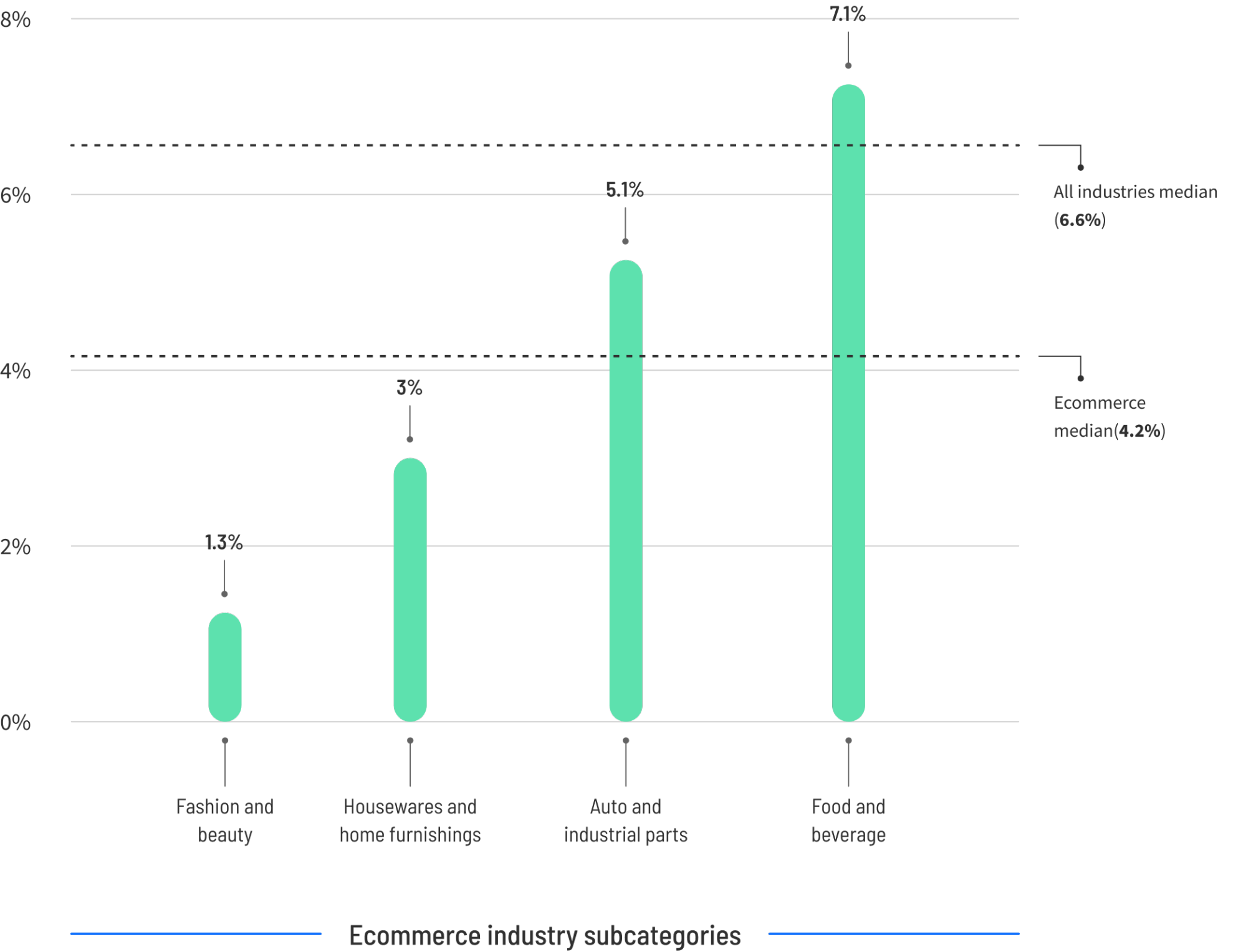
Ecommerce landing pages currently see a median conversion rate of 4.2%. However, the top 25% of performers reach 11.4%. This represents a massive financial opportunity; for a store generating 10,000 monthly visitors, moving from the median to the top quartile could result in an additional 720 conversions per month. Whether a brand is selling fashion or high-ticket electronics, the gap between "average" and "excellent" is where the true growth lies.
SaaS: Navigating Complexity
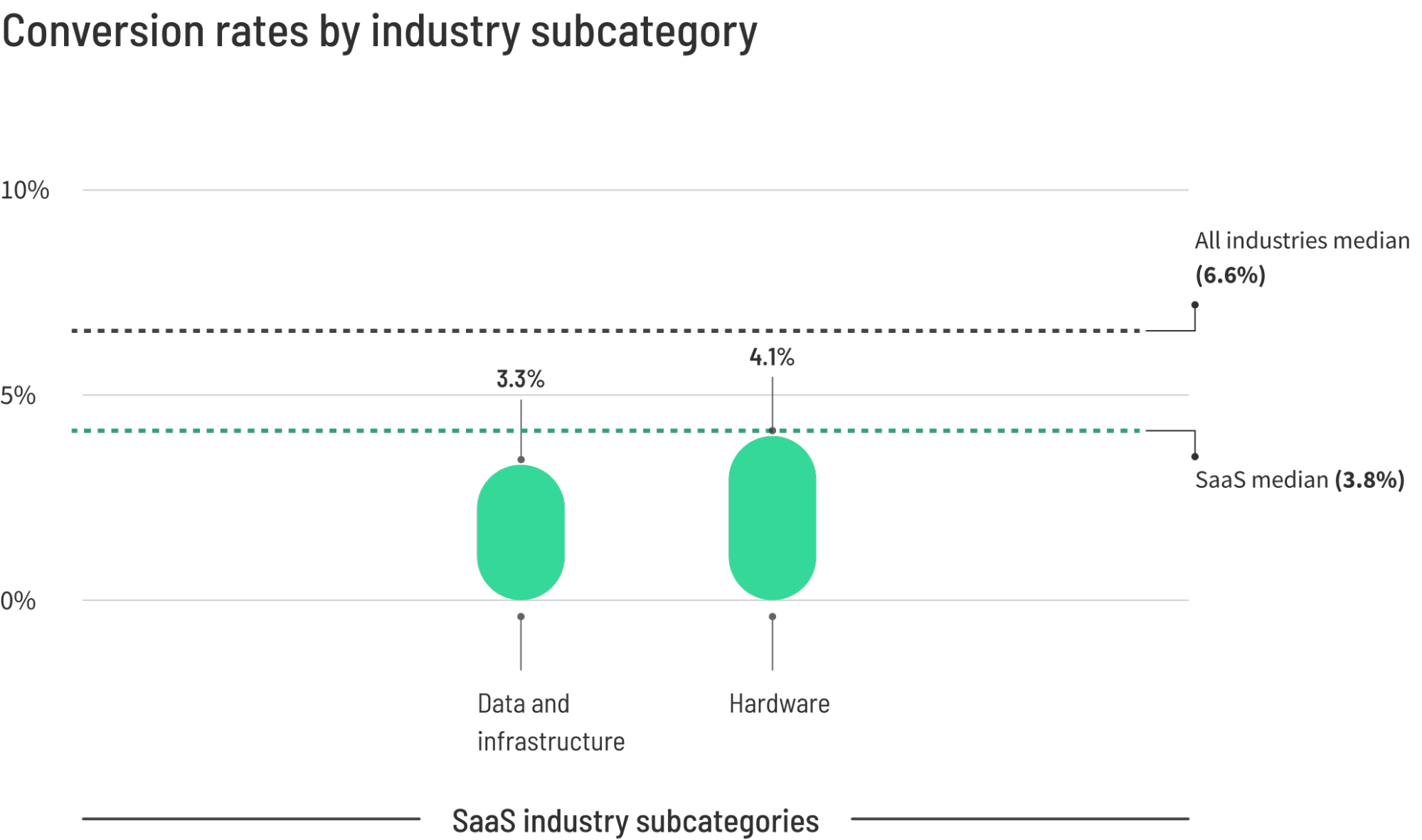
SaaS companies face a steeper uphill battle, with a median conversion rate of 3.8%. The complexity of SaaS products, which often involve long sales cycles and varied buyer intent, contributes to this lower baseline. To break into the top 25% (11.6% or higher), SaaS marketers must focus on reducing risk through tactics like no-credit-card trials and clear, benefit-driven messaging.
Professional Services and Legal
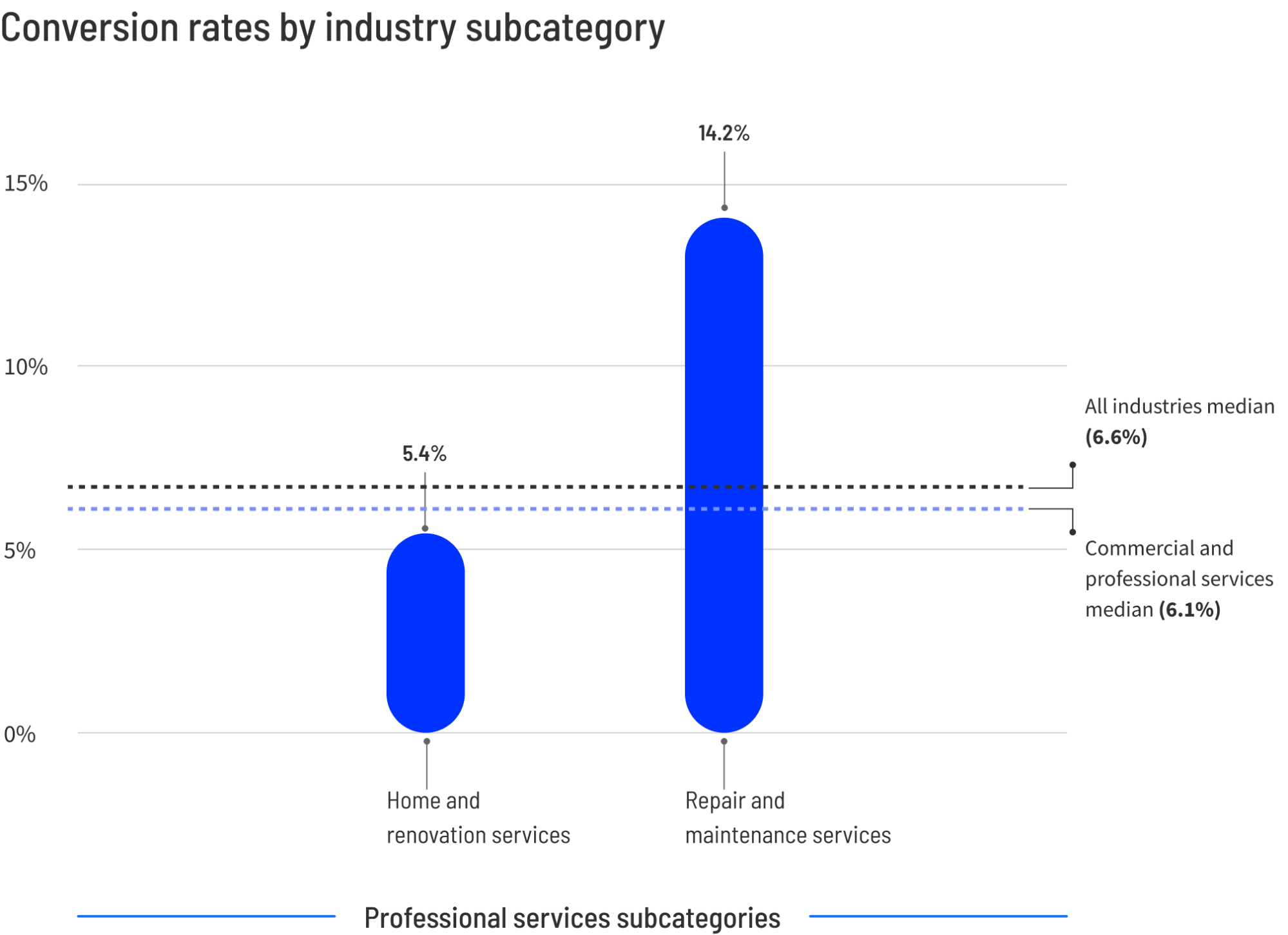
The professional services landscape is highly fragmented. While the industry median is 6.1%, the top performers achieve a 14.1% conversion rate. Interestingly, the legal sector shows unique trends, with mobile traffic often outperforming desktop. This is attributed to the "high-urgency" nature of legal needs—potential clients searching for legal help after an accident or a time-sensitive issue often reach for their phones to find an immediate solution.
Financial Services: The Trust Factor
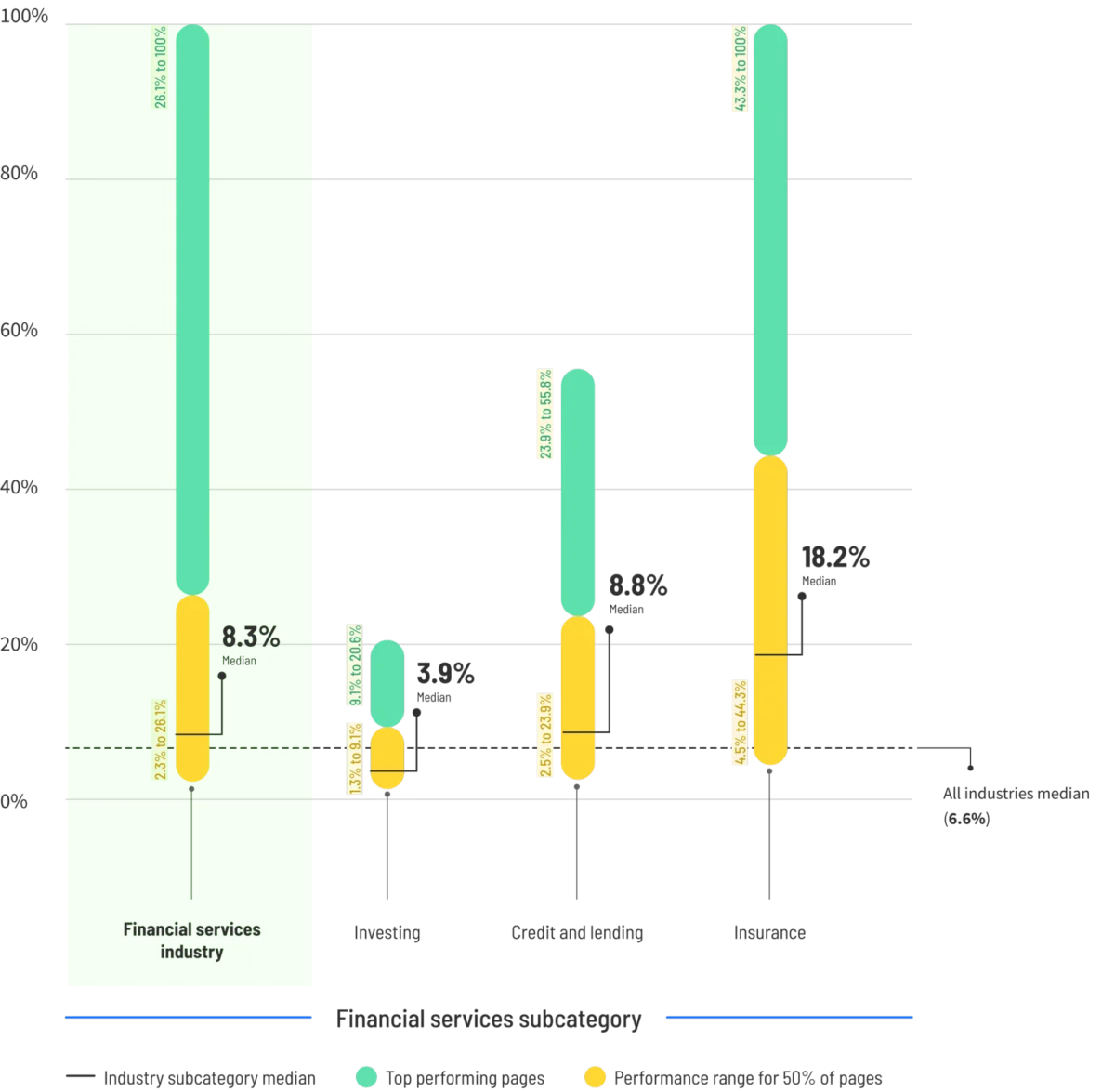
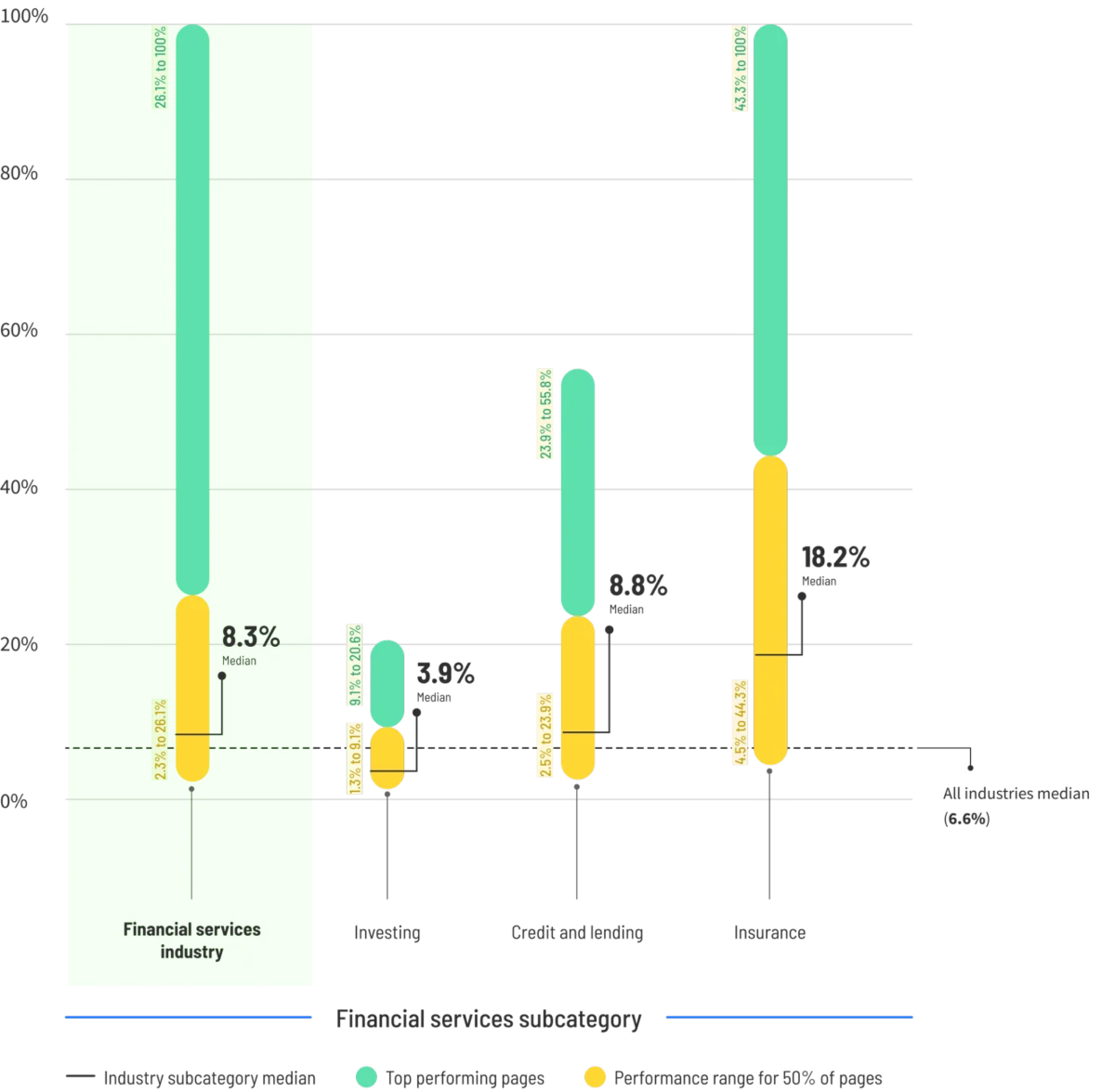
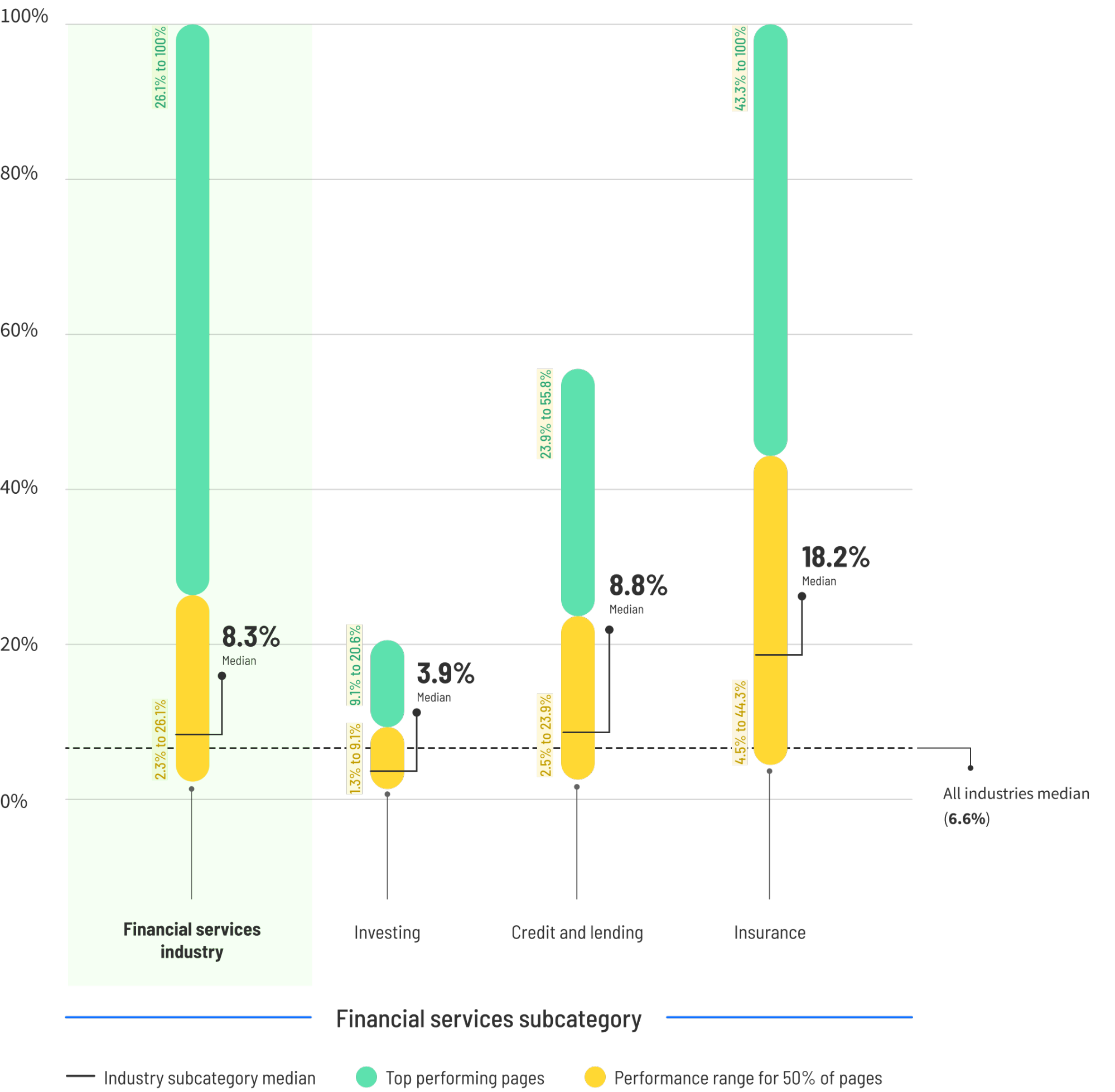
Financial services boast a strong median conversion rate of 8.3%. In this sector, intent is typically higher, as consumers aren’t "window shopping" for insurance or investments in the same way they might browse retail sites. Notably, mobile traffic in the financial sector converts 27.8% better than desktop, signaling a shift in how modern consumers manage their financial lives.
The Role of Traffic Channels and Device Optimization
Chronologically, the way users interact with digital content has shifted toward mobile-first consumption. However, the data reveals that device preference remains highly dependent on the industry.
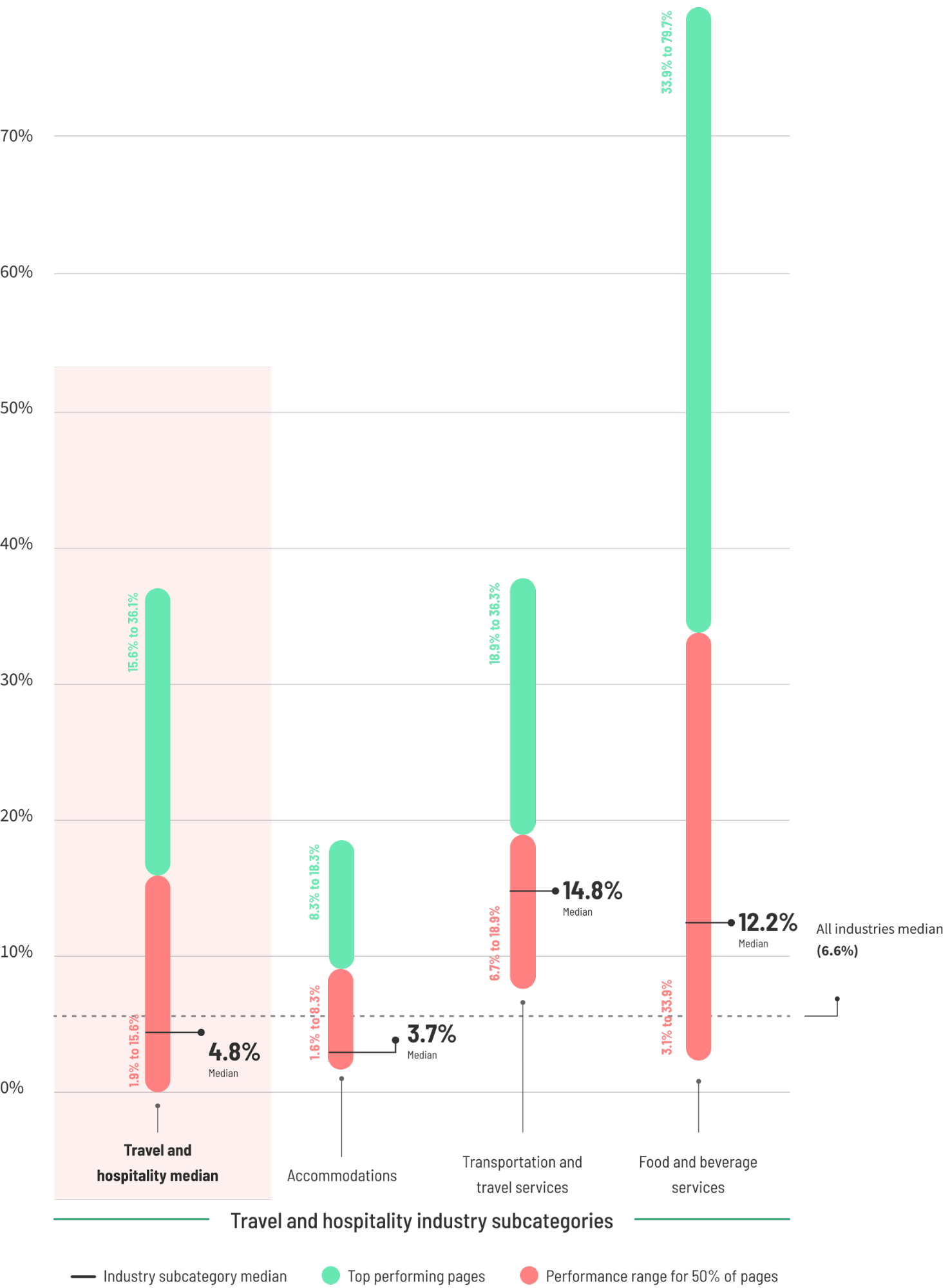
- Mobile vs. Desktop: While mobile is the primary driver of traffic (accounting for 83% of landing page visits), the conversion gap between mobile and desktop is still prevalent. In travel and hospitality, for instance, desktop remains king, converting 10.4% better than mobile, likely due to the complexity of travel planning.
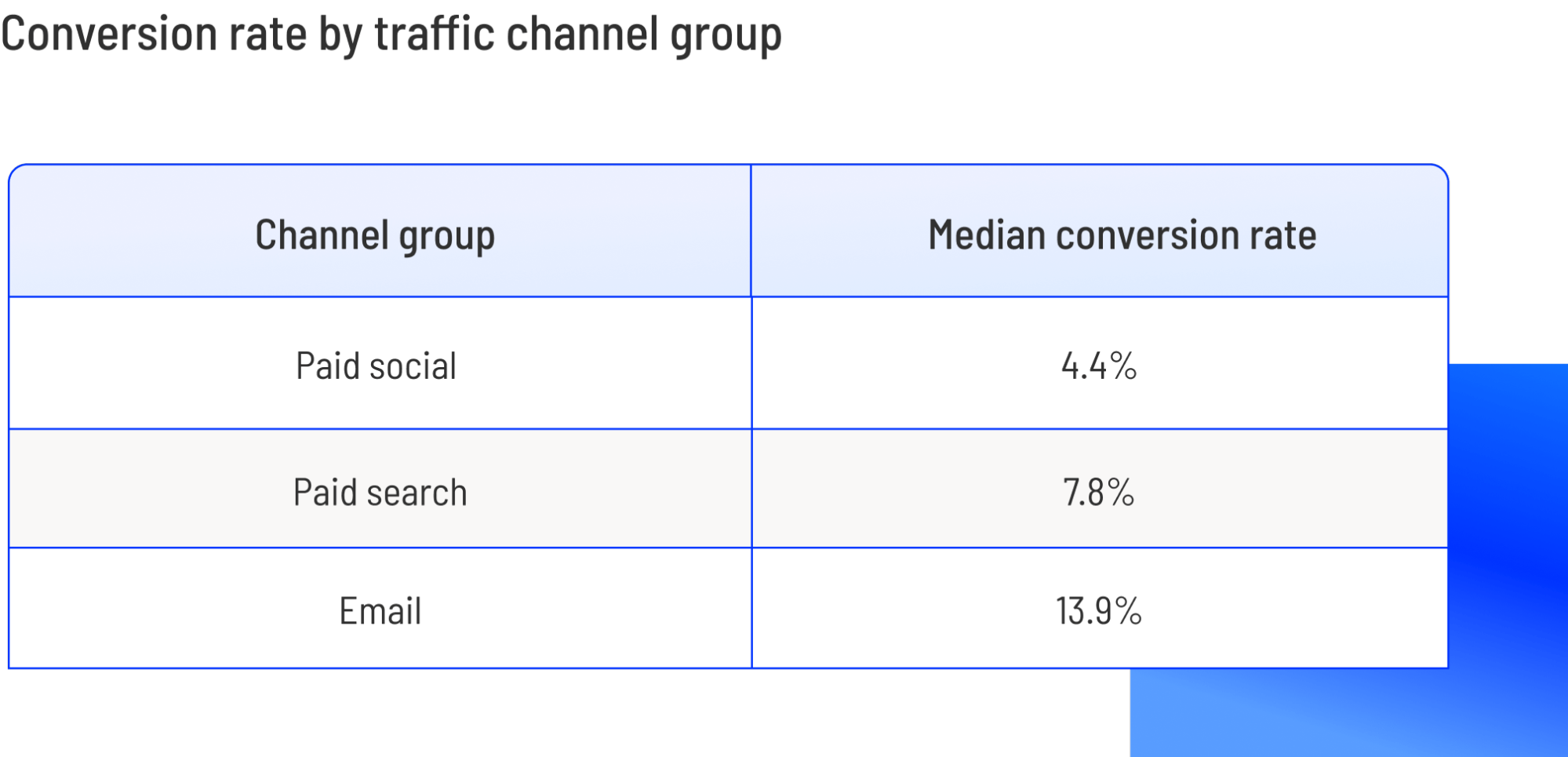
- The Power of Email: Across almost every sector, email traffic consistently emerges as the highest-converting channel. In the education sector, email traffic converts at 14.1%—nearly double the efficacy of paid search. This underscores the necessity of building owned audiences rather than relying solely on paid acquisition.
Strategic Implications for Marketers
If benchmarks represent the "where," the following tactics represent the "how" for marketers looking to bridge the gap between their current performance and the top 25%.
1. Simplify Language for Impact
The data shows that pages written at a 5th–7th grade reading level convert 56% better than those written at an 8th–9th grade level. Simplifying copy and stripping away jargon is one of the most effective, low-cost ways to improve conversion rates.
2. The Art of the A/B Test
Conversion rate optimization (CRO) is an ongoing process, not a one-time project. High-performing marketers continuously test button colors, CTA wording, and form field lengths. The goal is to isolate variables to understand exactly what drives user behavior.
3. Social Proof as a Catalyst
Trust is the currency of the internet. By placing testimonials, review counts, and client logos near conversion points, marketers can reduce the friction that prevents a visitor from becoming a lead.
4. Eliminating Distractions
Every navigation link, social media icon, or secondary CTA that doesn’t lead to the primary goal is a potential exit point. High-converting pages often "strip to the basics," focusing the user’s attention entirely on the offer at hand.
Looking Ahead: The Future of Optimization
As the digital landscape evolves, the reliance on automated tools and AI-driven insights is becoming standard. Features like "Smart Traffic"—which uses machine learning to automatically route visitors to the variant of a page that is most likely to convert—are enabling companies to achieve results that were once only possible with large, expensive optimization teams.
The gap between average and excellent is not a reflection of budget or brand size; it is a reflection of strategy. The companies that win are those that stop chasing "internet averages" and start building systematic, data-backed processes that prioritize the user’s intent. Whether through simplifying copy, optimizing for mobile, or leveraging email, the path to the top 25% is clear for those willing to test, learn, and iterate.
As the industry moves toward 2026 and beyond, the focus will undoubtedly remain on hyper-personalization. The "average" conversion rate will continue to be a vanity metric for the uninspired, while the true leaders will focus on the high-conversion thresholds that define real, measurable growth.