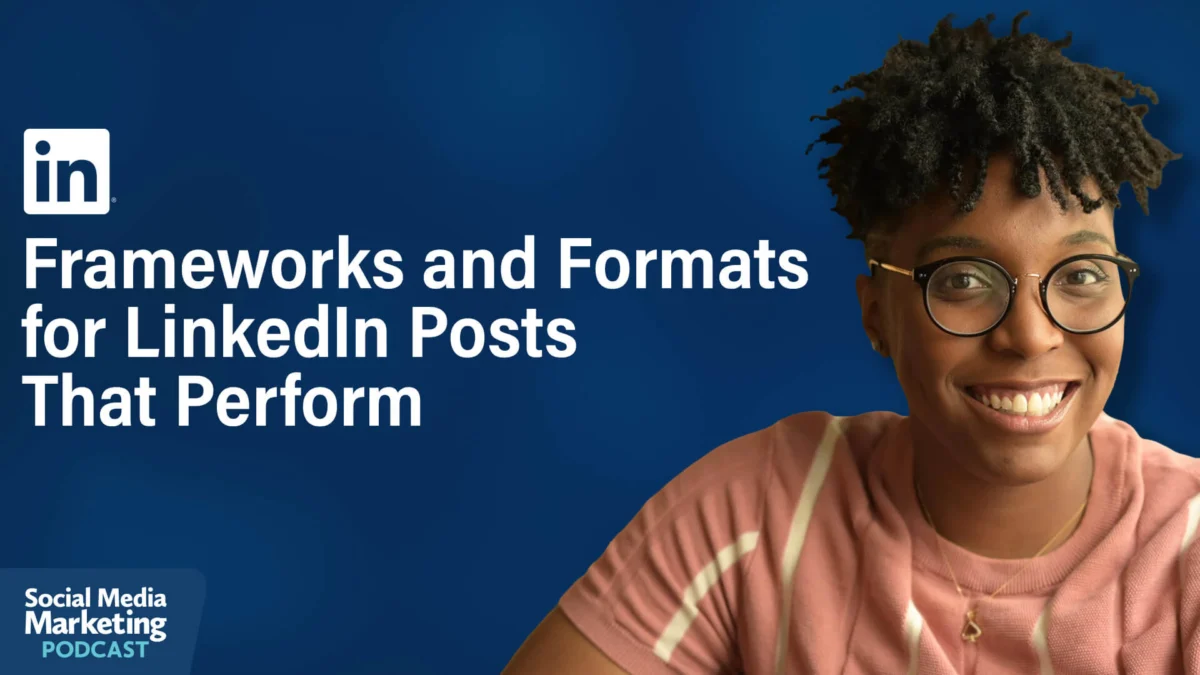
In an era dominated by AI-generated drivel and mass-produced content, LinkedIn has become a noisy landscape. Yet, for the discerning professional, the platform remains the single most powerful tool for B2B authority. Despite this, most users struggle to gain traction, posting into the void with little engagement. The secret, according to LinkedIn growth strategist Kasey Brown, is not to post more—it is to post with intentionality.
Only 1% of LinkedIn’s user base actively creates content. This supply-and-demand imbalance creates a massive opportunity for those who understand how to capture human attention. In collaboration with Social Media Examiner, Brown has codified a three-part "Triple S" framework designed to transform LinkedIn presence from a passive portfolio into a lead-generation engine.
The Foundation: Defining Your Digital Strategy
Before a single word is written, content success is determined by the clarity of your foundational pillars. Brown argues that most creators fail because they are "broadcasting" rather than "narrowcasting."
The Precision of the ICP
Your Ideal Client Profile (ICP) cannot be a vague demographic. It must be specific enough that a virtual assistant could use it to identify prospects with high accuracy. Instead of targeting "coaches and consultants," a high-performing ICP specifies: "Speakers and consultants earning $20,000+ monthly who need organic content systems to scale." This granularity ensures that every piece of content speaks directly to the pain points and aspirations of your most valuable prospects.
The Transformation Metric
Every post must have a defined transformation. Before drafting, ask yourself: What will the reader know or be able to do differently in 30 days because of this content? By shifting the focus from "what I want to say" to "what the reader gains," you stop competing for attention and start building a community of loyal followers.
The Triple S Framework: Stop, Stay, and Share
The "Triple S" framework is a psychological blueprint designed to guide the reader through the user journey, from the moment they see your post in the feed to the moment they decide to amplify it within their own network.

1: Stop – The Art of the Pattern Interrupt
The primary goal of your post is to arrest the user’s scroll. On LinkedIn, 80% of impressions are dictated by the image and the first two lines of text.
Visual Differentiation:
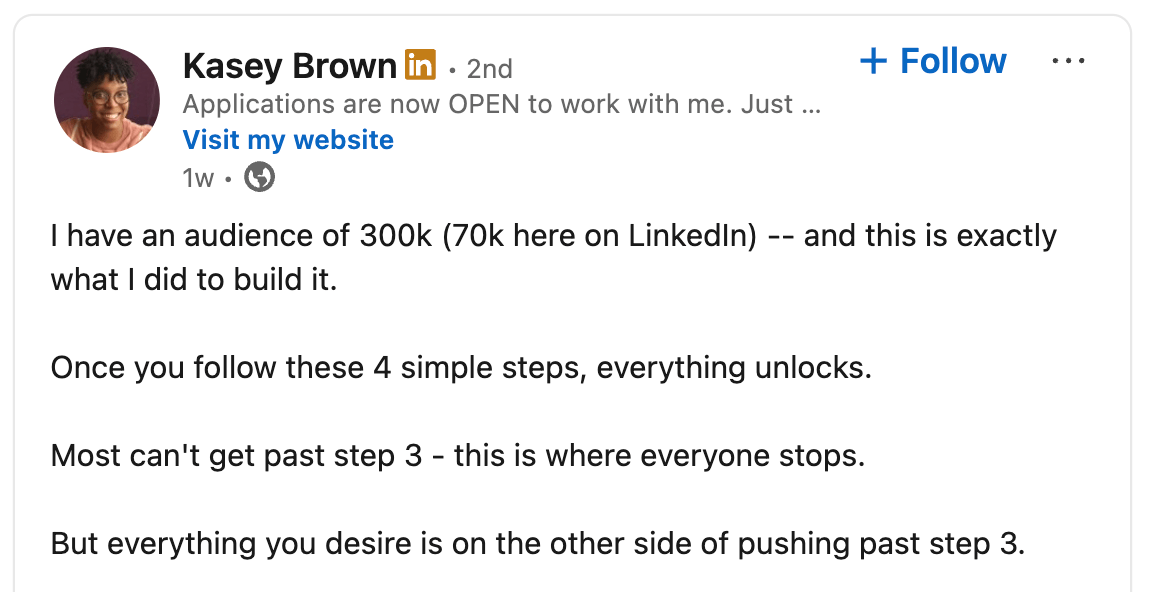
Most professionals default to high-end, polished headshots. Brown suggests the opposite. In a test of two images—one a professional, high-resolution speaking photo and the other a casual, 0.5x wide-angle selfie taken from a stage—the latter outperformed the former by a factor of 15:1.
Why? Because the unpolished, wide-angle shot creates a "pattern interrupt." It feels raw, human, and intriguing. For informational content, avoid generic title cards. Instead, display dense, actionable content as a screenshot of a working document. This signals that the post contains "insider" knowledge rather than surface-level fluff.
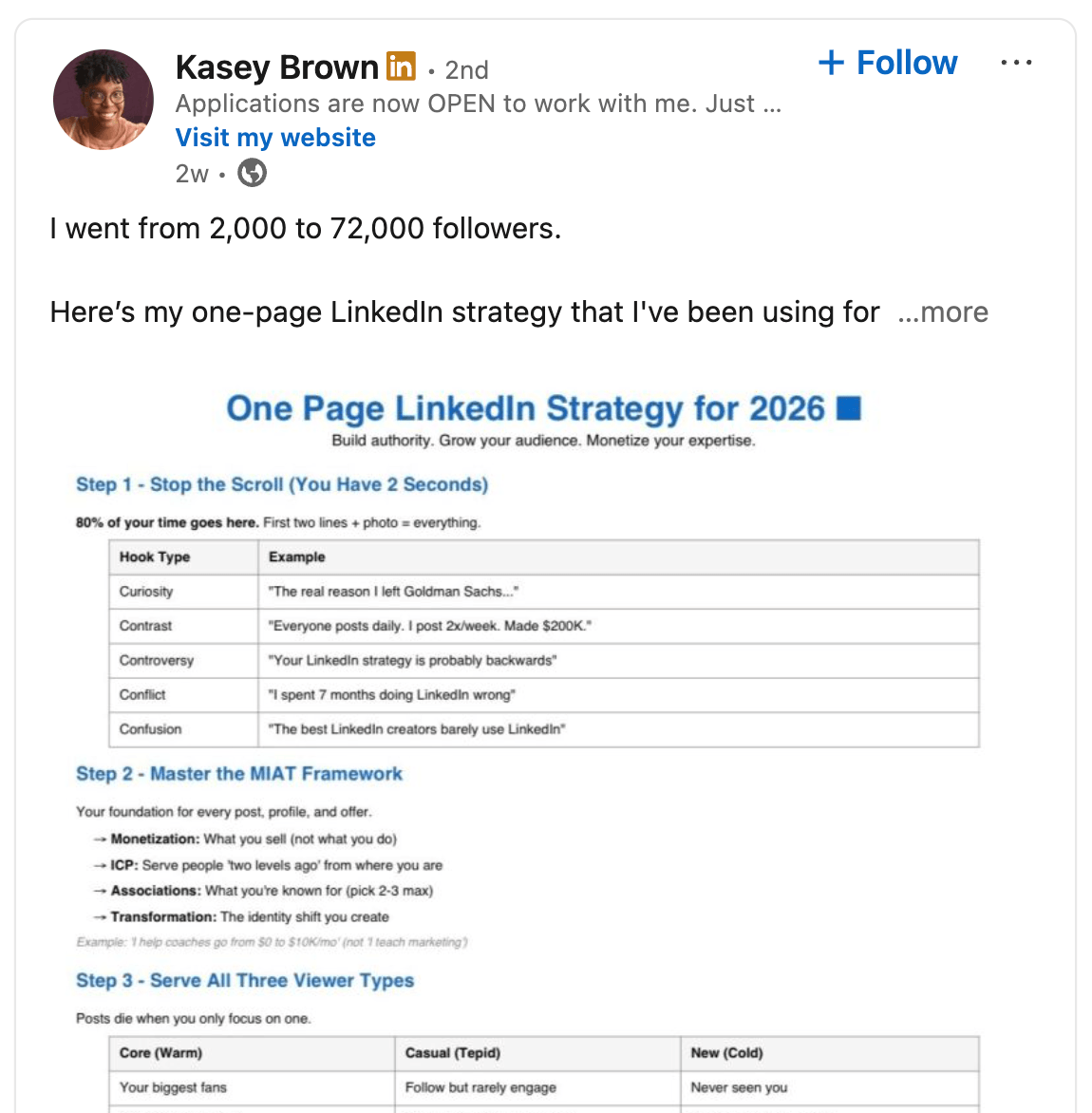
The Five Cs of Hook Writing:
The text hook must trigger at least two of the "Five Cs": Curiosity, Contrast, Contradiction, Controversy, or Confusion. A bland statement like "I had a great summer" fails. A hook such as "I was at a job I hated in 2021. Today, I spent $30,000 to work from Bali" immediately creates tension. The reader is now hooked, not by the destination, but by the transformation.
2: Stay – Earning the Right to be Read
Once a user clicks "see more," your next job is to keep them there. This is the "Stay" phase, and it requires a delicate balance of tension and resolution.
The Re-Hook Strategy:
The third line of your post is your "re-hook." It must confirm that the click was worth the effort while continuing to build tension. Do not provide the solution immediately. If you give away the "answer" in the third line, the reader has no reason to consume the rest of the content. Instead, layer in the struggle—the fires you had to put out, the risks you took, or the obstacles you faced. This keeps the reader invested until the very end.
Rhythm and Readability:
Readability is a technical requirement, not a stylistic choice. Brown recommends a rhythmic structure: a sequence of short, one-sentence lines followed by a dense, two-to-three-sentence paragraph. This creates a visual pace that makes the text easy to digest on mobile devices, where 70% of LinkedIn traffic originates. Using tools like the Hemingway App to maintain a 4th-to-7th-grade reading level ensures the content is accessible, not just intellectual.
3: Share – The Ultimate Metric of Authority
Shares (or reposts) are the highest form of digital currency on LinkedIn. They indicate that a reader found the content so valuable they are willing to attach their personal brand to it.
The Shareable Ending:
To drive shares, a post must end with a concrete, actionable takeaway—a "goodie bag" for the reader. If you have shared a story about your business success, the conclusion should provide a step-by-step framework that the reader can apply to their own life. When the value is high, explicit Calls to Action (CTAs), such as "Tag a friend who needs to see this," become effective rather than annoying.
Implications for the Modern Creator
The data is clear: content built on creator credibility rarely resonates. Content built on reader transformation, however, compounds.
The "Triple S" framework demonstrates that the LinkedIn algorithm is not a black box to be gamed, but a reflection of human behavior. When you optimize for the reader’s experience—by slowing the scroll with authentic visuals, holding their attention with narrative tension, and providing a tangible takeaway—the algorithm naturally pushes your content to a wider audience.
Furthermore, this approach creates a sustainable feedback loop. By tracking the "shares-per-impression" ratio, creators can identify their highest-performing content and recycle it every 60 to 90 days. This removes the "blank page syndrome" and ensures that your most effective messaging continues to reach new segments of your target audience.
The "Human" Advantage in the AI Age
While AI tools like Claude or ChatGPT can assist in formatting or brainstorming, they cannot replicate the specific "Five Cs" that trigger human curiosity. The most successful creators are using AI to organize their thoughts, but relying on their own lived experiences to provide the narrative tension that keeps readers engaged.
As Kasey Brown notes, "We don’t have to be better. We have to be different." By ignoring the temptation to follow the crowd and instead focusing on the specific, often messy, and highly actionable details of their expertise, professionals can carve out a unique space on LinkedIn.
In a world where artificial intelligence is making content creation easier than ever, the premium on human-centric, high-value, and structurally sound content has never been higher. Those who master the Triple S framework will not only survive the shift in content consumption—they will lead the conversation in their respective industries.