In the modern digital landscape, the distance between "activity" and "profitability" has never been greater. For many global organizations, the dashboard has become a theater of the absurd—a place where vanity metrics are prioritized over the cold, hard reality of the balance sheet. This crisis of measurement is not merely a technical oversight; it is a fundamental strategic failure that threatens to cannibalize company profits in the age of artificial intelligence.
The Myth of "Cost Per Session"
A few years ago, during a strategic consulting engagement for a multinational corporation operating in 75 countries, a startling realization occurred. The client’s marketing sub-team identified their primary success metric as "Cost Per Session" (CPS).
For a seasoned consultant with decades of experience, this was a red flag. The industry standard has long been "Cost Per Sale" (CPS), which at least links marketing spend to a transactional outcome. But "Cost Per Session"? It represents a dangerous shift toward valuing mere traffic over actual business impact. It essentially asks the marketing team to shovel as much digital foot traffic as possible into the top of the funnel, regardless of whether those visitors have any intent to buy, engage, or contribute to the organization’s long-term health.
When marketing organizations focus on CPS, they effectively turn their teams into low-cost traffic brokers, rewarding the volume of "eyeballs" rather than the quality of the customer journey. This is, by any standard, a value-deficient metric. It is not a measurement of business growth; it is a measurement of digital noise.
The Chronology of Measurement Failure
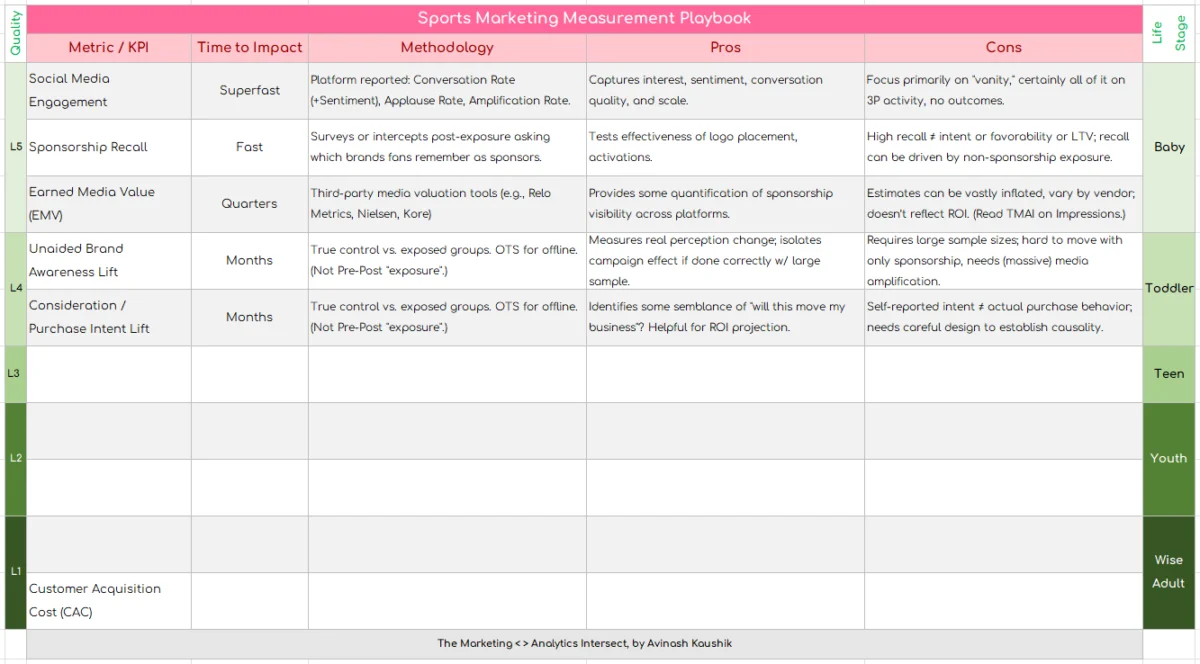
To understand why this shift has occurred, we must look at the evolution of performance marketing. The industry’s descent into vanity metrics followed a predictable, albeit tragic, path:
- The Impression Era: Marketing teams began by celebrating "Impressions" and "Views." These metrics are so hollow they cannot even be classified as KPIs; they are simply "things" that happen on a screen.
- The Traffic Era: As tracking pixels became sophisticated, companies moved to "Sessions" and "Clicks." The logic was that if we can get them to the site cheaply, the product will sell itself. This birthed the obsession with "Cost Per Session."
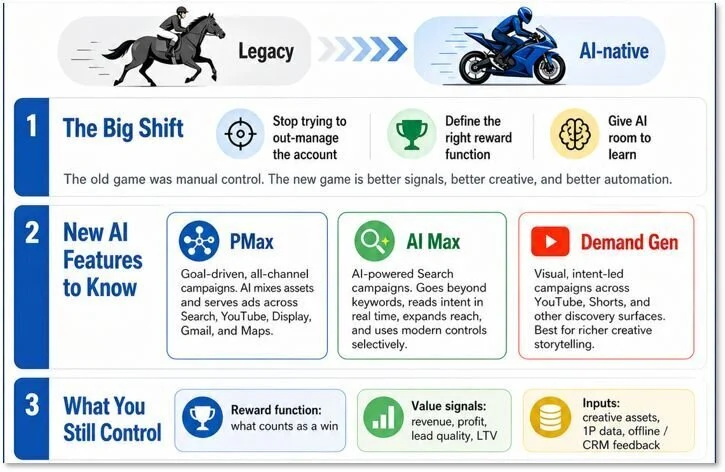
- The "Black Box" AI Era: With the advent of platforms like Google’s Advantage+ or Meta’s automated bidding, the platforms encouraged marketers to feed the algorithm more data. This often led to a "set it and forget it" mentality, where teams measured success by how much they could spend at the lowest possible cost per click.
This trajectory has blinded leadership to the most critical question a CFO can ask: What is the actual incremental business impact of this spend?
Supporting Data: The Case for Accountability
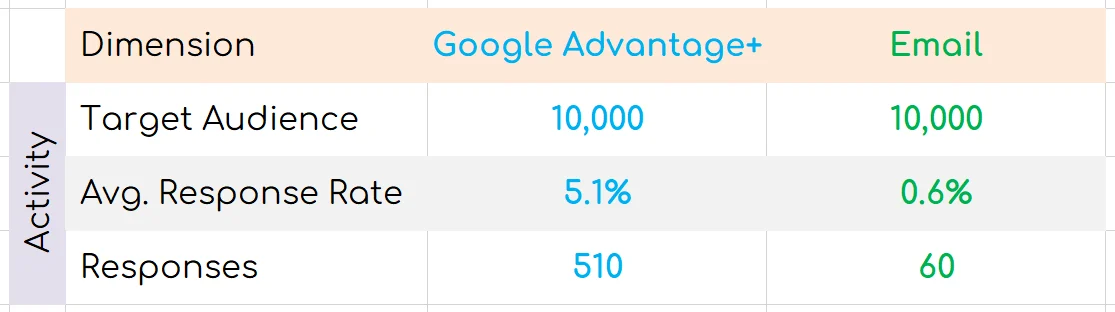
To move away from this cycle, organizations must pivot from Activity (impressions, clicks, sessions) to Outcomes (revenue, conversion rates) and, finally, to Accountability (profitability).
Consider a typical scenario where a marketing campaign—let’s use an AI-driven platform like Google Advantage+—reports 173 orders and $17,000 in revenue. On the surface, the CMO is thrilled. But when a CFO applies a layer of "Accountability" by factoring in the $7,000 in campaign costs and the associated Cost of Goods Sold (COGS), the picture changes drastically.
The Profitability Audit Table
| Metric | Google Advantage+ | Email Marketing |
|---|---|---|
| Revenue | $17,000 | $1,400 |
| Campaign Cost | $7,000 | $150 |
| Profit (Post-COGS) | $5,000 | $1,100 |
| Return on Investment (ROI) | 1.4 | 8.6 |
| Profit on Investment (POI) | 0.70 | 5.70 |
When viewed through the lens of Profit on Investment (POI), the "high performing" Google campaign actually loses money—for every dollar spent, the company receives only $0.70 in profit. The email campaign, while generating lower total revenue, is a powerhouse of efficiency, yielding $5.70 in profit for every dollar spent.
The data reveals a painful truth: Revenue is not the same as Profit. Scaling a campaign that has a negative POI is not "growth"—it is the rapid destruction of shareholder value.
Implications for the CMO and the CFO
The tension between the CMO and the CFO is often a result of a misalignment in metrics. The CMO is tasked with growth and brand awareness, while the CFO is tasked with capital allocation and risk management.
1. The Death of the "Traffic" Strategy
If your team is currently being incentivized by Cost Per Session, you are effectively paying to subsidize the advertising platforms’ revenue growth at the expense of your own. By shifting to "Cost Per Non-Bounced Session," you can at least filter out the noise. However, this is merely a Band-Aid. The true solution is to measure the net profit generated by every campaign.
2. The AI Search Disruption
Google’s recent guidance on "AI Search" (the shift toward AI Overviews and ChatGPT-style search experiences) changes the rules of the game. Google itself has warned that as AI becomes the primary interface for search, "clicks" will become less frequent but more intentional.
Focusing on "Cost Per Session" in an AI-driven world is a losing strategy. AI search engines are designed to provide answers, not just links. If your strategy is to drive traffic that doesn’t convert, you will find yourself increasingly invisible in the AI-search era, where quality and relevance—not volume—are the primary ranking signals.
Strategic Recommendations: How to "Suck Less"
If your organization is currently trapped in a cycle of unprofitable traffic acquisition, it is time for a drastic intervention.
- Step 1: The Stop-Gap Measure. Immediately pause campaigns that have a negative Profit on Investment (POI). There will be panic when traffic and revenue drop; this is a necessary "detox" period to reset expectations around profitability.
- Step 2: Redefine Success. Shift the internal reporting dashboard from Activity (Clicks/Sessions) to Accountability (POI/ROI). Ensure that every marketing spend is tied to a net profit calculation, even if that calculation requires estimating margins based on average COGS.
- Step 3: Leverage AI for Intent, Not Volume. Use AI-powered platforms to identify high-intent audiences rather than just high-volume audiences. A.I. should be used to turbocharge tactics that match specific customer needs, not to blindly bid on broad categories.
- Step 4: Protect the CMO’s Career. The most resilient career in the age of AI is the one that is anchored in business results. By aligning with the CFO’s requirement for accountability, the CMO becomes a profit center rather than a cost center. This builds the credibility needed to secure larger budgets for truly effective, high-ROI initiatives.
Conclusion: Outcomes Over Everything
The era of "set-it-and-forget-it" marketing is over. As AI reshapes how consumers discover brands, the margin for error is shrinking. Companies that continue to hide behind vanity metrics like "Cost Per Session" will find themselves unable to justify their existence to an increasingly data-literate C-suite.
True marketing leadership is defined by the ability to look past the surface-level metrics of clicks and sessions and demand the accountability that leads to sustainable growth. It is a path that requires hard work, uncomfortable conversations, and a total rejection of the "traffic-at-all-costs" mentality. For those who choose this path, the reward is an AI-proof career and an organization that doesn’t just survive the digital transformation—it thrives in it.