By Sharon Atefi
Published by Foundr
Main Facts: The Shift From Transactional Lists to Connected Communities
In the modern e-commerce landscape, the standard playbook for email marketing has long relied on a singular, relentless objective: conversion. Welcome series, browse abandonments, cart recoveries, and win-back campaigns have been meticulously optimized to herd subscribers down a linear funnel, pushing them toward the checkout button as quickly as possible.
While this transactional infrastructure remains a baseline requirement for commercial viability, industry leaders are discovering that it tells only half the story.
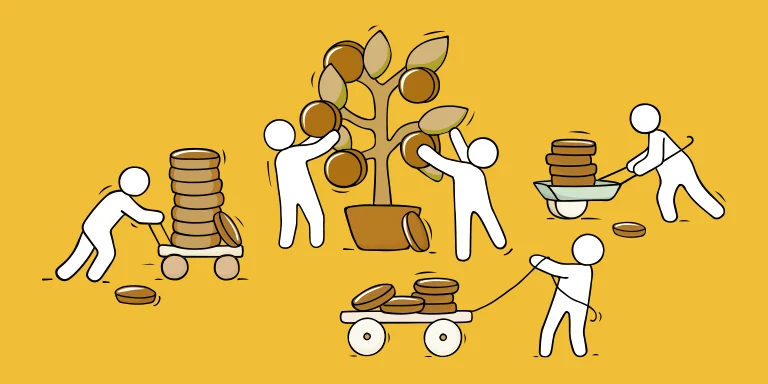
The brands achieving long-term resilience are transforming how they view their subscriber base. Instead of treating an email address as a target for extraction, pioneering founders are leveraging the inbox to foster genuine brand communities. By prioritizing relational connection over immediate revenue capture, these companies are cultivating loyal audiences who advocate for the brand organically, resist the pull of cheaper alternatives in their social feeds, and actively participate in the brand’s evolution.
Crucially, email remains uniquely suited for this task. Unlike social media channels governed by unpredictable algorithms and cluttered sidebars, the email inbox represents a direct, distraction-free line of communication where brands hold a subscriber’s undivided attention.
Chronology: The Evolution of E-Commerce Communication
To understand where modern email marketing is heading, it is helpful to trace how digital communication between brands and consumers has evolved over the past two decades:
- Early 2000s (The Blast Era): Email marketing was largely characterized by mass-blast newsletters. Companies sent identical promotional flyers to entire databases, focusing on volume rather than personalization, which eventually trained consumers to tune out the noise.
- The 2010s (The Funnel Optimization Era): As automation software matured, e-commerce brands shifted toward behavioral triggers. The focus narrowed entirely on funnels—maximizing open rates, click-through rates, and conversion metrics through automated flows. While efficient, this stripped much of the human element out of the medium.
- The Late 2010s to 2020s (The Rise of Social Communities): Brands realized that social media platforms (Facebook Groups, Instagram, Discord) were powerful tools for community building. However, algorithm changes and "pay-to-play" models made these rented spaces increasingly volatile and expensive to maintain.
- Present Day (The Inbox Community Era): Recognizing the limitations of social platforms, forward-thinking founders are bringing community-building back to where they hold direct ownership: the email inbox. By merging automated efficiency with intimate, human-centric storytelling, modern brands are using email as a two-way relationship channel.
Supporting Data: Moving Beyond Standard Metrics
Traditional email marketing dashboards are crowded with metrics that measure short-term transactional health: open rate, click rate, revenue per email (RPE), and conversion rate. However, brands prioritizing community growth are expanding their analytical frameworks to capture indicators of true connection and brand affinity.
1. Reply Rates
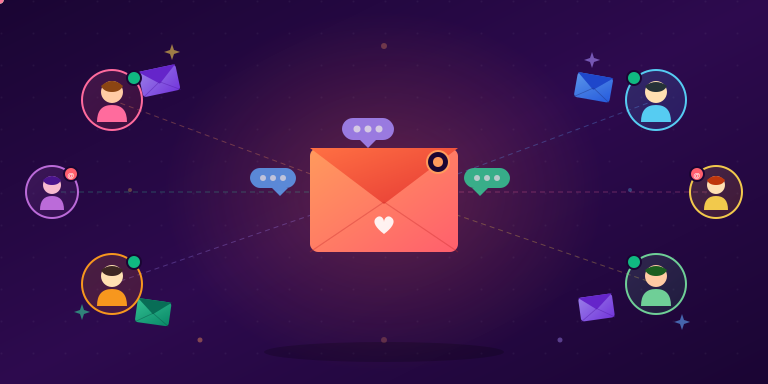
The most fundamental shift from a transactional list to a community is moving from a monologue to a dialogue. A healthy reply rate indicates that subscribers do not view the brand as an faceless corporate entity, but rather as a conversational partner. When brands actively prompt for feedback and receive thoughtful responses, it signals deep engagement.
2. Forward and Share Rates
When a subscriber forwards an email or shares a piece of content with a peer, they are putting their own social capital on the line to endorse the brand. Rising forward rates serve as a primary indicator that the content resonates on a personal level, acting as organic word-of-mouth marketing within trusted social circles.
3. Referral-Driven List Growth
In community-led brands, a significant portion of new subscriber acquisition happens organically through recommendations. Tracking attribution back to peer-to-peer sharing proves that the existing audience is actively working to expand the community.
4. Qualitative Unsubscribe Patterns
While unsubscribes are typically viewed negatively, community-focused brands analyze when and why unsubs occur. A spike following a purely promotional email is normal, but maintaining low unsubscribe rates across text-heavy, narrative, or founder-led emails demonstrates that the audience values the relationship and the insights shared, even when no product is being sold.
Strategies for Cultivating Community in the Inbox
Building a community through email does not require a massive enterprise budget or a complex loyalty rewards program. Instead, it requires a fundamental shift in mindset and execution across three core pillars.
Making Subscribers Feel Like Insiders
The fastest way to build camaraderie within a subscriber base is to grant them insider access. This goes far beyond offering a 10% discount code for signing up.
- Share the Process, Not Just the Product: Instead of merely announcing a product launch, brands can pull back the curtain. Explain the problem the product was designed to solve, discuss what failed in iterations one through three, and highlight the challenges faced during supplier visits. Consumers are fascinated by authentic behind-the-scenes narratives.
- Embrace Founder-Led Emails: Plain-text emails written in a personal voice—devoid of heavy graphic design or corporate formatting—frequently outperform polished marketing templates. A genuine note from a founder who cares deeply about their craft fosters immediate trust.
- Offer Early Access: Giving subscribers first dibs on sales, new content, or product drops before they hit the public-facing website or social channels makes them feel valued and privileged.
Asking Questions and Listening Actively
Traditional marketing talks at people; community building talks with them.
Brands can initiate dialogue by ending emails with open-ended, low-friction questions. Instead of complex surveys, ask simple prompts like: "What is the one thing you are still trying to figure out about this topic?" or "What product should we design next?"
When subscribers reply, real humans must respond. While this level of engagement may not scale infinitely to hundreds of thousands of readers without dedicated support, starting conversations with even a handful of engaged readers creates hyper-loyal advocates. These are the individuals who leave detailed reviews, evangelize the brand to friends, and provide invaluable market research directly from the source.
Developing a Recognizable, Human Voice
Communities cohere around shared identity and values. If an email blast could be sent by any competitor in the same industry without changing a single word, it lacks the distinct voice required to build community.
To stand out, a brand must answer deeper questions:
- What does the company genuinely believe about its industry?
- What standard practices does it explicitly push back against?
- What does it care about above and beyond the bottom line?
When these convictions consistently permeate every communication—whether it is a hard-selling promotional push or a purely educational newsletter—subscribers feel they truly know the brand. That familiarity breeds the trust necessary for long-term customer retention.
Implications: The Future of E-Commerce and Customer Loyalty
As customer acquisition costs (CAC) continue to rise across paid social and search channels, relying solely on transactional funnels is becoming an increasingly expensive and fragile growth strategy. Brands that fail to build emotional moats around their customer base find themselves vulnerable to margin erosion and fickle consumers who will switch at the sight of a cheaper alternative.
The implications of shifting toward email-based community building are profound:
- Resilience Against Algorithm Changes: Brands that own their audience relationships via email are insulated from the sudden policy shifts and rising ad costs that plague social media platforms.
- Higher Customer Lifetime Value (LTV): Consumers who feel emotionally connected to a brand purchase more frequently, stay subscribed longer, and tolerate minor missteps with greater grace.
- Sustainable Organic Growth: When an email list transforms into an active community, the marketing burden shifts from the founder to the collective voice of the consumers themselves.
Official Tools and Resources: Powering the Transition
Transitioning from a transactional email schedule to a community-focused dialogue requires the right technological foundation. Modern automation platforms are designed to handle the heavy lifting of behavioral triggers and segmentation, freeing up founders to focus on creative storytelling and relationship building.
For e-commerce entrepreneurs looking to balance revenue generation with community cultivation, tools like Omnisend provide the necessary segmentation, automation, and analytics infrastructure to deliver tailored messaging to the right people at the right time.
Special Offer: Readers can leverage exclusive perks to elevate their marketing infrastructure. Use the promo code FOUNDR50 to receive 50% off your first three months when signing up through Omnisend’s partner portal, helping you build an email list that looks forward to hearing from you every single week.