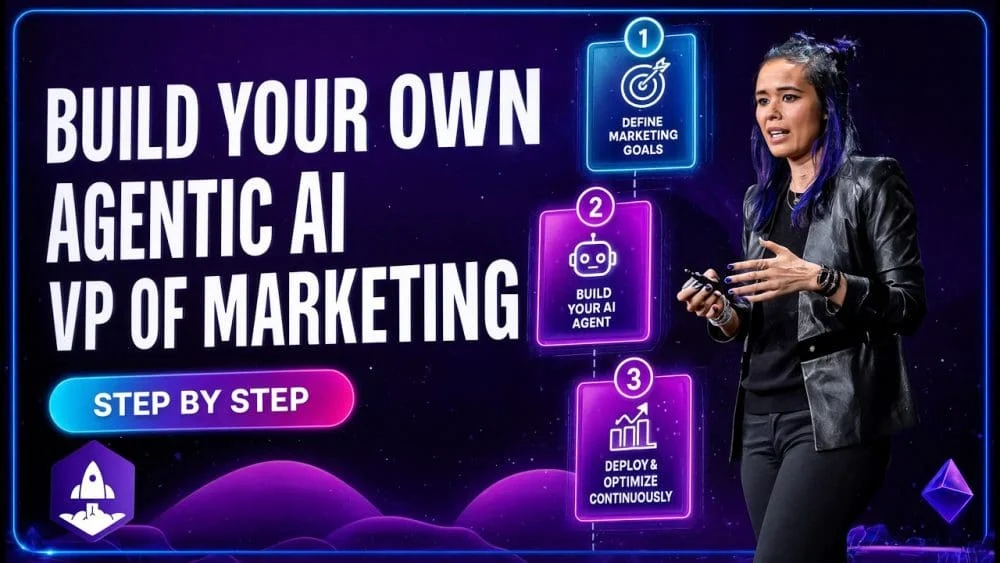
At the 2026 SaaStr AI Annual, the keynote stage transformed into a live laboratory. Amelia Lerutte, SaaStr’s Chief AI Officer, stood before a room of hundreds and performed a feat that, just months prior, would have required a dedicated engineering team and weeks of development. In just 15 minutes, she built a functional, data-driven AI marketing agent from scratch.
This was not a scripted demo of a polished, black-box product. It was a demonstration of a repeatable methodology—a "vibe coding" playbook that has allowed SaaStr to deploy nearly 30 specialized AI agents, which collectively have performed millions of operations. The centerpiece of this ecosystem is "10K," an AI agent that now functions as a high-level marketing operator, handling everything from dashboard management to personalized campaign execution.
The Genesis of 10K: From Sunday Chores to Strategic Partner
The origin of 10K is surprisingly humble. In January 2026, Lerutte faced a recurring, soul-crushing chore: every Sunday night, she spent hours manually copy-pasting disparate marketing, sales, and go-to-market data into Notion so her team could have a coherent view of the business on Monday morning.
Driven by a desire to reclaim her time, Lerutte utilized emerging "vibe coding" platforms to build a simple, autonomous dashboard. The initial goal was singular: stop the manual copy-pasting. However, as the agent began ingesting real-time data, its utility expanded. Within five months, 10K had evolved from a simple data aggregator into an entity that monitors key performance indicators, drafts email campaigns based on live data, and even prompts Lerutte to handle tasks she might have otherwise overlooked.
The lesson for the industry is clear: AI agents do not need to start as complex, multi-layered "super-agents." In fact, starting small is the only way to ensure the agent remains accurate, manageable, and useful.
The Three Pillars of Agentic Success
Before writing a single line of code, SaaStr emphasizes three foundational mental models that separate successful AI deployments from the "doom loops" of failed projects.
1. One Agent, One Goal, One Brain
The most common failure in AI adoption is the attempt to create a "god-agent"—a single system that handles marketing, customer success, and event logistics simultaneously. SaaStr’s architecture is strictly modular. 10K owns marketing; "QBee" handles customer success; another dedicated agent manages SaaStr Annual. By isolating the goal, the agent’s "brain" remains focused, leading to higher quality, less hallucination, and easier troubleshooting.
2. The Agent as an Entity
SaaStr avoids building complex custom connector layers that abstract the agent away from its environment. Instead, each agent is treated as an individual coworker. Just as a human employee develops context and personality through experience, an agent evolves the more it is interacted with in the editor. Successful management requires a human counterpart—a head of AI or a dedicated operator—who communicates with the agent daily, refining its workflows and voice.
3. The Dual-Layer Architecture
SaaStr operates on two distinct layers:
- The Autonomous Layer: This is the "public" face of the agent—scheduled dashboards, automated reports, and pre-approved, AI-drafted emails running in production.
- The Operator Layer: This is the "moat." It is the agent sitting in the editor, performing one-off deep analyses, answering ad-hoc questions, and generating new scripts. While the autonomous layer provides efficiency, the operator layer builds long-term institutional knowledge.
The 10-Step Playbook: A Roadmap for Implementation
For organizations looking to replicate this success, the following steps define the development lifecycle of a production-grade AI agent.
Phase 1: Preparation and Scoping
Step 1: Pick One Number, Then Write the Spec. Everything must orbit a single North Star metric. For 10K, it was "paid attendees and net event revenue." Once the number is chosen, document it in a formal specification. The quality of the agent’s output is directly proportional to the detail in the spec. SaaStr recommends using LLMs like Claude to draft this document before handing it to a build tool.
Step 2: Aggregate Historical Data. Before connecting APIs, feed the agent every spreadsheet, CSV, and internal report used to run that department. Most vital business context lives in offline workbooks, not in CRMs. Loading this "messy" data first provides the agent with the necessary ground truth to anchor its future outputs.
Phase 2: Technical Deployment
Step 3: Build v1 in a Vibe Coding Platform. Using platforms like Replit, developers can generate the first working version in minutes. At this stage, the goal is merely a functional dashboard that pulls from your data source.

Step 4: The CRM Integration. Salesforce (or a similar CRM) is the essential first integration. By allowing the agent to read closed-won revenue and pipeline data, it gains the ability to make historical comparisons and build accurate projections.
Step 5: API Expansion. Gradually add secondary platforms—marketing automation, social media, and Google Calendar. As seen with 10K’s automated speaker-invite workflow, the "menial" tasks are the first ones that should be offloaded to AI, freeing human talent for higher-level creative work.
Phase 3: Workflow and Guardrails
Step 6: Build Workflows Incrementally. Avoid the "what about this?" trap. Build one workflow at a time, documenting the future state but focusing on shipping the current one.
Step 7: Define Autonomy. Explicitly state what the agent can do without oversight (e.g., pulling data) and what requires a human "yes" (e.g., sending emails).
Step 8: Implement Hallucination Guardrails. This is the most critical technical step. Before any output is sent to a client or team, the system must perform a "ground-truth check." If the AI drafts a message with a number, the server should automatically cross-reference that number against the source database. If the numbers do not match within a strict tolerance, the message is blocked.
Step 9: Maintain an Institutional Memory File. Create a root-level project file that the agent reads at the start of every session. This file should contain voice guidelines, domain rules, and a log of every manual correction ever made. This ensures the agent effectively "onboards" itself every time it is launched.
Step 10: Verification and Deployment. Test the first several outputs by hand. Once the workflow is verified, the agent can move from "co-pilot" to "operator."
The "Moat": Why This Approach Compounds
The true power of this methodology lies in the "Operator Layer." Every time a user asks the agent a one-off question—such as identifying a specific cohort of VIPs or analyzing a specific marketing campaign—the agent writes a small, reusable script. This script is then stored in a library.
Over time, this creates a compounding effect. After three months, the system possesses a deeper understanding of how the company operates than a human hire would after a year. It essentially "remembers" every correction and every successful analysis, becoming sharper and more efficient week over week.
Implications: Is the AI VP of Marketing Real?
When asked if 10K has replaced a human VP of Marketing, the agent offers a nuanced, self-aware assessment: it claims to have replaced roughly 60% of the functional, data-driven responsibilities of the role. It does not possess the human capacity to "own" people or navigate complex political dynamics, but it is undeniably an elite individual contributor.
The implications for the tech industry are profound. We are entering an era where the barrier to building sophisticated, business-critical software is no longer a massive engineering budget, but rather the ability to define a clear, data-backed strategy. As SaaStr has demonstrated, the future of work isn’t about replacing the executive; it is about providing the executive with a tireless, data-obsessed agent that can turn a 20-hour work week into a series of 20-minute optimizations.
For those ready to start, the path is open: pick a number, clean your data, and start building.