In the rapidly shifting landscape of web infrastructure, the role of a managed WordPress host has transcended mere storage and uptime. Today, hosting companies are positioning themselves as strategic partners, navigating a complex intersection of high-performance hardware, plugin-bloat mitigation, and the seismic disruption of Artificial Intelligence.
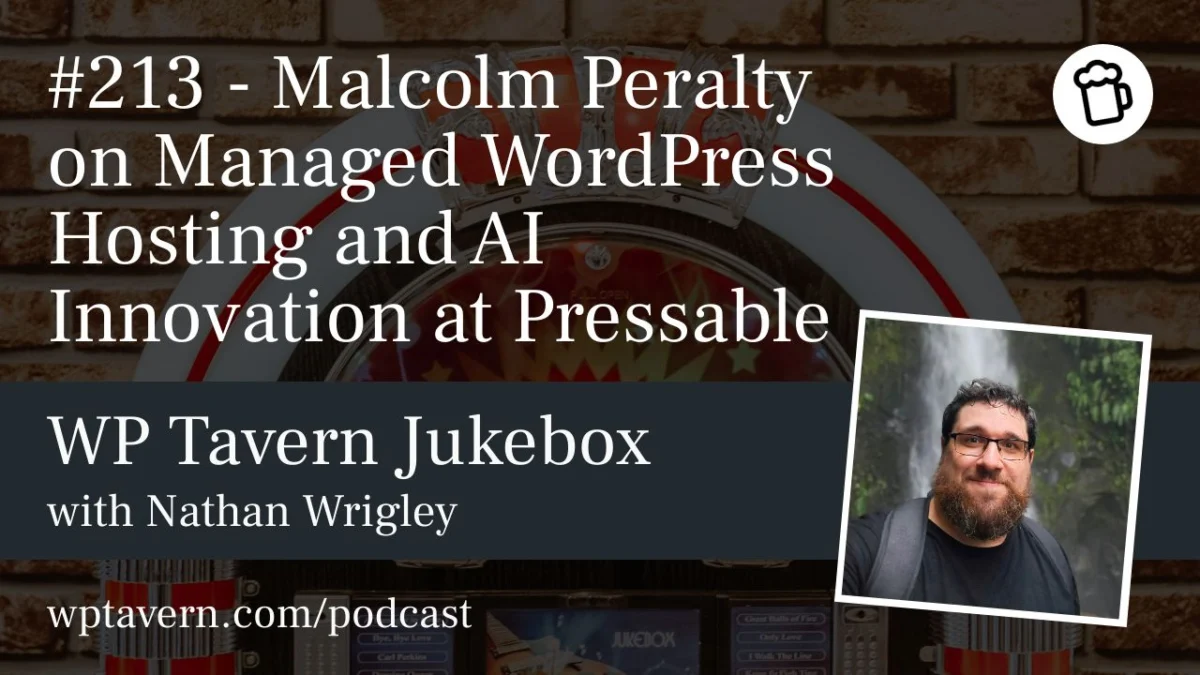
Recently, Nathan Wrigley of the WP Tavern Jukebox Podcast sat down with Malcolm Peralty, a veteran of the WordPress ecosystem and Technical Account Manager at Pressable, to discuss the realities of modern hosting. Their conversation peeled back the curtain on a sector that is no longer just about "keeping sites online," but about architecting resilient, AI-integrated environments capable of handling the demands of global e-commerce and complex learning management systems (LMS).
A Journey Through the WordPress Ecosystem
Malcolm Peralty’s career provides a unique vantage point on the evolution of content management systems (CMS). Having started his journey with WordPress 0.72—long before the platform reached its 1.0 milestone—Peralty has spent two decades observing the ebb and flow of web technology.
His career path included a stint in the Drupal world, specifically at Acquia, an experience he describes as a vital education in enterprise-level expectations. "Drupal jobs pay better," Peralty admitted candidly, noting that the lure of higher compensation is often a driving factor for career movement in tech. However, his return to WordPress via Pressable marks a full-circle moment. By bringing enterprise-grade technical account management (TAM) skills back to the WordPress space, Peralty is helping to bridge the gap between the "commodity" hosting perception and the reality of high-scale, high-performance managed environments.
The Role of the Technical Account Manager
At the heart of Pressable’s evolving service model is the role of the Technical Account Manager. Unlike traditional support teams tasked with resolving immediate tickets, a TAM acts as a long-term strategic consultant.
"We’re WordPress hosting strategists," says Peralty. "We think about what your website will look like in two years, what technologies you need to be aware of, and which plugins are actually hindering your performance."
This proactive approach to infrastructure is a significant departure from standard hosting support. The goal is to optimize client environments to the point where they might even require fewer resources—a move that prioritizes client success over maximizing hosting plan tiers. By monitoring server data and identifying bottlenecks, TAMs help clients shift from reactive firefighting to strategic growth. This is particularly crucial for sites running resource-intensive applications like WooCommerce or LMS platforms, where a standard "one-size-fits-all" hosting environment often fails.
The Hardware Layer: WP Cloud and Performance Nuance
One of the most critical aspects of the conversation was the demystification of server infrastructure. Many users view hosting as a "black box," but companies like Pressable, through their proprietary WP Cloud infrastructure, are constantly fine-tuning the hardware layer to meet modern demands.
Peralty highlighted a common trap: the "individual speed test." Many hosts utilize aggressive caching or powerful CPUs to make a site feel fast to a single user. However, when that same site is subjected to real-world traffic—such as a flash sale or a front-page feature on a major site—those configurations often collapse.
"We have a model where we have one worker per one VCPU," Peralty explained. "It’s like a five-lane highway for five cars, rather than 40 cars trying to squeeze onto one lane." This architectural choice is central to how Pressable manages the "bloat" often introduced by heavy site builders like Elementor or Divi, which, while user-friendly, create significant performance overhead.
The Future of Hosting: AI, MCP, and Automation
Perhaps the most significant development discussed is Pressable’s upcoming AI-powered control panel, known as MCP. This technology aims to revolutionize how developers and site owners interact with their hosting environments by leveraging natural language processing.
The "USB/API for AI"
Peralty describes the MCP as a bridge—a way for AI agents to interact with the Pressable API to execute complex tasks. "Anything you could do or click on as a user in the control panel, an AI could also act on," he noted.
The potential use cases are transformative:
- Rapid Prototyping: An agency could ask an AI to spin up a sandbox site, pull production data, apply specific code, and confirm it is ready for testing—all within the time it takes to finish a cup of coffee.
- Bulk Management: For users managing hundreds of sites, AI could scan for outdated plugins across the entire portfolio and apply updates automatically, with human oversight.
- Natural Language Infrastructure: Instead of navigating complex admin menus, users might eventually be able to issue commands like, "Update my CSS for a holiday theme," or "Why is my site slow?" and receive an AI-generated diagnosis.
The Human-in-the-Loop Imperative
Despite the promise of automation, both Wrigley and Peralty acknowledged the "landmines" inherent in AI integration. The risk of hallucination—or worse, a cascade of unintended deletions—requires robust guardrails.
"We are a human-first, AI-enhanced company," Peralty emphasized. The strategy involves maintaining "human-in-the-loop" checkpoints. Whether it’s restoring backups after an accidental command or using audit logs to trace actions, the goal is to ensure that the AI remains a tool for efficiency rather than a source of instability.
The implications for the industry are profound. We are witnessing the collapse of the traditional website creation timeline. Where once a "five-minute install" was the gold standard, we are moving toward a reality where an entire proof-of-concept site can be generated through a conversation.
Implications for the Future of WordPress
The conversation concluded on a thought-provoking note regarding the "cost of being online." As AI bots crawl the web, adding items to carts and triggering uncached sessions, they place an immense, often hidden, strain on server resources. The industry is currently struggling with how to account for this traffic.
Furthermore, the very nature of the WordPress interface is being challenged. If users can build, theme, and manage sites through IDEs or AI agents, the standard WordPress admin dashboard may become just one of many ways to interact with the platform—or perhaps even a legacy tool for a minority of users.
Summary of Key Takeaways:
- Shift in Hosting Strategy: Hosting is moving from a utility-based model to a consultative, strategy-led partnership.
- Performance at Scale: True performance is defined by resilience under load, not just single-user speed tests.
- The Rise of MCP: The integration of natural language commands into hosting controls will drastically reduce the time-to-delivery for agencies.
- The AI Burden: The rise of AI-driven web traffic presents new economic challenges for hosts, as the cost of server resources rises to accommodate non-human interactions.
- Human-First Architecture: Despite the push for total automation, the need for human oversight, audit logs, and "undo" capabilities remains the bedrock of professional web infrastructure.
As Pressable and other forward-thinking hosts continue to iterate, the line between the developer, the host, and the platform continues to blur. Whether this leads to a more accessible web for the average user or a more complex, code-heavy landscape for the expert remains to be seen. However, one thing is certain: the era of the "static" hosting experience is over. In its place is a dynamic, AI-driven environment where the only limit is the sophistication of the prompt.