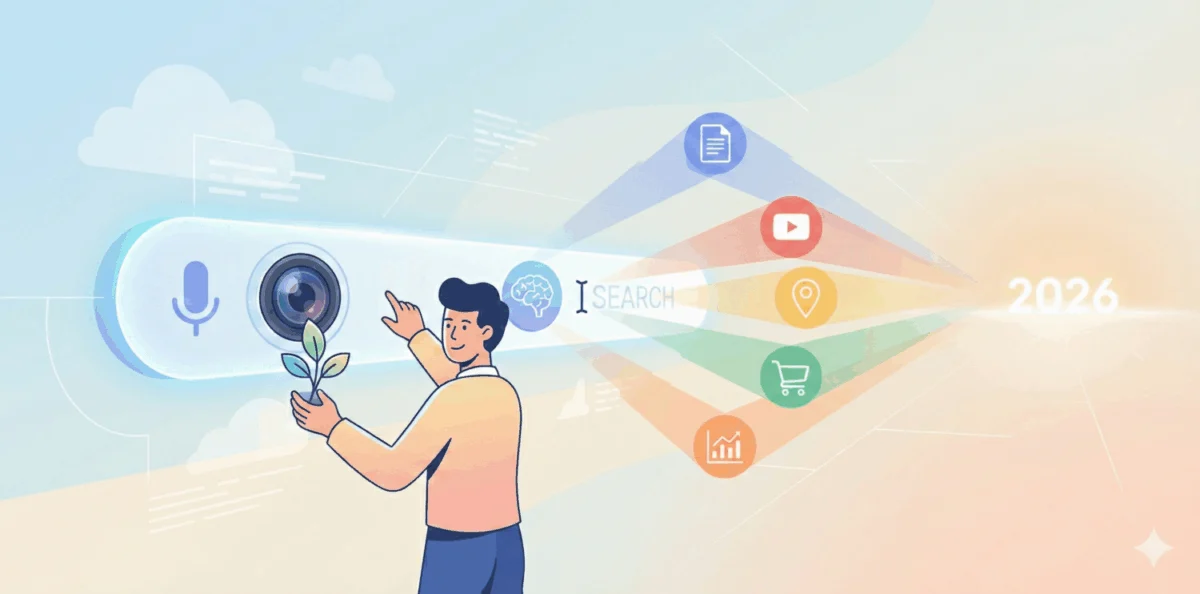
SAN FRANCISCO — The digital landscape is undergoing its most profound structural transformation since the commercialization of the internet. For nearly three decades, online visibility has been governed by a familiar paradigm: a user types a query into a search bar, a search engine crawls the web, and a results page delivers a list of ten blue links. Today, that foundational architecture is fracturing.
As artificial intelligence systems like OpenAI’s ChatGPT, Google’s AI Overviews, Anthropic’s Claude, and Perplexity rapidly evolve, they are no longer just pointing users toward information—they are synthesizing it directly. These systems carry context from interaction to interaction, answer multi-layered questions in real-time, and make autonomous decisions about which brands, facts, and perspectives deserve to be highlighted.
For digital marketers, brand strategists, and enterprise organizations, this is not merely another algorithmic update to reverse-engineer or a new ranking factor to optimize. It is an entirely new operating system for human curiosity. The traditional Search Engine Optimization (SEO) playbook, built on keyword density, backlink profiles, and click-through optimization, is rapidly losing its efficacy.
As we look toward the realities of 2026, marketing teams are being forced to completely recalibrate how they build authority, structure information, and measure success in an ecosystem dominated by AI answer engines.
The Main Facts: The Structural Collapse of Legacy Search
The core shift in the modern search ecosystem is the transition from deterministic retrieval to probabilistic synthesis. In the past, search engines functioned as digital librarians: they indexed documents and retrieved the closest matches based on keywords and metadata. The user bore the responsibility of clicking through multiple links, reading disparate sources, and piecing together an answer.
AI-driven discovery eliminates that friction. When a user asks an LLM-powered engine a complex question—such as, "Compare enterprise cybersecurity frameworks for a remote fintech startup with under fifty employees"—the system does not simply output a list of software review sites. Instead, it reads hundreds of articles, evaluates the credibility of the sources, weighs contradictory data points, and generates a bespoke, authoritative response in seconds.
This fundamental reengineering of information flow has created three undeniable realities for the digital economy:
- The Death of the Direct Click: A brand’s content can heavily influence—or even form the foundation of—an AI-generated answer without ever earning a traditional website visit or a click-through.
- Ecosystem Fragmentation: Search is no longer controlled by a single dominant gateway. Instead, it is spread across a decentralized web of chat interfaces, embedded OS assistants, vertical AI agents, and multimodal platforms.
- The Rise of "Inferred Need": Discovery is shifting from explicit demand (what a user types) to implicit intent (what an AI system predicts a user needs based on behavioral histories, job roles, and conversational context).
Chronology of the Shift: How We Arrived at the AI Discovery Era
To understand where search is heading in 2026, it is vital to trace the rapid acceleration of generative AI integration over the past few years:
- 2022–2023 (The Novelty Phase): The launch of public-facing generative chat interfaces stunned consumers and industry insiders alike. While primarily used for creative writing and basic coding, early adopters quickly realized these tools could answer complex informational queries faster than traditional search engines.
- 2023–2024 (The Integration Phase): Tech giants scrambled to defend their turf. Microsoft integrated OpenAI technology into Bing, while Google rolled out its Search Generative Experience (SGE)—later rebranded as AI Overviews—directly into standard search result pages, aggressively pushing traditional organic links below the fold.
- 2024–2025 (The Context and Memory Era): Platforms introduced persistent user memory, multi-turn conversational context, and deep agentic capabilities. AI could now remember past searches, understand user expertise levels, and execute multi-step tasks across external applications.
- 2025–Present (The Autonomous Ecosystem): Search and recommendation have officially merged. Consumers increasingly bypass traditional search engines entirely, relying instead on ambient AI assistants integrated into their browsers, operating systems, and wearable devices to fetch answers, make recommendations, and execute transactions.
Supporting Data and Industry Insights: The Numbers Behind the Change
The behavioral data supporting this transformation highlights an irreversible shift in consumer habits. According to recent digital usage studies, a significant and growing percentage of informational queries—particularly among younger demographics and technical professionals—now begin and end within conversational AI interfaces rather than traditional search engines.
Furthermore, industry benchmarks show a steady decline in organic click-through rates (CTRs) for informational keywords on traditional search engine results pages (SERPs), even for sites holding top-three rankings. Why? Because Google’s AI Overviews and competing answer engines resolve the user’s intent on the spot.
The Rise of the "Storyteller" and Verified Expertise
Compounding this technical shift is a massive pivot in corporate hiring and content investment. A widely discussed Wall Street Journal report highlighted a dramatic surge in companies desperately seeking high-level human storytellers, subject matter experts, and niche analysts.
Why are organizations hiring expensive human talent when generative AI can produce thousands of words in seconds? Because AI systems themselves are demanding human rigor. LLMs are programmed to favor verifiable facts, named experts, original research, and clear information provenance over generic, scraped web filler. As AI floods the internet with low-cost synthetic summaries, authentic human expertise has become the ultimate scarcity—and the ultimate currency for digital survival.
Official Responses and Industry Perspectives
Major stakeholders across the technology and marketing sectors are actively redefining their strategies to cope with this seismic disruption.
Search engine architects maintain that the core mission of organizing the world’s information remains unchanged, even if the delivery mechanism has evolved. Representatives from major AI search platforms emphasize that citations remain a core pillar of their models. They argue that high-quality publishers still have a massive incentive to produce great work because AI engines rely on authoritative human sources to ground their outputs in reality and prevent "hallucinations."
However, enterprise marketing leaders tell a more anxious story. In closed-door industry roundtables and strategic planning sessions for 2026, CMOs frequently voice frustration over the erosion of traditional analytics.
"We spent twenty years perfecting the art of last-click attribution and keyword ranking," notes one enterprise marketing executive. "Suddenly, our CEO is asking why our organic traffic is flattening while our brand mentions in AI summaries are through the roof—and our analytics tools can’t draw a straight line between the two."
Agencies and SEO veterans are similarly pivoting. Forward-thinking firms are dropping the term "SEO" altogether, replacing it with Generative Engine Optimization (GEO) or Answer Engine Optimization (AEO). The focus has decisively shifted from manipulating algorithms to securing trust across machine-readable frameworks.
Deep-Dive Implications: Five Predictions for Marketing in 2026
As this shift embeds itself deeper into daily consumer behavior, marketing teams must restructure their operations across five critical vectors.
Prediction 1: AI Answer Engines Will Become the Default Search Experience
Traditional "ten blue links" search will not vanish entirely, but it will be relegated to a secondary, legacy role. Consumers will increasingly rely on chat-based and agentic AI systems for their initial information discovery.
Because AI synthesizes answers by cross-referencing multiple publisher sites, brand-owned assets, and third-party reviews, visibility will no longer be about ranking #1. It will be about retrievability and semantic trust. Content that lacks structured data, explicit sourcing, and rigorous clarity will simply fail to register as an input when AI systems compile their answers.
Prediction 2: Search and Recommendation Will Merge Into a Single Discovery System
The boundary between "searching for an answer" and "being recommended a product" is dissolving. Platforms like YouTube, TikTok, Amazon, and LinkedIn already use predictive models to surface content based on inferred needs rather than active text queries.
In 2026, marketers must design for these moments of inferred need. This requires creating native, highly legible content formats that match how specific platforms evaluate relevance and engagement. If your content cannot be parsed and contextualized by algorithmic recommendation engines, it will not travel.
Prediction 3: Personalization Will Acquire a Permanent Memory
With persistent conversational histories becoming standard across major AI platforms, no two users will experience the exact same search output. An engineer researching cloud architecture will receive a vastly different synthesis than a college student asking a basic introductory question.
This level of audience fragmentation demands modular content strategies. Brands can no longer rely on one-size-fits-all blog posts. Content must be architected as a knowledge continuum—offering clear entry points for beginners, technical deep-dives for experts, and machine-readable signals that help AI systems match the right piece of content to the right user profile.
Prediction 4: Traditional Attribution Models Will Break, and New KPIs Will Emerge
As click-based pathways disappear behind conversational walls, old metrics like Click-Through Rates (CTR) and last-click conversions will lose their diagnostic power.
In their place, new Key Performance Indicators (KPIs) are taking center stage:
- Citation Frequency: How often an AI model references your brand, domain, or data in its outputs.
- Share of Answers: The percentage of times your brand appears in AI-generated responses for core industry queries compared to your competitors.
- Model Recall and Excerpt Usage: Tracking how accurately and frequently AI summaries pull your proprietary definitions, product specs, and expert quotes.
Prediction 5: Authority Signals Will Eclipse All Traditional Ranking Factors
As Large Language Models implement stricter guardrails against misinformation, "safe precision" is becoming the gold standard. AI systems heavily favor verifiable claims, named authorities, institutional transparency, and original research over high-volume, low-effort aggregation.
Human expertise is officially back as a core competitive advantage. Brands that invest in credentialed authors, transparent sourcing, and rigorous editorial standards will thrive; those relying on thin, AI-generated filler will be filtered out by safety layers and retrieval algorithms.
Frequently Asked Questions (FAQs)
If clicks are declining, how can marketing teams prove their content programs are working?
The measurement paradigm is shifting decisively from web traffic to brand influence. Metrics like citation frequency, excerpt reuse, and "share of answers" are replacing CTR as the primary indicators of content health. While these indicators lack the neat simplicity of last-click attribution, they provide an accurate picture of how your brand shapes decisions upstream within AI reasoning layers.
What specific types of content perform best in AI-driven discovery environments?
Content that is clear, highly structured, specific, and defensible consistently outperforms generic or broad material. AI systems favor explicit definitions, verifiable data points, named subject matter experts, and well-defined logical scopes. Original research, proprietary case studies, and tightly focused explainers are far more likely to be cited than recycled keyword-stuffing.
How should organizations adjust their content strategies to accommodate AI personalization and memory?
Content teams must move away from isolated, static publishing models and embrace knowledge architectures. This means producing modular assets designed for different stages of intellectual maturity—beginner primers, intermediate guides, and advanced technical breakdowns—interlinked with clear semantic signals. This structure allows AI memory systems to effortlessly fetch the exact depth of content a returning user’s history requires.
Conclusion: Building for the 2026 Search Landscape
The evolution of search represents an existential challenge for legacy marketing departments, but it presents an extraordinary opportunity for forward-thinking brands. Organizations that cling to outdated optimization tactics will find their digital footprint evaporating as AI reshapes the pathways of human curiosity.
The foundation for visibility in 2026 is built today. Audit your digital ecosystem for answer-readiness, invest heavily in structured data and human expertise, and build measurement frameworks capable of capturing influence far beyond the traditional click. In the era of AI-driven discovery, substance, structure, and authority are the ultimate keys to the kingdom.