The open-source landscape is undergoing a quiet yet seismic shift. While global tech ecosystems race to adopt artificial intelligence and automated tooling, one of the world’s most foundational content management systems is investing in its most enduring asset: people.
At the heart of this movement is the WordPress Credits initiative, a strategic program launched by the WordPress Foundation. Designed to connect higher education with real-world open-source contributions, the program acts as a vital conduit between academic theory and practical industry experience.
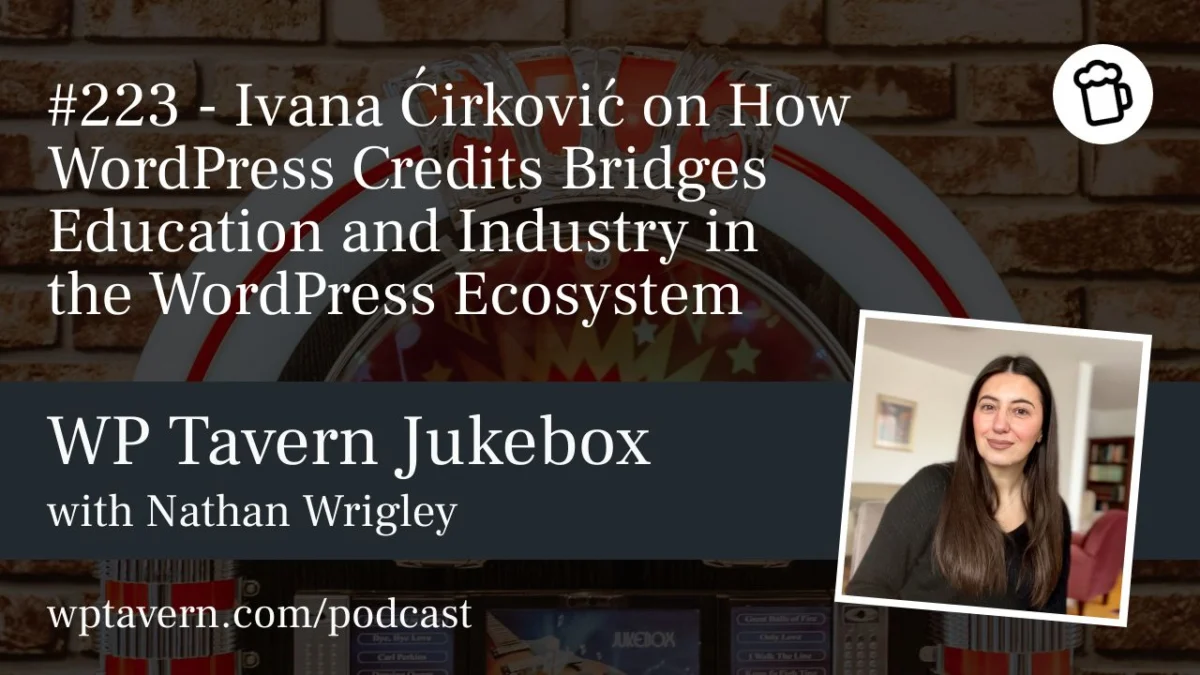
To explore how this initiative is transforming the ecosystem, WP Tavern’s Jukebox Podcast recently sat down with Ivana Ćirković, a veteran digital marketer, WPBakery marketing lead, and certified WordPress Credits mentor. Recorded live at WordCamp Europe, the conversation sheds light on a program that is rapidly redefining how the next generation of digital professionals enters the web technology sector.
Main Facts: What is the WordPress Credits Initiative?
Launched in late December, the WordPress Credits program was engineered to solve a persistent challenge within the open-source community: the aging demographic of active contributors and the gap between traditional university curricula and the demands of the modern job market.
- The Core Objective: The program bridges academia and industry by partnering with universities worldwide. It invites students to earn academic credit, certifications, and tangible career advantages through hands-on contributions to the WordPress project.
- The Contribution Tracks: Students choose a specialized track aligned with their field of study—ranging from translation (Polyglots) and documentation to core development, plugin reviews, and marketing.
- Public Portfolios: Every student’s contribution is transparently tracked and displayed via their official
wordpress.orgprofile, creating a verifiable public portfolio that enhances their competitiveness in the global job market. - Mentorship Backbone: The initiative relies heavily on experienced professionals who act as mentors, guiding students through weekly huddles, remote work environments, and open-source workflows.
Chronology: From Concept to Global Expansion
The journey of the WordPress Credits initiative represents a deliberate evolution in how the WordPress Foundation approaches community growth and workforce development.
1. The Pre-Launch Phase and Foundation Planning
For years, community leaders recognized a growing disconnect. While WordPress powered over 40 percent of the web, the demographic of core contributors and local WordCamp attendees was steadily aging. At the same time, university computer science and digital marketing degrees were leaning on increasingly theoretical or outdated frameworks. The WordPress Foundation recognized an opportunity to align these two realities.
2. December: The Official Rollout
In December, the WordPress Foundation officially deployed the Credits program. The framework was structured to allow universities to integrate real-world open-source contribution into existing degree paths. Early adopters signed on, and professionals with a passion for education—such as Ivana Ćirković—completed rigorous vetting and training to become certified mentors.
3. The First Cohort and Current State (WordCamp Europe)
Fast forward to the present day: the program has successfully shepherded its first generation of students through the system. During WordCamp Europe, mentors and organizers gathered to evaluate the initial results, gather community feedback, and lay the groundwork for expanding business participation. As Ćirković noted during her interview, the program is still in its developmental infancy, yet its foundational framework has proven remarkably effective.
Supporting Data and Real-World Mechanics
To understand the scale and rigor of the WordPress Credits program, one must examine how it operates on a granular level. It is not merely an internship or an informal club; it is a structured, accountable educational framework.
The Rigor of Contribution
Participation in the program demands genuine effort. Students cannot simply complete a passive online module; they must produce tangible, peer-reviewed work.
"You need to do the work," Ćirković explained. "Let’s say students are interested in translation. They go to the Polyglots team and get assigned to a mentor who is on a weekly basis working with them… For that student, they need to have 150 translation strings approved. You might need to translate 500 words out of which 150 is approved. This is the bare minimum you need to do in order to get that badge."
Accountability and Structure
The program enforces professional accountability to prepare students for remote, distributed workforces.
- Students are organized into mentorship groups—ranging from one-on-one sessions to small group huddles.
- Communication occurs asynchronously via Slack and synchronously through weekly check-ins.
- The Rule of Engagement: If a student misses three consecutive check-ins or fails to communicate without justification, they are removed from the program. This ensures that universities can reliably tie the program to official student grades while maintaining the integrity of the open-source contribution pool.
- Reflective Blogging: Regardless of their chosen technical track, every student is required to maintain a weekly blog documenting their experiences, thoughts, and professional development.
Official Perspectives: Educators, Students, and Businesses
The success of the WordPress Credits initiative hinges on a three-way partnership: the academic institutions, the students, and the broader tech industry.
The Academic Advantage
University curricula are notoriously slow to adapt to fast-moving digital industries. By integrating WordPress Credits, academic institutions gain an immediate, zero-effort upgrade to their course offerings. They can offer students up-to-date practical training in remote collaboration, agile workflows, and modern web standards, making their degree programs far more attractive to prospective enrollees.
The Student Perspective
For young adults navigating a crowded job market, differentiating oneself is paramount. The program offers students:
- Real-World Experience: Working on actual software, documentation, and translations used by millions globally, rather than fictional classroom assignments.
- Transferable Skills: Mastery of remote work tools, cross-cultural communication, and professional accountability.
- Marketable Branding: A permanent, verifiable record of contributions on
wordpress.orgthat serves as an undeniable proof of competence to future employers.
The Business and Agency Angle
While the educational benefits are clear, the initiative holds profound value for commercial WordPress businesses and web agencies.
Tech businesses frequently struggle with the onboarding bottleneck—often spending three to six months getting junior hires up to speed with remote collaboration, internal workflows, and open-source codebases. Graduates of the WordPress Credits program arrive pre-onboarded. They already understand Slack, asynchronous communication, version control concepts, and community etiquette.
Furthermore, businesses that provide mentors gain a front-row seat to emerging talent. They can observe young minds solving complex problems in real environments, effectively turning mentorship into a long-term, low-risk recruitment pipeline.
Implications for the Future of WordPress
As the open-source ecosystem looks toward the next five years, initiatives like WordPress Credits may well determine the long-term survival and vitality of the platform.
Solving the Demographic Challenge
Conferences like WordCamp Europe often highlight a stark reality: the core community skews older, reflecting the early boom years of the web. Without a deliberate influx of younger participants, innovation stalls.
- "For 11 years all the same faces are here, and we really need new faces," Ćirković reflected.
- While platforms like TikTok and YouTube capture the attention of modern youth, the WordPress Credits program meets young people where career opportunities are forged—within educational institutions.
Shifting Beyond Flashy Trends
While artificial intelligence and visual site builders dominate tech headlines, Ćirković emphasizes that the true superpower of WordPress has always been its human element.
"WordPress has always been about people. And we need new people, we need young people to get it where it needs to be. We are getting older and don’t have the strength or stamina to do so for how many long years. By having new kids, fresh perspectives, I’m really excited to see what they can come up with next."
A Blueprint for Open-Source Sustainability
The implications extend far beyond WordPress. If successful, the Credits model could serve as a blueprint for other major open-source projects struggling to onboard the next generation of developers, marketers, and translators. By codifying contribution into academic accreditation, the WordPress Foundation has built a sustainable engine for talent acquisition.
Conclusion
The WordPress Credits initiative is much more than an educational experiment; it is a vital lifeline for a maturing digital ecosystem. By aligning the needs of universities seeking modern curricula, students demanding career mobility, and businesses searching for qualified talent, the program creates a virtuous cycle of growth.
As mentors like Ivana Ćirković continue to champion the cause at international events and local universities, the future of WordPress looks increasingly bright. It is a future built not just on code, blocks, and themes, but on the fresh ideas, boundless energy, and professional dedication of a new generation.
To listen to the full interview with Ivana Ćirković, search for Jukebox on WP Tavern or visit the official WP Tavern Podcast page.