Main Facts
The WordPress ecosystem is facing a critical generational shift. While the platform continues to power a massive share of the internet, its community core—the active contributors, agency owners, and event organizers—is aging. To counter this, the WordPress Foundation launched the WordPress Credits Initiative in late December.
The program serves as an innovative bridge connecting higher education institutions with real-world open-source contributions. By partnering with universities globally, the initiative allows students to work on practical tasks—ranging from code contributions and documentation to translation and marketing—while earning academic credits, formal certifications, and tangible career advantages.
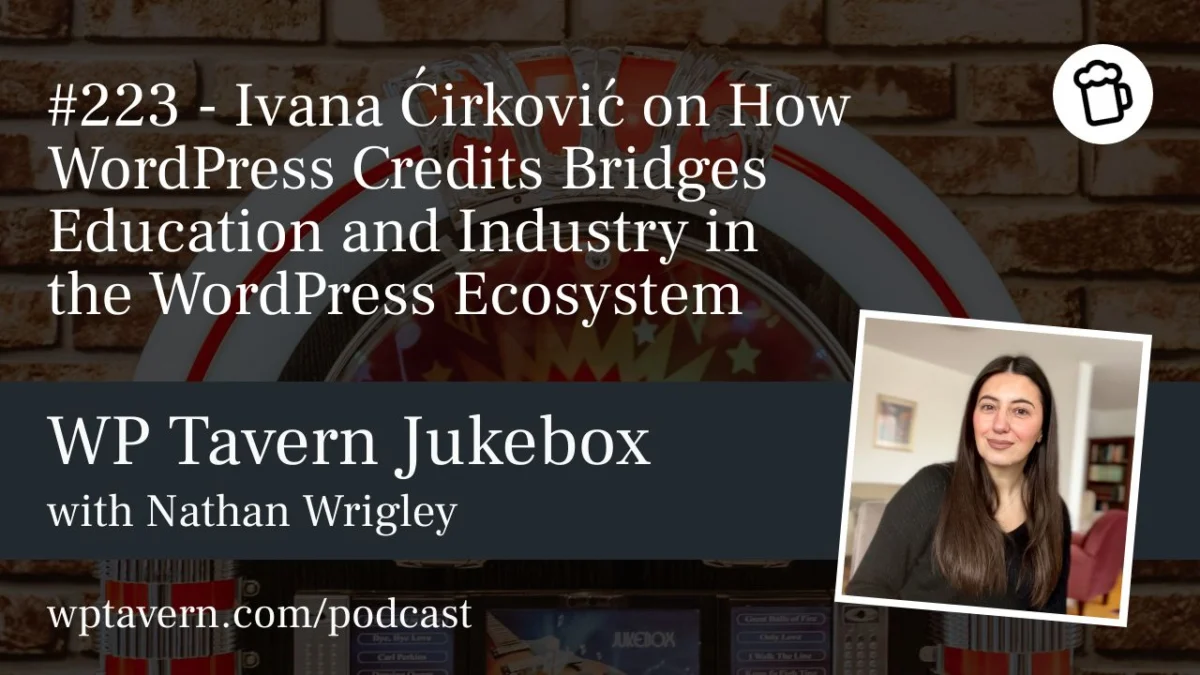
At WordCamp Europe 2026, WP Tavern’s Nathan Wrigley sat down with Ivana Ćirković, a digital marketer with 18 years of experience and marketing lead at WPBakery. As an officially certified mentor within the WordPress Credits program, Ćirković shared vital insights into how the initiative is redefining education, empowering students, and creating a sustainable talent pipeline for businesses in the tech sector.
Chronology: From Concept to Community Implementation
The Genesis of the Initiative
The WordPress Credits program was formally rolled out by the WordPress Foundation late last year. Recognizing a widening gap between what modern digital industries require and what traditional university curricula deliver, the Foundation set out to formalize open-source participation into recognized academic milestones.
Mentorship and Onboarding
Following the rollout, professionals across the tech and digital marketing space applied to become mentors. Ivana Ćirković underwent the necessary training and certification process to guide students as they made their first formal entries into the WordPress ecosystem.
The First Cohort and Beyond
Having successfully guided the program’s inaugural cohort of students through their initial projects, mentors and organizers are now evaluating the framework’s effectiveness. The initiative took center stage at WordCamp Europe 2026, where stakeholders discussed its early successes and mapped out its future evolution.
Supporting Data and Program Mechanics
The WordPress Credits initiative operates on strict accountability and structured participation, ensuring that students gain genuine, high-value experience rather than superficial academic fluff.
How the Student Journey Works
- Stream Selection: Upon entering the program through a partner university, students choose a specific contribution track aligned with their field of study. IT students typically gravitate toward core development or plugin reviews, while communications and marketing majors focus on translation (via the Polyglots team) or documentation.
- Commitment to a Single Track: Students must remain within their chosen category for the duration of the program, ensuring depth of knowledge rather than a shallow overview.
- Rigorous Quality Control: Contributions are not measured by word or line count alone, but by rigorous community standards. For instance, a student focusing on translation must have a minimum of 150 approved strings. This often requires translating up to 500 words to ensure that 150 meet the community’s exact utility and quality thresholds.
- Public Portfolio Building: Every student’s contribution is permanently tracked and publicly displayed on their official
wordpress.orgprofile. This acts as a verifiable digital badge and professional portfolio, enhancing their competitiveness in the global job market. - Weekly Blogging Requirement: Regardless of their chosen track, students must maintain a weekly blog documenting their thoughts, progress, and professional growth, thereby cultivating an active online persona.
Accountability and Retention
The program maintains high standards through structured accountability. Students participate in weekly check-ins—either one-on-one or in small group huddles—and maintain asynchronous communication via Slack.
"If a student doesn’t answer the message or come to the weekly mentor call three times, they are no longer WordPress Credit students," Ćirković explained. "You need to show yourself that you are willing to do the work. We won’t force you if you don’t want to be there."
Official Responses and Perspectives
Ivana Ćirković on the Synergy Between Education and Business
During her WordCamp Europe interview, Ćirković highlighted that the benefits of the WordPress Credits initiative extend far beyond the classroom, offering distinct strategic advantages for commercial enterprises.
"Businesses have a unique opportunity to shape people they want to employ by getting involved as mentors," Ćirković noted. "They also get the chance to see firsthand how those young minds work in real environments… whether it’s documentation, translation, programming, or AI."
Web agencies traditionally face a three-to-six-month onboarding curve when hiring junior staff—a process that drains time, money, and senior resources. Students coming out of the WordPress Credits program arrive pre-onboarded. They are already familiar with remote work dynamics, Slack communication, and open-source collaboration.
Nathan Wrigley on the Generational Divide
Reflecting on the demographic realities of modern tech conferences, Wrigley observed that the age profile of legacy tech communities heavily skews older.
"I definitely have concerns that the age demographic is skewing," Wrigley remarked. "No matter what has happened in the past, I don’t see it being backfilled with younger people at the moment… The world moved on, and TikTok came along, and YouTube became a massive thing."
In response, Ćirković emphasized that saving the ecosystem requires meeting the younger generation on their own digital terms rather than expecting them to naturally gravitate toward traditional web forums and legacy conference spaces.
Implications: The Next Five Years of WordPress
The launch and scaling of the WordPress Credits initiative carry profound implications for universities, enterprises, and the open-source movement at large.
1. Modernizing Higher Education
Traditional university syllabi are frequently criticized for lagging behind the fast-paced evolution of the tech industry. By integrating open-source contribution into official coursework, universities can offer modern, highly practical training that directly aligns with market demands, making their programs significantly more attractive to prospective students.
2. Streamlining Agency Recruitment
For small-to-mid-sized digital agencies, talent acquisition is a major bottleneck. As the business-facing side of the WordPress Credits program matures, it promises to deliver a pre-screened, highly accountable pool of junior talent. Agencies that participate early will gain direct access to pipeline talent, drastically reducing the friction and financial overhead typically associated with entry-level onboarding.
3. Safeguarding Open-Source Sustainability
Ultimately, the long-term survival of WordPress depends on generational renewal. While software features like AI integration and block-editor advancements are crucial for technical competitiveness, WordPress has always been fundamentally a community-driven project.
As Ćirković concluded:
"WordPress has always been about people. And we need new people, we need young people to get it where it needs to be. We are getting older and don’t have the strength or stamina… By having new kids with fresh perspectives, I’m really excited to see what they can come up with next."
The WordPress Credits initiative is more than an educational experiment; it is a vital lifeline designed to pass the torch of open-source stewardship to a brand-new generation of digital innovators.