In the rapidly shifting landscape of web development, few tools have maintained the staying power of Beaver Builder. For nearly 12 years, the page builder has served as a cornerstone of the WordPress ecosystem, helping millions of users bridge the gap between complex coding requirements and intuitive visual design.
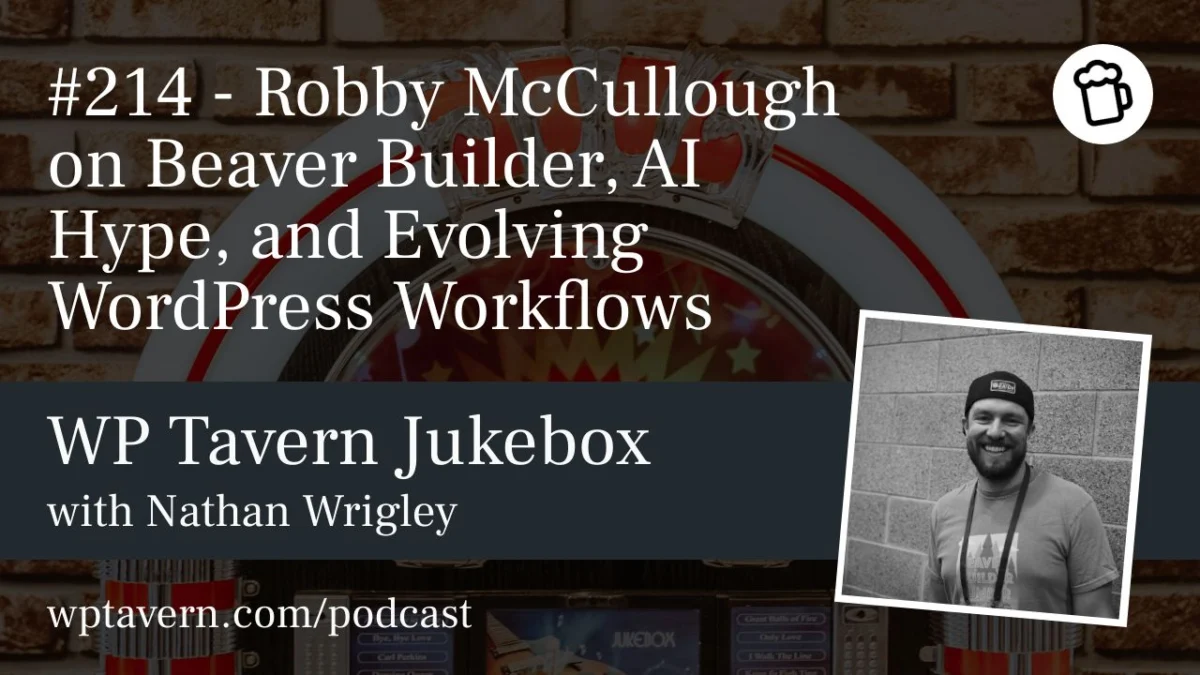
Recently, Robby McCullough, co-founder of Beaver Builder, joined Nathan Wrigley on the Jukebox podcast to discuss the company’s trajectory, the "AI gold rush," and whether the artisan craft of web development is destined to become a relic of the past.
The Origin Story and the Page Builder Revolution
To understand where Beaver Builder is heading, one must look at where it began. Over a decade ago, building a professional-grade website required a significant barrier to entry: a mastery of PHP, HTML, CSS, and the intricate template hierarchy of WordPress.
McCullough recalls the early days of his agency, where he and his partners found themselves frustrated by the friction inherent in client handoffs. "We were a web design agency," McCullough explains. "We wanted to use a page builder to build a site so that we could hand that site off to a client and they could make changes themselves, instead of having to email us for every minor update."
Beaver Builder emerged as a solution to this friction. By allowing users to drag and drop components into place, the plugin helped democratize web design. This shift is widely credited with fueling a significant portion of WordPress’s growth, helping it capture over 40% of the web. During that era, the page builder was a revolutionary tool that settled the "WordPress way" versus "visual editing" debate, eventually becoming a standard for professional developers and agencies alike.
The AI Inflexion Point: Why Waiting Was a Strategic Choice
In the last 18 months, the tech industry has been consumed by artificial intelligence. Many software companies rushed to integrate basic GPT wrappers, often for the sake of marketing rather than genuine utility. Beaver Builder, however, chose a different path.
"We didn’t jump on the AI bandwagon early, and I’m glad we didn’t," McCullough admits. He notes that while many competitors were "slapping a GPT wrapper" onto their products to satisfy shareholders, Beaver Builder waited for the technology to mature.
McCullough describes the current state of AI—specifically agentic coding tools—as a true "inflexion point." He is no longer looking at AI as a gimmick for generating blog headings; he is viewing it as a powerful assistant that can write code, troubleshoot design layouts, and drastically lower the friction of feature development.
The company is currently exploring "agentic" approaches:
- Drag-and-Drop AI: A system where users can build a page using an AI tool locally and then drag that structure into the Beaver Builder interface to refine it.
- In-App Chat Agents: A way for users to ask an AI to rework specific elements of a page—such as a pricing table or layout padding—without leaving the WordPress dashboard.
The Paradox of Abstraction: Is "Vibe Coding" Replacing Craft?
A central theme of the discussion was the tension between efficiency and expertise. As AI-powered "vibe coding"—the act of building websites by simply describing them to an LLM—becomes more popular, there is a legitimate concern about the loss of fundamental web skills.
"When you’re using these agentic tools and going from zero to a hundred, you kind of lose that interaction with the tooling and the code," says Wrigley. He draws an analogy to furniture: there is a distinct difference between a custom piece built by a master carpenter and a mass-produced item from IKEA. Both serve a purpose, but the knowledge required to create the former is being bypassed by the speed of the latter.
McCullough acknowledges this melancholy. He reflects on his own history of manually building color palettes and researching fonts, noting that he rarely does these tasks from scratch anymore. However, he remains an optimist. He argues that even if AI builds the "structure," the need for a sophisticated, user-friendly editor remains.
"We don’t want to make a closed black box where you have to pay tokens per month to get your designs," McCullough asserts. Instead, Beaver Builder aims to empower users to use AI for creation, while retaining the ability to "pop the hood" and tweak the underlying code.
Business Anxieties in a Shifting Landscape
Running a product business in the age of AI is undeniably stressful. The pace of change is no longer measured in years, but in weeks. Founders today face the unique challenge of having no clear long-term roadmap because the platform landscape shifts so frequently.
McCullough discusses the "existential threats" that page builders have faced throughout history—from the introduction of the Gutenberg editor to the rise of modern static site generators. Despite these challenges, he maintains that WordPress offers a "plumbing" system that newer, trendier tools often lack. Features like post revisions, media management, and custom post types are deeply ingrained in the WordPress experience.
"Regardless of whether I want it or not, I’m sure that’s going to be true to a degree with WordPress," McCullough says. "40% of the web, all those millions of sites, aren’t just going to decide to update overnight. There will be legacy WordPress forever."
The Future: Maintenance and the Human Element
Perhaps the most compelling argument for the continued relevance of page builders is not creation, but maintenance. While an AI might be able to spin up a stunning, five-page landing page in seconds, that site will eventually need to change.
McCullough and Wrigley agree that the future role of the page builder may evolve into a "maintenance and modification" layer. Once the AI has handled the heavy lifting of the initial build, the human owner needs a reliable, stable interface to handle ongoing updates, seasonal changes, and client-specific tweaks.
However, this reliance on AI leads to a deeper philosophical question: What happens to human collaboration?
"I work from home alone a lot," McCullough admits. "Am I losing opportunities to collaborate with real people? Is this faux-human experience going to start taking precedence over interacting with actual humans?"
This concern has sparked a desire to see the return of community-driven events. The decline of local WordPress meetups and WordCamps since the COVID-19 pandemic is something both men hope to reverse. They argue that as we spend more time talking to "simulations" of intelligence, the value of the "real-world" experience—the pub, the meetup, the conference—will likely see a resurgence.
Conclusion: A New Era of Web Development
As the conversation concluded, the consensus was clear: the technology is moving toward a future where we may literally talk to our websites to update them. While this feels like science fiction, the infrastructure is already being built.
For Beaver Builder, the strategy is to remain a bridge. They aren’t trying to fight the tsunami of AI; they are building a vessel to help their users navigate it. By combining the efficiency of AI-driven generation with the reliable, visual, and tactile control of the Beaver Builder interface, they hope to preserve the craft of web design while embracing the inevitable speed of the future.
For now, the "artisans" of the web can rest easy knowing that while the tools of the trade are changing, the need for human intent—the ability to know when a design "looks right"—is something no algorithm can fully replicate. As McCullough aptly puts it, he has built his career on knowing what feels right, and that intuition remains the most valuable tool in any developer’s kit.