Bridging the Chasm: How B2B Marketers Can Finally Defend Their Pipeline Numbers to Finance
By The Editorial Desk Published: August 2026
Main Facts: The Great B2B Measurement Disconnect
Ask any B2B marketing team how their paid media campaigns are performing, and the response is usually swift, enthusiastic, and heavily weighted in platform metrics. Cost-per-click (CPC) is down, click-through rates (CTR) are climbing, and return on ad spend (ROAS) charts look healthy.
However, ask that exact same team a more fundamental question—what tangible dollar amount did paid media inject into the corporate pipeline last quarter?—and the room frequently falls silent.
This silence sits at the heart of modern enterprise friction. In the complex landscape of B2B commerce, where buying committees routinely span five to ten stakeholders—including CEOs, CFOs, and HR directors—evaluating multiple vendors simultaneously, no one converts on a single click. Sales cycles stretch across months, touching whitepapers, webinars, executive briefings, and product demos.
When a marketing report halts its analysis at platform-level metrics, it measures the ad network, not the business. The core challenge facing B2B marketers today is not generating impressions; it is establishing a credible, defensible pipeline number that can withstand the rigorous scrutiny of corporate finance.
Chronology: The Evolution of B2B Attribution and the Accountability Crisis
To understand how modern marketing teams arrived at this impasse, one must trace the timeline of digital advertising evolution over the past two decades.
The Early 2000s (The Wild West of Clicks): Digital marketing emerged primarily through direct-response channels. B2B marketers borrowed direct-to-consumer playbooks, tracking simple lead forms and valuing traffic volumes over long-term customer value. Finance departments viewed marketing budgets as experimental line items.
The 2010s (The Rise of Marketing Automation): As platforms like Marketo, HubSpot, and Salesforce matured, companies attempted to bridge the gap between marketing touches and CRM contacts. Yet, attribution models remained primitive—often relying blindly on "First Touch" or "Last Touch" logic, which rewarded whichever channel happened to intercept the buyer at the very beginning or the very end of their journey.
The Early 2020s (Privacy Shifts and Dark Social): Stricter privacy regulations, cookie deprecation, and the rise of privacy-first browsers began breaking traditional tracking mechanisms. Buyers increasingly consumed content across "dark social" channels (Slack communities, private podcasts, direct peer recommendations) that standard UTM parameters could not capture. Marketers found themselves defending inflated metrics against skeptical CFOs tightening budgets amid macroeconomic uncertainty.
Present Day (The Unified Measurement Mandate): Today, forward-thinking organizations are moving away from single-source-of-truth fallacies. They are adopting multi-layered modeling frameworks that integrate CRM data, econometric causal analysis, and geo-based incrementality testing to satisfy the boardroom’s demand for true financial accountability.
Supporting Data: Real-World Case Studies in Pipeline Rigor
Transitioning from vanity metrics to pipeline-driven accountability yields profound operational shifts. Organizations that overhaul their measurement architecture before optimizing their ad spend consistently outperform those that rely on platform dashboards alone.
Case Study 1: B2B SaaS Efficiency Gains
A mid-market B2B software-as-a-service (SaaS) provider restructured its integrated search program by abandoning click-volume goals in favor of pipeline-led signals. By feeding CRM-qualified stage progression data back into ad algorithms, the company achieved:
A 27% reduction in cost per Marketing Qualified Lead (MQL).
An 18% increase in overall conversion rates.
A 22% surge in qualified traffic volume.
Rather than chasing cheaper, low-intent clicks, the budget systematically gravitated toward search queries and audience segments historically correlated with closed-won revenue.
Case Study 2: Enterprise Tech ROAS Transformation
A global technology enterprise integrated Salesforce lead-scoring data directly into its Google Ads environment. By assigning granular, real-dollar values to various lead tiers—rather than treating every form fill as an equal victory—the organization achieved a 138% increase in true return on ad spend. The optimization engine stopped prioritizing volume and began hunting for enterprise-grade profile matches.
Official Perspectives and Industry Insights
Top-tier marketing strategists and financial controllers agree that the old ways of reporting are fundamentally broken.
"Anyone selling you a single source of truth in B2B attribution is selling you a simplification," notes a leading industry analyst. "In complex enterprise sales, no single model captures the nuance of a ten-person buying committee spanning six months. You have to triangulate your data using multiple lenses."
Finance departments, by nature and training, do not operate on assumptions or directional proxies. They operate on historical validation, risk assessment, and margin analysis. When marketing leaders present cost-per-click data to a CFO, they are speaking a foreign language.
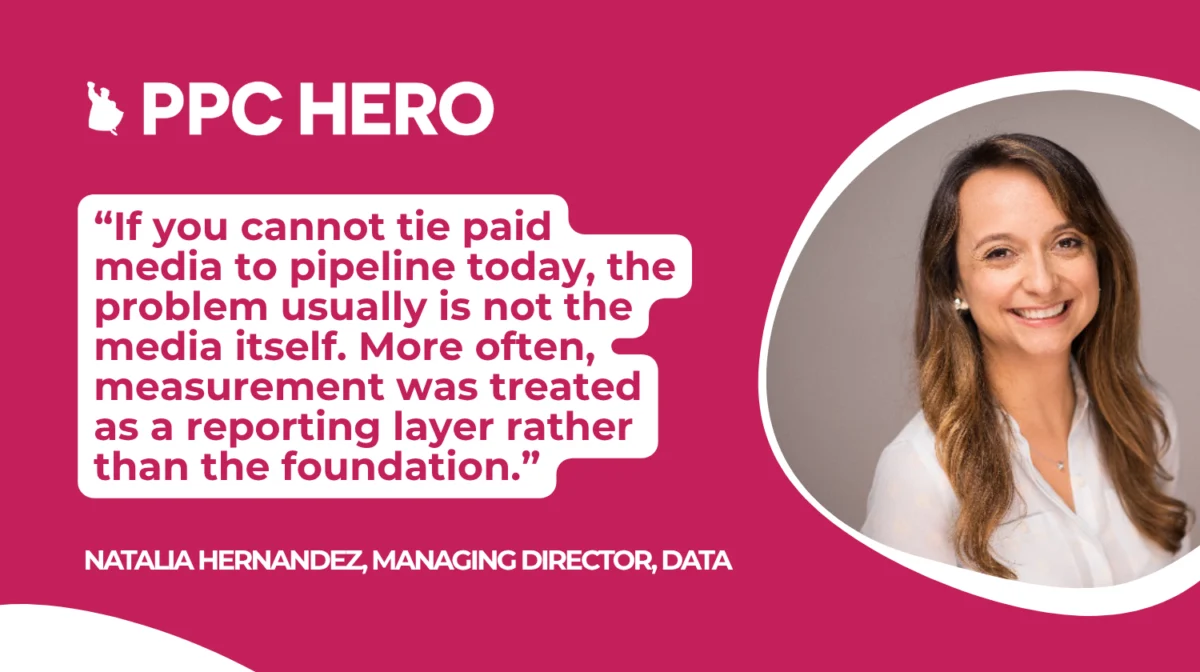
Conversely, when marketing aligns its reporting with contribution margins, lifetime-value-to-customer-acquisition-cost (LTV:CAC) ratios, and pipeline velocity, the dynamic shifts from skepticism to strategic partnership. Measurement must transition from a defensive reporting layer used to justify past budgets into the foundational architecture that dictates future capital allocation.
Implications: What Changes When Measurement Leads Strategy?
When an enterprise commits to rewiring its measurement infrastructure before launching its next campaign, the operational culture transforms across multiple dimensions.
1. Upfront Technical Discipline Becomes Mandatory
The process starts long before ad copy is written or bids are set. Campaign IDs must be rigorously mapped to Salesforce or HubSpot objects. UTM parameter governance must be enforced across all agency partners and internal teams. Lead forms must seamlessly sync to CRM campaign objects so that conversion tracking links directly to downstream pipeline events—such as MQL creation, SQL validation, first meetings, and closed-won contracts.
Relying on a single attribution model guarantees distortion. Modern enterprise measurement requires a three-tiered approach:
Multi-Touch Attribution (MTA): Connects ad interactions and self-reported buyer data to CRM outcomes. While useful, MTA inherently suffers from platform bias and tracking drop-offs.
Causal Modeling: Employs econometric methods to measure each channel’s true contribution to the pipeline while controlling for external variables like macroeconomic shifts, seasonality, and organic brand demand.
Geo-Based Incrementality Testing: Proves definitively whether paid media generated net-new pipeline or merely claimed credit for baseline demand that would have converted organically anyway.
Running these layers concurrently eliminates blind spots. While MTA over-credits trackable clicks and causal models cannot observe individual journeys, their intersection provides a defensible, objective read on marketing efficiency.
3. Speaking the Language of the Boardroom
To secure ongoing budget protection, marketing teams must adopt the lexicon of the C-suite. Impressions, reach, and clicks are directional health indicators at best; they have zero standing in a pipeline review.
By utilizing Marketing Mix Modeling (MMM) to tie ad spend directly to pipeline generation through CRM integrations, and deploying geo-holdout testing to isolate responsive markets, marketers can formulate budgets rooted in financial reality. The ultimate objective is not theoretical sophistication for its own sake, but the establishment of a pipeline metric that leadership can trust without hesitation.
Conclusion: The Path Forward
The enduring challenge of B2B pipeline attribution is rarely caused by flaws in the media platforms themselves. Rather, it stems from treating measurement as an afterthought—a retrospective reporting layer slapped onto campaigns after they have run.
By establishing CRM integration as a prerequisite, abandoning the myth of the single attribution source, and anchoring reports in financial metrics that matter to the CFO, B2B marketers can finally close the credibility gap.
Do this effectively, and the next time the executive leadership team asks what paid media contributed to the pipeline, the answer will not be met with an uncomfortable silence. It will be delivered with absolute clarity, backed by data that can be defended in any boardroom in the world.