SAN FRANCISCO — In the high-stakes theater of Software-as-a-Service (SaaS) growth, few commercial decisions carry as much long-term weight as structuring multi-year contracts. For early-stage and hyper-growth startups alike, the siren song of cash paid upfront is difficult to resist. Founders are routinely tempted to trade future revenue for immediate, bankable liquidity by offering steep discounts on 2-, 3-, and 5-year commitments.
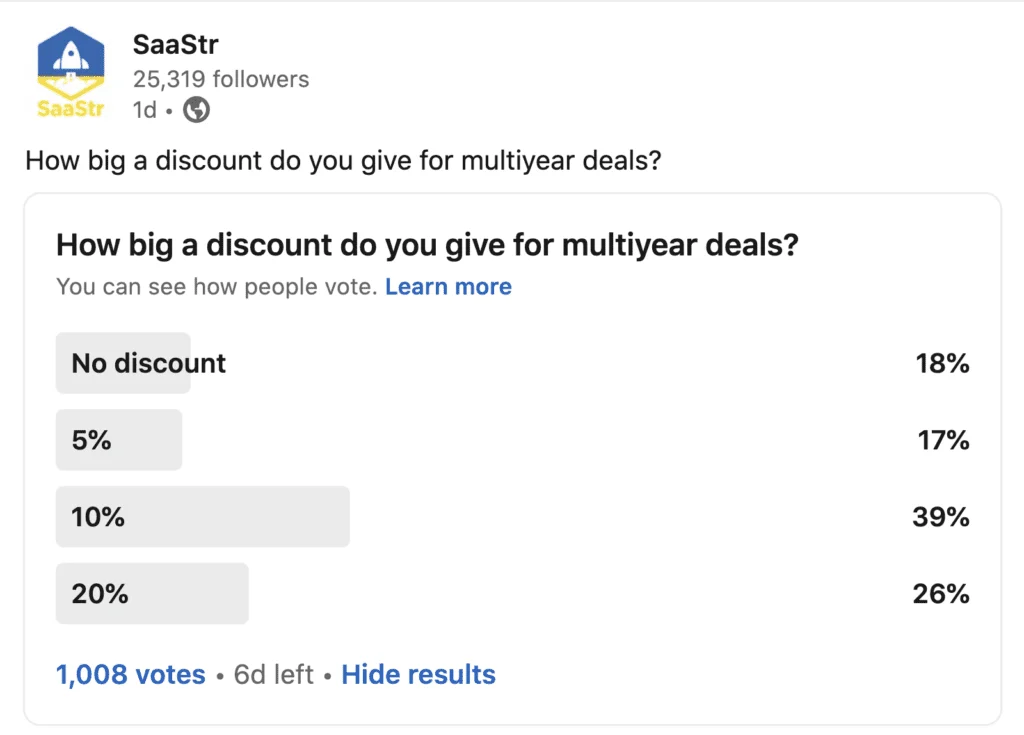
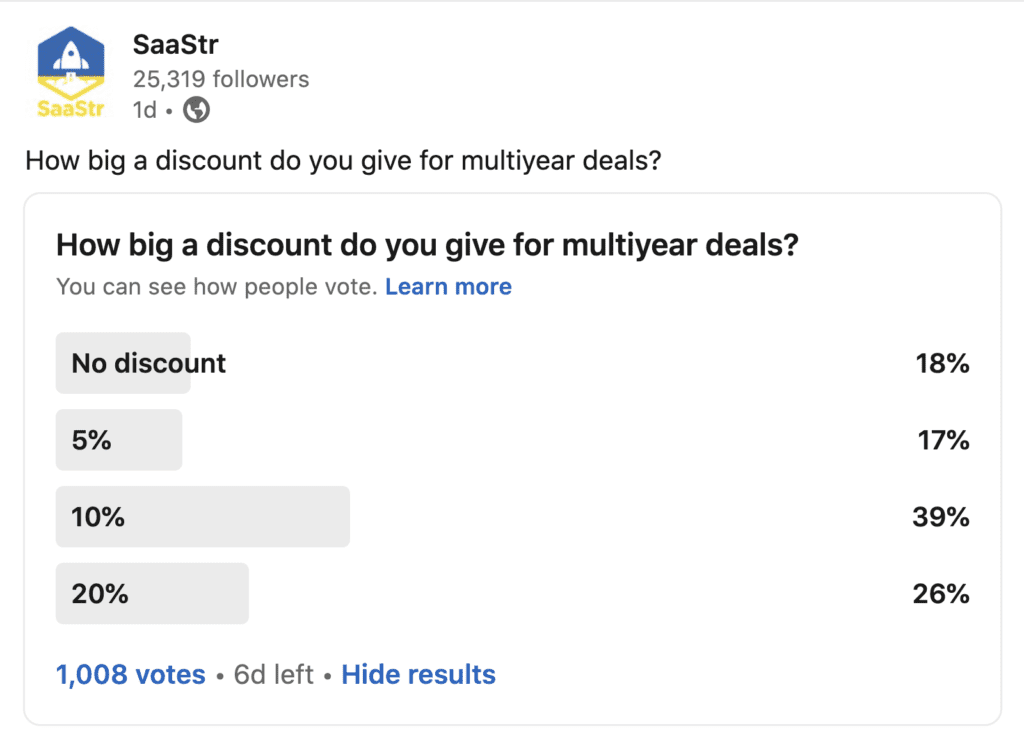
However, industry benchmarks and seasoned operators warn that these short-term cash injections can morph into long-term financial anchors. According to recent analyses from the SaaS ecosystem, most disciplined software companies cap their multi-year incentives at a conservative 10% to 20% discount. Pushing past this threshold, experts caution, can severely erode customer lifetime value (LTV) and compound downstream revenue leakage.
This report examines the intricate mathematics behind multi-year SaaS contracts, exploring standard discounting practices, the strategic trade-offs between cash flow and long-term retention, and the psychological interplay of pricing power in B2B software sales.
Main Facts: The Anatomy of Multi-Year SaaS Discounts
At the heart of the multi-year contract debate lies a fundamental commercial equation: How much future revenue are you willing to sacrifice today in exchange for predictable, upfront capital?
When enterprise buyers or mid-market procurement teams negotiate software agreements spanning multiple years, they almost invariably demand a concession. The standard industry expectation is a sliding scale of savings tied to contract length and payment terms (typically Net 30 vs. Annual Paid Upfront).
Typical Discount Tiers in the Market
- 1-Year Contracts: Standard pricing with nominal or zero discount, typically paid annually upfront or quarterly.
- 2-Year Contracts (Paid Upfront): Generally command an additional 10% discount off the annualized rate.
- 3-Year Contracts (Paid Upfront): Usually land in the 10% to 15% discount range, occasionally stretching to 20% for high-value logo acquisitions.
- 5-Year Contracts (Paid Upfront): Rarely recommended by pricing strategists, but when executed, they typically max out around 15% to 20%.
The governing rule of thumb across the B2B SaaS landscape is the 10–20% boundary. When companies venture past a 20% discount for multi-year commitments, they cross a rubicon where the mathematical trade-off ceases to make sense for businesses with healthy retention metrics.
Chronology: The Evolution of SaaS Contract Philosophies
To understand how modern SaaS pricing evolved, it is necessary to retrace the shifting paradigms of venture capital, capital efficiency, and go-to-market (GTM) strategies over the past two decades.
Phase 1: The Land-Grab Era (Pre-2015)
In the early days of cloud software, venture capitalists preached top-line growth above all else. Companies like Salesforce, Workday, and early horizontal SaaS players aggressively pushed for multi-year deals. Upfront cash was king because customer acquisition costs (CAC) were high, and investor metrics rewarded sheer top-line velocity. Startups routinely handed out 25% to 35% discounts for 3-year commitments simply to lock competitors out of accounts and inflate Annual Recurring Revenue (ARR) figures for subsequent funding rounds.
Phase 2: The Efficiency Pivot (2016–2021)
As the SaaS market matured, finance leaders began looking deeper into unit economics. Metrics like Net Revenue Retention (NRR) and Gross Retention Rate (GRR) took center stage. Founders realized that discounting a customer by 30% for three years meant missing out on natural price expansion, seat additions, and module upsells. Companies adopted more disciplined discounting matrices, realizing that a high-discount customer often became an anchor preventing proper monetization over time.
Phase 3: The Macroeconomic Realignment (2022–Present)
In the post-zero-interest-rate era, cost of capital skyrocketed. Upfront cash regained some of its luster as startups sought runway extension without resorting to dilutive down-rounds or expensive debt. Simultaneously, enterprise buyers facing budget tightening aggressively leveraged multi-year commitments to extract maximum concessions from vendors. This tension has forced executive teams to carefully re-evaluate their discounting floors and ceilings.
Supporting Data: The Math Behind the 10–20% Rule
To appreciate why industry veterans advise against deep multi-year discounts, one must analyze the compounding effect of revenue leakage.
Consider a hypothetical enterprise contract valued at $100,000 ARR.
- Scenario A (Conservative Discount): You offer a 15% discount for a 3-year contract, paid upfront. The client pays $85,000 per year, totaling $255,000 cash collected on Day One.
- Scenario B (Aggressive Discount): To close the deal quickly, you offer a 30% discount for 3 years, paid upfront. The client pays $70,000 per year, totaling $210,000 cash collected on Day One.
While Scenario B nets you an extra $210,000 immediately, you have forgone $45,000 in top-line revenue over 36 months. More critically, if that customer expands their usage in Year 2 or Year 3—adding more seats, API calls, or premium features—their expansion revenue is often anchored to that deeply discounted baseline.
Furthermore, if your company exhibits Net Negative Churn (meaning your expansion revenue from existing customers outpaces the revenue lost from churned accounts), locking yourself into a multi-year discount is mathematically counterproductive.
"Once you go past 20% or so, you are giving up a material amount of downstream revenue in Years 2 through 10, if your churn rate is low," industry advisors note. "You’re locking yourself into a decade of discounts not just for the users you close today, but also the ones you add later."
Official Perspectives and Expert Responses
Navigating enterprise negotiations requires a delicate balance between sales enablement and financial stewardship. Industry leaders hold nuanced views on when multi-year discounts are justifiable and when they represent a strategic misstep.
When Multi-Year Discounts Make Sense
- Early-Stage Survival: For pre-product-market-fit startups or companies with limited runway, cash is oxygen. If an upfront 3-year payment means surviving another 12 months without raising capital in a depressed market, take the deal. Survival supersedes optimization.
- High-Churn Vulnerability: If your product operates in a commoditized category with high annual churn rates (e.g., SMB-focused point solutions), locking customers in for 36 months guarantees revenue that you might otherwise lose at the 12-month renewal mark.
- Defensive Positioning: If a fierce competitor is aggressively gunning for a marquee logo in your target vertical, offering a slight pricing concession to secure a multi-year enterprise lock-in can create high switching costs for the buyer.
When Multi-Year Discounts Destroy Value
- Strong Net Revenue Retention (NRR): If your product possesses strong expansion vectors, customers naturally spend more over time. Discounting them upfront curtails your ability to capture that organic expansion.
- Inflationary Pressures: In an inflationary environment, locking in fixed pricing for 3 to 5 years means your real purchasing power declines year-over-year. SaaS companies must account for operational cost increases (hosting, talent, compliance).
Implications: Strategic Takeaways for SaaS Leaders
For founders, Chief Revenue Officers (CROs), and VP of Sales leaders, structuring a cohesive multi-year pricing policy requires establishing strict internal guardrails.
1. Shift from Discounts to Value-Added Incentives
Instead of slicing 25% off the subscription fee, consider alternative concessions that preserve your average selling price (ASP):
- Price Protection Clauses: Guaranteeing a cap on price increases at renewal (e.g., "price will not increase by more than 5% in Year 3") rather than flat pricing.
- Professional Services Bundling: Offering complimentary onboarding, custom integrations, or dedicated customer success management instead of straight cash discounts.
- Consumption-Based Flexibility: Structuring minimum commit tiers with overage rates rather than rigid seat licenses.
2. Empower Sales Teams with Approval Workflows
Sales representatives are incentivized to close deals quickly, often using discounts as the path of least resistance. Establish clear governance:
- Standard Rep Authority: Reps can offer up to 10% for a 3-year upfront deal.
- Sales Leadership Approval: Discounts between 10% and 20% require VP of Sales sign-off.
- Executive/Board Approval: Any multi-year discount exceeding 20% must be justified by strategic logo value and approved by the CEO or Chief Financial Officer.
3. Bet on Your Product
Ultimately, pricing philosophy is a reflection of management’s confidence in its own software. If your product delivers undeniable ROI, solves critical business problems, and exhibits net negative churn, you do not need to heavily discount your future to win today. Bet on your application, maintain your pricing integrity, and build a resilient, compounding revenue engine for the long haul.