MIDTOWN — Artificial intelligence has officially transitioned from an experimental novelty into an everyday operational baseline for the creative and marketing industries. Yet, as adoption rates skyrocket, a complex landscape of workflow friction, tool churn, and strategic re-evaluation is emerging.
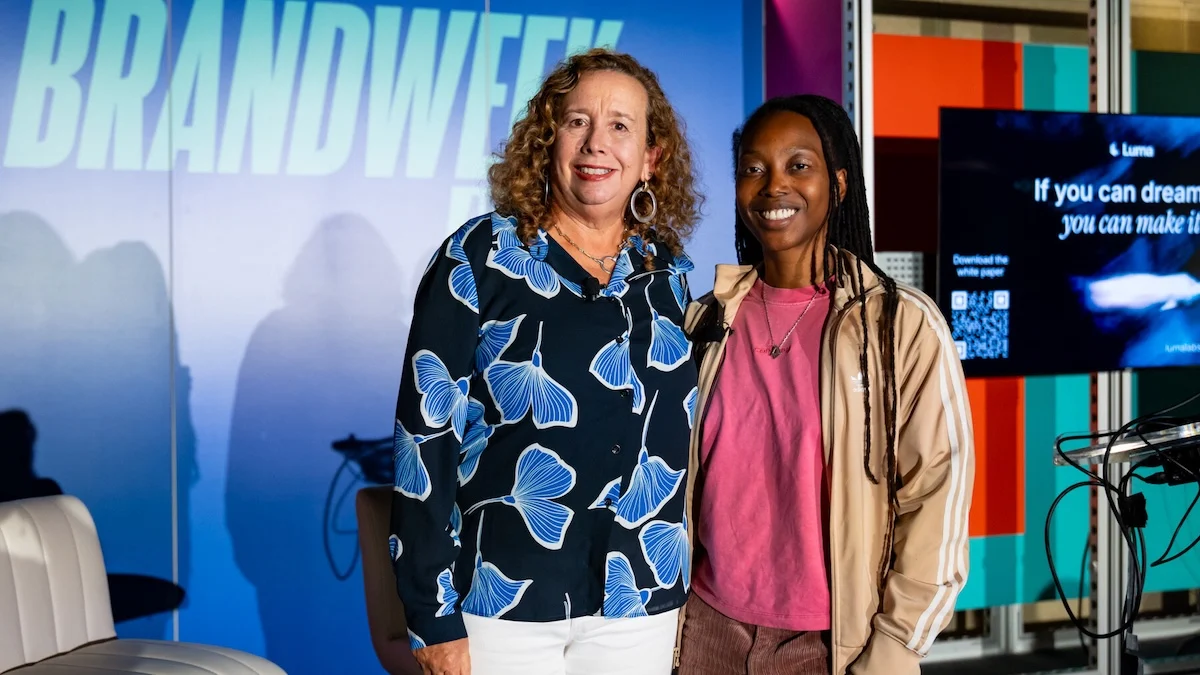
These shifting dynamics took center stage at Brandweek 2026, where a high-profile workshop co-hosted by Luma brought together industry leaders to dissect the state of artificial intelligence in modern marketing. Featuring marketing research consultant Michele Madansky of Michele Madansky Consulting (MMC) and Alexia Adana, forward-deployed creative lead at Luma, the session offered a dual perspective: a macro-level statistical view of how creatives are engaging with AI, and a micro-level demonstration of how advanced AI agents can streamline execution without sacrificing human authorship.
The conversation highlighted a pivotal moment for the sector. While nearly every modern marketer leverages some form of generative AI tool, the depth of true integration varies wildly. With steep learning curves, rapidly changing software ecosystems, and persistent questions surrounding brand safety, the industry is racing to figure out not just how to use AI, but how to use it efficiently, creatively, and sustainably.
Main Facts: The Current Landscape of AI Adoption
The core revelation of the Brandweek workshop centered on the findings of Luma’s inaugural annual report, “State of Creative Professionals and AI: 2026,” which surveyed 760 creative professionals to capture a comprehensive snapshot of the industry.
The headline figure is striking: 81% of creative professionals are actively using AI to create and release content. This confirms that artificial intelligence is no longer the exclusive domain of tech-forward early adopters; it has permeated mainstream creative departments, agencies, and brand teams alike.
However, raw adoption numbers tell only part of the story. Beneath the surface of that 81% adoption rate lies a turbulent reality of experimentation, evaluation, and abandonment. According to Madansky, creative organizations are cycling through platforms at a breakneck pace. On average, a typical creative organization evaluated 6.1 tools, adopted 4.3, and ultimately stopped using three.
This phenomenon—often categorized as tool churn—underscores the exploratory nature of the current market. Brands and agencies are actively testing the waters, fully aware that not every solution will yield long-term value or fit seamlessly into existing pipelines.
Furthermore, the study revealed significant disparities in adoption across different sectors of the creative economy. Traditional advertising and marketing agencies are currently leading the charge, integrating AI tools directly into client workflows to scale output. Conversely, independent freelancers are lagging behind, often constrained by tighter budgets, fragmented resources, and the lack of dedicated operational support to evaluate and master complex software stacks.
When examining the types of content being produced, written copy and image generation currently lead the pack. Video production, by contrast, lags behind. As Madansky explained during the presentation, "Video is harder to produce," requiring more sophisticated compute power, longer rendering times, and more intricate narrative control than static images or text prompts.
Chronology: From Experimental Novelty to Integrated Workflows
To understand how the creative sector arrived at the current paradigm, it is helpful to trace the evolution of generative AI within marketing over the past several years.
Phase 1: The Wild West of Prompts (2022–2024)
When consumer-facing generative AI tools first burst onto the global stage, the initial wave was defined by novelty and individual experimentation. Marketers and copywriters tested standalone models to write quick social media captions or generate abstract background imagery. During this period, workflows were largely unstructured. Users acted as solo prompters, wrestling with syntax and trial-and-error to coax usable assets out of unpredictable foundational models.
Phase 2: The Enterprise Gold Rush (2024–2025)
As the technology matured, ad tech companies, software giants, and specialized startups flooded the market with proprietary tools tailored specifically for enterprise marketing. Brands rushed to build internal AI policies, while agencies began experimenting with generative platforms to cut production costs and accelerate campaign timelines. However, this period also introduced severe friction: tool fatigue, fragmented software stacks, and growing anxiety over copyright, brand consistency, and the erosion of original creative direction.
Phase 3: The Era of Specialization and Hybrid Workflows (2026 and Beyond)
As demonstrated at Brandweek 2026, the industry has now entered a more mature phase defined by agents, digital twins, and hybrid workflows. Rather than relying on raw, generic prompts, modern platforms allow brands to codify their unique identities into specialized AI systems. Artificial intelligence is no longer viewed merely as a novelty generator, but as an operational assistant embedded directly into the foundational stages of creative ideation, mood-boarding, and asset production.
Supporting Data: Key Insights from the Luma 2026 Report
The “State of Creative Professionals and AI: 2026” report provides invaluable quantitative context for understanding these generational shifts in marketing operations.
- 81% Adoption Rate: The vast majority of surveyed creative professionals now utilize AI-driven tools in their regular workflows for content creation and distribution.
- The 6.1–4.3–3 Churn Metric: Creative organizations evaluate an average of 6.1 distinct AI tools, successfully adopt 4.3 of them into active trials, but subsequently abandon 3, highlighting intense market competition and high software turnover.
- Agency vs. Freelance Divide: Corporate marketing teams and established agencies are outpacing independent freelancers in both adoption depth and infrastructure investment.
- Text and Image vs. Video: Written copy and static visual assets dominate current AI utilization, while video generation remains in an earlier stage of integration due to higher technical complexity.
Official Responses and Practical Demonstrations
Moving from macro-level data to practical application, Luma’s Alexia Adana took the stage to demonstrate how advanced AI platforms are actively reshaping day-to-day agency and brand workflows.
To illustrate her points, Adana walked the audience through a real-world workshop conducted by Luma with Oakley, the iconic eyewear brand owned by parent company Luxottica. Instead of requiring complex technical prompt engineering, Adana interacted directly with a Luma AI agent via a simple chat interface.
Demystifying the AI Agent
"Think of the agent as this very powerful, pretrained tool that speaks to the generative AI models on your behalf," Adana explained to the Brandweek audience. "So, you do not need to be a technical prompter anymore to create these high-fidelity assets. You just need to be somebody with a great idea and really solid direction to give that agent to go execute."
Codifying "Brand DNA"
During the live demonstration, Adana showed how Luma ingests corporate guidelines to establish a secure, continuous "Brand DNA." This involves uploading core brand assets—such as specific typography, logos, color palettes, and historical campaign materials. By ingesting past campaigns, the AI learns what has historically worked for the brand, ensuring that subsequent outputs align cleanly with established corporate identity guidelines.
Digital Twins and Hybrid Production
Once the foundational Brand DNA is established, the creative process kicks into gear. Luma incorporates "digital twins"—high-resolution, scanned digital representations of real-life human models who have been professionally photographed, alongside precise 3D assets of the brand’s physical products.
Armed with a standard creative brief, a marketer can instruct the Luma agent to generate comprehensive mood boards, concept art, and early-stage brainstorming assets in a fraction of the traditional timeline. Adana then demonstrated how to alter one of Oakley’s test assets in real time, proving that hybrid production models can dramatically accelerate creative turnarounds.
Crucially, both Madansky and Adana emphasized that these workflows are not designed to replace human oversight.
"This is all rooted in human authorship, [the assets are] rooted in real photography, and going through a hybrid workflow," Adana stressed, pushing back against the narrative of fully automated, human-free content creation.
Implications: What This Means for the Future of Marketing
The convergence of high adoption rates, heavy tool churn, and sophisticated agent-driven platforms carries profound implications for the advertising, media, and commerce industries.
1. The Death of the Prompt Engineer, the Rise of the Director
As user interfaces evolve from complex command lines to conversational AI agents, the need for hyper-technical prompt engineering is fading. The market is placing a premium on classic creative direction, strategic vision, and deep brand stewardship. Marketers do not need to know how to code the model; they need to know how to direct it.
2. A Maturing Software Ecosystem
The high rate of tool churn highlighted in Luma’s report signals that the market for creative AI is currently undergoing a brutal culling. Standalone wrapper apps that offer superficial generative features are likely to be discarded in favor of deeply integrated enterprise platforms that can ingest proprietary brand data, respect copyright parameters, and plug seamlessly into existing digital asset management (DAM) systems.
3. Ethical Frameworks and the Defense of Human Authorship
As agencies and brands increasingly rely on digital twins and synthetic asset generation, questions surrounding authenticity, copyright ownership, and labor standards will intensify. The emphasis placed by Luma and other industry leaders on "human authorship" and "real photography" points to an emerging industry consensus: the most successful AI campaigns will be those that use technology to augment, rather than erase, human creativity.
4. The Expanding Agency Advantage
Because large agencies and well-funded brand teams are better positioned to absorb the costs of software evaluation and tool churn, smaller independent creators and freelancers face a widening competitive gap. Bridging this digital divide will require accessible, cost-effective SaaS solutions designed specifically for independent operators.
Conclusion
As the marketing industry gathers for marquee events like ADWEEK House and Brandweek, the overarching narrative surrounding artificial intelligence has matured. The industry has moved past the initial honeymoon phase of uncritical fascination. Today, marketers are grappling with the operational realities of integration, tool selection, and workflow efficiency.
By grounding AI utilization in strict Brand DNA, leveraging human-authored foundational photography, and utilizing intuitive conversational agents, platforms like Luma are pointing the way toward a sustainable future. In this new paradigm, artificial intelligence will not replace the creative mind—it will serve as its most powerful amplifier.