In the high-stakes corridors of the Cannes Lions International Festival of Creativity, a singular buzzword has emerged as the industry’s panacea for the anxieties wrought by generative AI: authenticity. From panel discussions to keynote stages, marketers are championing authenticity as the ultimate defense against the rising tide of "AI slop"—the generic, algorithmically generated content that threatens to dilute brand identity.
However, as the industry obsesses over whether an AI-augmented tagline carries enough "humanity" to resonate with consumers, a critical, foundational question is being overlooked: Does the business behind that campaign actually possess the moral and operational capital to tell its chosen story?
As we approach the 250th anniversary of the United States (America250) and the Fourth of July, marketers face a litmus test that transcends creative execution. The challenge is no longer just about content; it is about proving that a brand has "earned the right" to participate in the national conversation.
The Polarized Landscape of Patriotic Marketing
For decades, the patriotic marketing playbook was etched in stone: a synthesis of fireworks, military flyovers, and the ubiquitous placement of the American flag on everyday consumer packaged goods. It was a safe, reliable strategy that served as a shorthand for American values.
Today, that formula is fraught with risk. According to recent research from Zappi, 56% of Americans believe the American flag has become more politically polarized over time. In an era where cultural flashpoints are constant and the political divide is widening, brands are understandably hesitant. Some executives are grappling with a "paralysis of caution," wondering if any engagement with national holidays is too risky.
Chronology of a Shifting Sentiment
- The Traditional Era (1950s–2000s): Patriotism in marketing was largely monolithic. Brands leveraged symbols of national unity to drive sales, with minimal fear of backlash.
- The Rise of Conscious Consumerism (2010s): Consumers began scrutinizing corporate values. Patriotism was no longer just about flags; it began to be weighed against corporate social responsibility (CSR) and environmental, social, and governance (ESG) performance.
- The AI/Post-Truth Pivot (2023–Present): The rise of generative AI has created a crisis of trust. Authenticity is now the primary currency, and consumers are hyper-sensitive to "performative" gestures. Brands are now forced to reconcile their marketing claims with their actual operational impact on the communities they serve.
Supporting Data: What Consumers Really Want
Despite the political tension, the data suggests that reports of the death of patriotic marketing are greatly exaggerated. The key differentiator is no longer if a brand celebrates, but how it does so.
- The Desire for Pride: Nearly half (49%) of Americans report that they view brands more positively when they utilize patriotic branding.
- The Rejection of Cynicism: Only 3% of Americans believe brands should avoid celebrating America entirely. The audience is not anti-patriotism; they are anti-performative.
- The Value of Tangibility: Nearly two-thirds of Americans (66%) explicitly state that they trust companies that invest in local jobs and infrastructure more than companies that simply run traditional patriotic advertising campaigns.
This data underscores a vital shift: consumers are increasingly viewing "authenticity" through the lens of economic participation. They are looking for brands that demonstrate patriotism through tangible community impact rather than superficial, flag-waving creative campaigns.
The "Coca-Cola" Model: A Blueprint for Action
If the goal is to bridge the gap between abstract patriotism and genuine consumer trust, the recent strategy from Coca-Cola serves as a definitive case study.
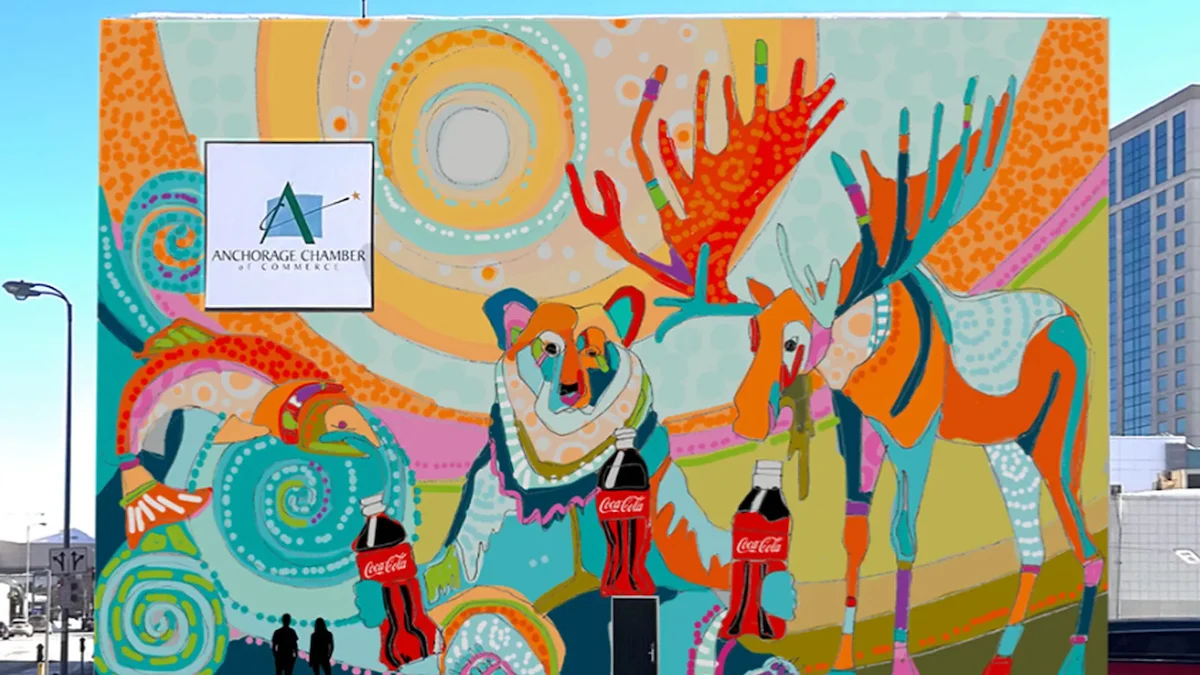
Rather than relying solely on the limited-edition "flag can" trope, the company has pivoted toward a model of active community integration. Their commitment to 250,000 volunteer hours—targeting food insecurity, environmental sustainability, and youth empowerment—transforms the brand from a passive observer to an active participant in the American fabric. By partnering with local artists to create murals in cities across the nation, they are providing a platform for local voices rather than imposing a top-down narrative.
This is not just "good PR"; it is a recalibration of the brand’s relationship with its consumers. By focusing on local community impact, Coca-Cola is effectively decentralizing their patriotism, allowing individual consumers to engage with the brand in a way that feels relevant to their own specific, local experience.
Implications: Moving Authenticity from Creative to Corporate
The current crisis of authenticity cannot be solved in the creative department. When a brand asks, "Is this AI-generated?" they are asking the wrong question. The real question is, "Does our business model support the values we are projecting?"
1. Authenticity as a Business Function
Authenticity is no longer a creative filter; it is a business imperative. When consumers were asked which brands best represent the United States, they did not name companies with the most expensive Super Bowl commercials. They named Ford, Walmart, and Coca-Cola. These brands have earned their place in the national consciousness because they are deeply embedded in the everyday logistics of American life. They provide the jobs, the groceries, and the essential goods that make daily life possible.
2. The Return on Investment of Local Impact
The research indicates that consumers are essentially performing a cost-benefit analysis on the brands they support. They are far more likely to reward a company that invests in local job creation than one that simply invests in high-production-value advertising. For the modern marketer, this means that the budget for a television spot might be better spent on a regional supply chain initiative or a local job training program.
3. Connecting to Existing Rituals
Kraft Heinz’s "Taste of America" campaign provides a masterclass in subtlety. Rather than reinventing the Fourth of July, they leaned into the rituals that already exist—the summer cookout. By anchoring their campaign in the shared, lived experience of their customers, they created a sense of belonging that felt organic rather than manufactured. They reminded the consumer of how the brand enables a positive, shared human experience.
Conclusion: The Path Forward
The future of brand storytelling in the age of AI lies not in better algorithms or more convincing deepfakes, but in the radical alignment of brand promise and business action.
The industry must stop viewing authenticity as a stylistic choice. It is, and always has been, a reflection of integrity. As we move toward the America250 milestone, brands that succeed will be those that realize their "right to speak" is not granted by their marketing budget, but by their presence in the daily lives of their customers.
To build trust, brands must move beyond the flag and into the community. They must demonstrate that they are invested in the same future as their consumers. In an increasingly synthetic world, the most powerful marketing move is not to create a better imitation of reality, but to participate more deeply in it.
Whether it is through job creation, community service, or simply enhancing the rituals that define our daily lives, the brands that thrive will be those that choose to be useful, present, and—above all—real. The era of the "performative patriot" is closing; the era of the "embedded participant" is here.