
NEW YORK — In an era dominated by relentless digital transformation, hyper-targeted programmatic advertising, and an obsessive pursuit of the next viral algorithmic breakthrough, modern marketing departments are increasingly finding themselves trapped in a labyrinth of their own making.
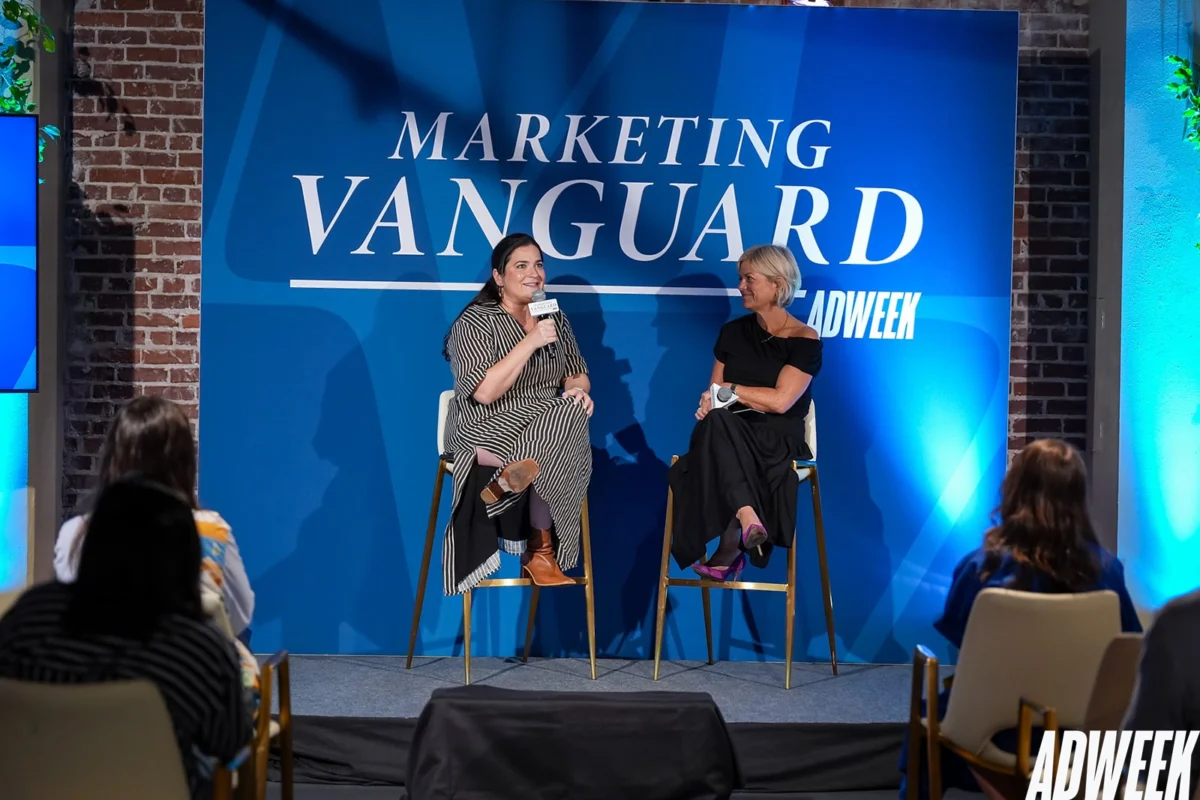
This was the central thesis of a compelling fireside chat at Brandweek’s prestigious Marketing Vanguard Stage. Little Spoon Chief Marketing Officer Caryn Wasser sat down with Adweek Chief Brand and Community Officer Jenny Rooney for a wide-ranging, candid discussion that challenged the industry status quo. Wasser argued that modern brands are spending far too much time and capital chasing elusive silver bullets, while simultaneously losing sight of the foundational pillars that actually drive sustainable business growth.
The conversation served as a timely wake-up call for CMOs and brand architects navigating an increasingly fragmented media landscape. By examining how modern consumer behavior intersects with legacy marketing principles, Wasser laid out a blueprint for how brands can strip away the noise, refocus on core values, and build resilient, grassroots-driven longevity in a rapidly changing marketplace.
Main Facts
The fireside chat between Wasser and Rooney centered on the growing disconnect between complex corporate marketing strategies and consumer realities. Key takeaways from the session include:
- The Overcomplication Trap: Marketing teams frequently stall growth by prioritizing complex, trend-chasing initiatives—such as over-engineered tech stacks and fleeting social media fads—over clear, resonant brand messaging.
- The Power of Grassroots Foundation: Regardless of how rapidly martech tools, generative AI, and digital platforms evolve, brands must anchor themselves in authentic, community-driven fundamentals to survive and scale.
- Customer-Centric Simplicity: True brand breakthroughs rarely stem from industry-inside insights; rather, they emerge from deeply listening to the everyday friction points of the target consumer and offering straightforward, empathetic solutions.
- Strategic Focus for CMOs: Modern marketing leaders must protect their teams from shiny-object syndrome, directing resources toward high-impact channels that foster genuine trust and long-term customer lifetime value (LTV).
Chronology: The Evolution of Modern Marketing Overcomplexity
To understand how the marketing industry arrived at its current state of tactical paralysis, it is helpful to trace the chronological shifts in brand strategy over the past two decades.
Phase 1: The Digital Frontier and the Promise of Big Data (Late 2000s – Early 2010s)
As the dust settled from the dot-com era, brands rushed to establish a digital footprint. This period marked the democratization of analytics. For the first time, marketers could track clicks, impressions, and conversions in real time. Initially celebrated as a triumph of accountability, this data glut gradually shifted the industry’s mindset. Marketers began to believe that if something could not be tracked instantly, it lacked value. The era of performance marketing was born, laying the groundwork for an obsession with metrics that often overshadowed brand equity.
Phase 2: The Social Media Gold Rush and Fragmentation (Mid 2010s)
The rise of Facebook, Instagram, Twitter, and later TikTok fractured consumer attention spans. Brands scrambled to maintain an omni-channel presence, often spreading themselves too thin. Marketing departments swelled, morphing into internal media agencies tasked with producing endless streams of content for disparate platforms. Strategy frequently took a backseat to volume, as teams prioritized frequency over strategic resonance.
Phase 3: The Martech Explosion and Algorithmic Anxiety (Late 2010s – Pandemic Era)
By the dawn of the 2020s, the marketing technology landscape had expanded exponentially, boasting thousands of point solutions designed to optimize every micro-interaction of the customer journey. Coupled with the algorithmic volatility of major social platforms, CMOs experienced acute anxiety. The pressure to leverage predictive analytics, hyper-personalization engines, and programmatic ecosystems led to bloated budgets and convoluted campaigns. The simple art of storytelling was frequently buried under layers of attribution models and multi-touch data attribution.
Phase 4: The Pushback and Return to Basics (The Present Day)
Today, marketing leaders like Little Spoon’s Caryn Wasser are signaling a much-needed correction. Faced with tightening economic environments, privacy regulations that limit traditional tracking, and consumer fatigue toward hyper-targeted digital noise, brands are realizing that complexity is often the enemy of effectiveness. The current era is defined by a necessary pivot back to foundational brand building, authenticity, and grassroots connection.
Supporting Data and Industry Context
The observations shared by Wasser on the Marketing Vanguard Stage reflect broader macroeconomic and industry-wide shifts documented by market researchers over the past several years.
According to recent studies by organizations like the Ehrenberg-Bass Institute for Marketing Science and the IPA (Institute of Practitioners in Advertising), the pendulum has swung too far toward short-term performance marketing at the expense of long-term brand building. Key data points illuminating this tension include:
- The 60/40 Rule: Industry benchmarks consistently suggest an optimal marketing budget split of 60% allocated to long-term brand building and 40% to short-term activation. However, digital overcomplication has driven many brands to invert these numbers, spending up to 80% or more on immediate performance metrics, which ultimately caps long-term growth potential.
- Consumer Trust Deficit: Edelman’s annual Trust Barometer indicates that consumer skepticism toward corporate messaging is at an all-time high. Complex, jargon-filled marketing campaigns often exacerbate this distrust, whereas transparent, community-rooted communication builds lasting affinity.
- Martech Bloat: Gartner research highlights that chief marketing officers are utilizing only a fraction of their total marketing technology stack’s capabilities, pointing to systemic over-purchasing and over-complication in digital infrastructure.
In this context, Little Spoon’s philosophy—championed by Wasser—serves as an antidote to industry-wide inefficiencies. By focusing heavily on solving real parenting pain points with clarity and directness, the brand has managed to cut through the digital clutter that overwhelms competitors.
Official Responses and Perspectives
The fireside chat generated significant discussion among industry leaders in attendance. The dialogue underscored a growing consensus among modern CMOs that agility and simplicity are paramount.
"We live in an age where the toolsets at our disposal are infinitely more powerful than they were a decade ago, but our human capacity to process complexity has not changed," noted an attendee representing a major consumer packaged goods (CPG) holding company. "Caryn’s message reminds us that technology should serve the strategy, not dictate it."
During the session, Wasser elaborated on how Little Spoon maintains its grounding despite operating in a hyper-competitive category. Rather than relying on convoluted marketing funnels, the brand treats its consumer base as an active community.
"When you build a brand from the ground up, you cannot afford to hide behind vanity metrics or complex multi-layered attribution models," Wasser explained during the chat. "You have to know who you are serving, what specific problem you are solving for them, and why they should care. If your message requires a 10-step explainer video or a complicated programmatic loop to resonate, you’ve already lost the consumer’s attention."
Rooney echoed these sentiments, pointing out that many legacy brands fall into the trap of trying to modernize by adopting every emerging trend, losing their core identity in the process. "The most successful brands today are those that have the discipline to say ‘no’ to the noise," Rooney observed.
Implications for the Future of Marketing
The insights shared by Caryn Wasser at Brandweek carry profound implications for the future trajectory of brand strategy, organizational design, and executive leadership.
1. Organizational Restructuring
As marketing teams grapple with the limitations of overcomplicated strategies, we are likely to see a structural shift within corporate marketing departments. The era of hyper-specialized silos—where content, performance, data science, and brand strategy operate in isolation—may give way to more agile, cross-functional units centered around core consumer journeys. CMOs will need to break down internal barriers to foster a unified vision.
2. Redefining ROI in a Privacy-First World
With the deprecation of third-party cookies and tightening privacy regulations, the obsession with hyper-granular attribution is becoming unsustainable. Wasser’s emphasis on foundational grassroots growth points toward a future where brand equity, organic word-of-mouth, and community loyalty are once again recognized as primary drivers of return on investment (ROI). Marketers must learn to balance quantitative rigor with qualitative brand resonance.
3. The Return of Empathy and Clarity
Ultimately, the most critical takeaway for marketing leaders is the primacy of human-to-human connection. In an era where generative AI and automated workflows can churn out infinite variations of marketing copy in seconds, human discernment and empathetic storytelling become the ultimate differentiators. Brands that can articulate their value proposition with absolute clarity will consistently outperform those trapped in the maze of tactical overcomplication.
As the marketing landscape continues to evolve at a breakneck pace, the wisdom imparted on the Marketing Vanguard Stage remains a guiding light: behind every tool, metric, and algorithm is a human being looking for a genuine solution. By stripping away the unnecessary complexity, modern CMOs can rediscover the fundamental purpose of marketing—to connect, to solve, and to grow.