The WordPress landscape is undergoing a profound transformation. As open-source communities grapple with the rapid acceleration of artificial intelligence, shifting demographics, and a swelling tide of new submissions, industry veterans are forced to rethink foundational pillars.
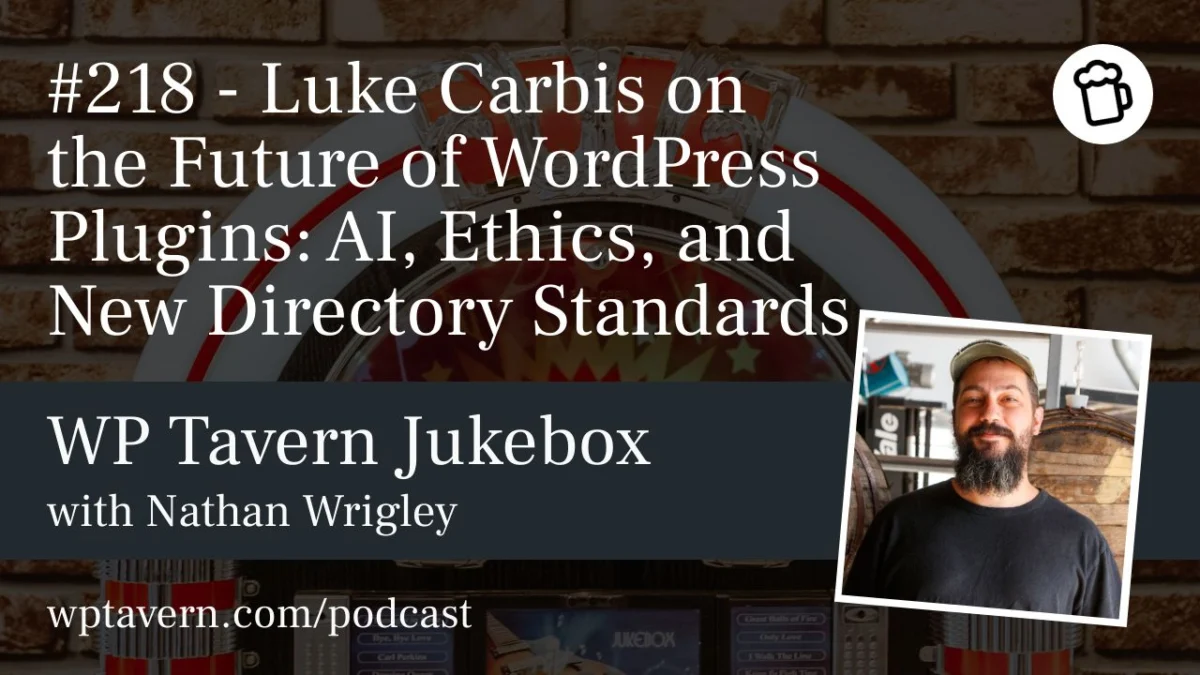
In a recent episode of the Jukebox podcast from WP Tavern, host Nathan Wrigley sat down with Luke Carbis—a 20-year WordPress veteran, core contributor, and member of the Plugin Review Team—to unpack these seismic shifts. Coming fresh off WordCamp Asia, Carbis discussed his presentation, Beyond the Guidelines: It’s Time to Evolve Our Standards for a Safer Plugin Ecosystem, shedding light on the administrative burdens, discovery challenges, and existential questions facing modern WordPress development.
Main Facts: The State of the Plugin Directory
The core challenge facing the WordPress.org plugin directory is one of sheer volume. Propelled by the low barrier to entry introduced by generative AI, plugin submissions have surged dramatically over the past year.
- The AI Influx: In the last 12 months, the volume of plugin submissions has quadrupled compared to previous years.
- Review Queue Management: Despite a wave of new AI-generated "vibe-coded" plugins, the Plugin Review Team has managed to maintain a relatively stable one-week turnaround time by integrating new tooling and expanding human oversight.
- The Discoverability Crisis: The primary bottleneck is no longer getting approved; it is standing out. With thousands of plugins performing identical functions, both developers and end-users struggle to surface quality solutions.
- Algorithmic Realities: While the WordPress.org search algorithm is entirely open-source—relying on active installs, support responsiveness, and keyword matching—it remains vulnerable to saturation and gaming, making organic discovery increasingly difficult for independent creators.
Chronology: From Open Source Roots to AI Crossroads
To understand Carbis’s critiques, one must examine his two-decade journey within the ecosystem. Starting as an agency developer, small business owner, and product lead, Carbis has witnessed the maturation of WordPress from a simple blogging tool into a dominant Content Management System powering over 40% of the web.
- The Traditional Era: For years, the plugin ecosystem operated on a predictable rhythm. Developers built functional add-ons, submitted them to the repository, and relied on organic growth or direct marketing to build audiences.
- The Automation Boom: Over the last three years, early automation tools helped clear out historical backlogs in the review queue, briefly bringing wait times to near-zero.
- The AI Disruption: The widespread adoption of large language models completely altered this dynamic. Developers and novices alike could suddenly generate, package, and submit dozens of plugins in a matter of hours.
- The Post-WordCamp Asia Pivot: Following WordCamp Asia, leadership within the WordPress project—most notably project co-founder Matt Mullenweg—has taken a more aggressive, direct approach to project governance, pushing for deeper AI integration and accelerated modernization, which has sparked intense debate regarding the project’s future direction.
Supporting Data: Volume, Wait Times, and Generational Divides
While quantitative data from the repository highlights a growing operational strain, qualitative data from the community reveals deeper cultural divides.
- 400% Increase: Plugin submissions have multiplied fourfold over the last year, largely driven by AI assistance.
- 7-Day Baseline: The current average wait time for a plugin review hovers around one week, a testament to the Plugin Review Team’s efficiency despite record-breaking volumes.
- The Gen Z Stance: According to anecdotal classroom and published demographic data (such as recent insights from The Verge), younger demographics—specifically Gen Z—exhibit a strong hesitation toward AI adoption, often citing environmental concerns and fears of skill degradation. This presents a recruitment hurdle for an open-source project increasingly betting its workflow on AI.
Official Responses and Proposals: Reimagining the Ecosystem
Carbis used his WordCamp Asia talk to put forward several pragmatic, actionable solutions designed to modernize the directory without requiring sweeping, unrealistic structural overhauls.
1. Connecting WordPress.org Accounts to Installs
Carbis proposes streamlining the user experience by allowing native WordPress installations to securely connect directly to a user’s WordPress.org profile. This would instantly bridge the gap between saved "favorites" on the repository and active site dashboards, mirroring the seamless app-store experiences found in mobile ecosystems.
2. Supporting Alternative and "Untrusted" Repositories
Acknowledging that many developers simply want a clean way to deploy custom or premium plugins across client sites, Carbis suggests introducing a native mechanism—akin to "untrusted sources" in other app stores—where developers can register secure Git repositories (such as GitHub) within their WordPress.org profiles. This would allow automated zip downloads and updates directly from the dashboard while retaining administrative kill-switches for malicious code.
3. Exploring a Commercial Plugin Marketplace
Perhaps the most controversial proposition is the introduction of a fully supported commercial plugin marketplace directly within WordPress.org.
- The Financial Model: Carbis suggests an 8% fee split—3% dedicated to secure payment processing and 5% channeled directly back into the WordPress Foundation to fund Core contributors, community events, and the Plugin Review Team.
- The Counter-Argument: Critics argue that introducing direct commercial sales into the official repository violates the foundational ethos of open source, potentially introducing commercial bias and altering the community’s egalitarian spirit.
4. Granular AI Disclosure Headers
To combat opacity regarding AI usage, Carbis proposes introducing standardized plugin headers that allow developers to transparently declare their level of AI utilization (ranging from simple autocomplete assistance to fully automated "vibe-coding"). This metadata would surface in the directory, allowing users to make informed choices based on their personal comfort levels with AI.
Implications: Strong Leadership vs. Open-Source Atrophy
The conversation ultimately shifted toward the macro-level governance of WordPress. As the platform faces a critical juncture against modern competitors and AI-driven development frameworks, the community is weighing the value of decentralized consensus against decisive, top-down leadership.
The Dictator vs. Committee Dilemma
Carbis candidly reflected on his shifting perspective regarding project leadership. Comparing Matt Mullenweg’s recent decisive interventions to visionary product leaders like Steve Jobs or DHH, Carbis conceded that while aggressive leadership can ruffle feathers, the alternative—bureaucratic paralysis and slow atrophy—poses an equally lethal threat to the platform’s relevance.
The Soul of Open Source
Conversely, the debate highlights a philosophical rift. For veterans and newcomers alike, the rallying cry of WordPress has always been "Code is Poetry," rooted in collaboration, philanthropy, and human-centric design. Imposing heavy reliance on AI tools and shifting toward commercialized structures risks alienating contributors who value the project’s traditional, community-first ethos.
Navigating the Precipice
As WordPress stands on the precipice of a seismic technological shift, the choices made today will dictate whether the platform thrives in an AI-first future or fractures under ideological weight. Whether through granular AI disclosures, streamlined repository management, or bold governance experiments, the community must deliberately choose its path forward.
To listen to the full discussion with Luke Carbis, visit the WP Tavern Jukebox podcast or check out his work on the Crossword podcast at crossword.fm.