In the digital era, the ability to reach a global audience is no longer a luxury reserved for multinational corporations with massive localization budgets. For the WordPress ecosystem, which powers over 40% of the web, the barrier to entry for multilingual content has historically been high, plagued by complex workflows, astronomical translation costs, and technical overhead. However, as Artificial Intelligence (AI) matures, the landscape is undergoing a radical shift.
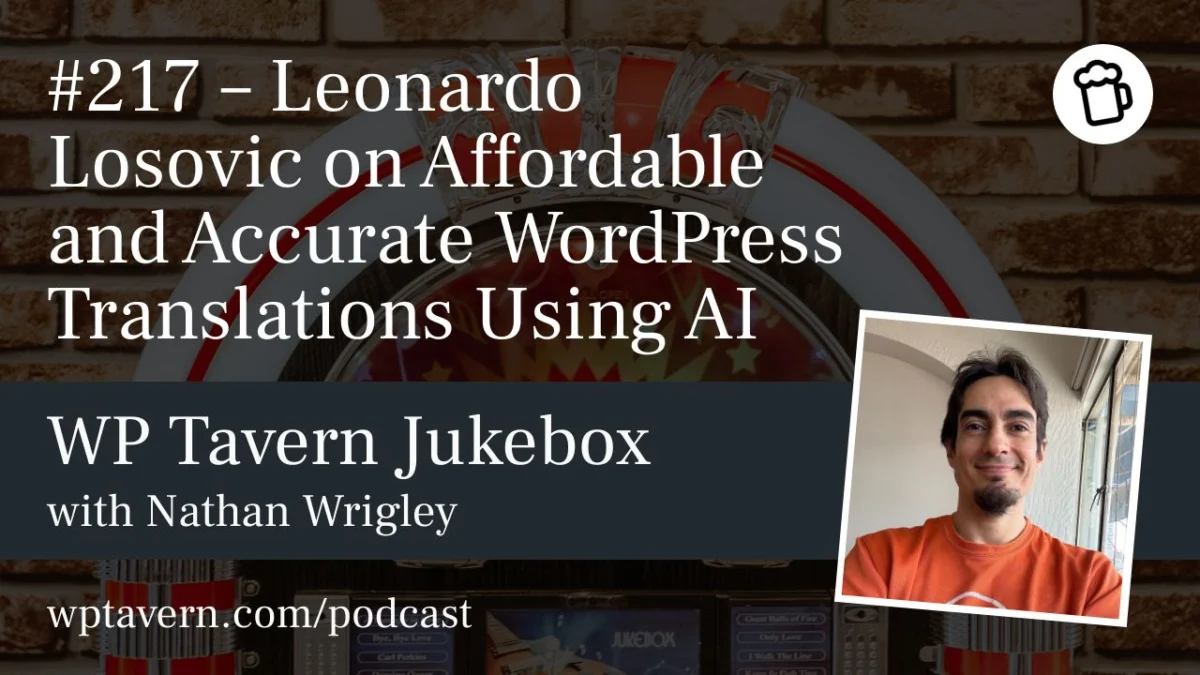
In a recent episode of the WP Tavern Jukebox podcast, host Nathan Wrigley sat down with Leonardo Losoviz, a veteran WordPress developer and creator of the Gato AI Translations for Polylang plugin. Their discussion unpacked how AI is not only democratizing website translation but also fundamentally changing the strategic calculus for site owners, bloggers, and businesses.
The Shift from Manual Labor to Automated Precision
For over a decade, translating a WordPress site was a multi-stage, labor-intensive ordeal. Site owners had to identify translatable strings, contract professional human translators, negotiate rates, manage the back-and-forth of file transfers, and finally integrate the translated text back into the WordPress backend. This process often cost thousands of dollars and required weeks of lead time.
"In the past, this was a fairly lengthy, probably quite costly enterprise," noted Wrigley. "Because you had to figure out which bits of the website needed to be translated. You then had to negotiate the price, receive the translated text, and figure out how to map the English string to the target language."
Today, that model is effectively obsolete. With the integration of Large Language Models (LLMs) such as OpenAI, Anthropic, and Gemini, the process has been compressed into a few clicks. The cost, once measured in human hourly rates, has dropped to a fraction of a cent per request—the price of API tokens.
The Chronology of WordPress Translation
The journey toward seamless multilingual WordPress sites has followed a trajectory from manual, static translation to dynamic, AI-augmented workflows.
- The Early Years (2012–2018): Translation was primarily manual. Developers relied on files like
.moand.po(Portable Object) to manage language strings. Plugins emerged to help manage this, but they were often clunky and required extensive database management. - The Rise of Professional Platforms (2018–2022): The industry saw the growth of sophisticated plugins like Polylang, WPML, and TranslatePress. These tools introduced the concept of "language switching" and automated some aspects of content management, though they still relied heavily on human translation or expensive machine-translation APIs like DeepL.
- The AI Revolution (2023–Present): The introduction of generative AI changed the game. Plugins like Losoviz’s Gato AI Translations allow for the mass translation of entire post libraries at the push of a button, with the AI maintaining context and tone far more effectively than legacy machine translation tools.
The Moral and Business Imperative
One of the central questions debated by Losoviz and Wrigley is whether site owners should translate their sites even when not legally required to do so. The consensus is clear: if you have the capability, you have the responsibility to expand your reach.
"The key question is, if you don’t have to [by law], should you still do it?" Losoviz asked. "And the answer is, yes, of course you should. Why wouldn’t you want to show your content to a new user base?"
Beyond the moral argument, there is a pragmatic "arms race" component. As AI lowers the barrier to entry, multilingual content is becoming a baseline expectation. If your competitors are translating their content and you are not, you are effectively ceding international market share.
"If you’re the only one who is translating your site to 20 languages, you will be far ahead," Losoviz explained. "But because it’s easy for you, it’s easy for everybody. If everybody does the same, you’re just running to stay in the same place."
Practical Strategies for Modern Translation
Despite the ease of AI, Losoviz warns against a "set it and forget it" mentality. He emphasizes that while AI can handle 99% of general translation work, human oversight remains vital for technical industries.
The "Finality" Rule
Losoviz offers a critical piece of advice: never initiate the translation process until your source content is 100% final. Because automated translation creates new database entries, every time you update your original English post, you potentially trigger the need to re-translate and re-sync across multiple languages. This leads to "token waste" and unnecessary technical debt.
SEO and Technical Best Practices
For those concerned about SEO, the integration with plugins like Polylang is essential. These plugins ensure that:
- URL Structures: Language-specific versions are correctly indexed (e.g.,
example.com/fr/orfr.example.com). hreflangTags: The system automatically notifies search engines that a page in French is a translation of the English original, preventing "duplicate content" penalties.- Database Efficiency: Instead of duplicating entire media files (like images), the system creates metadata links that allow the same image to be used across different language versions, keeping the site lightweight.
The Future: WordPress 7.0 and Beyond
The most exciting developments lie on the horizon, specifically regarding WordPress’s roadmap. With the ongoing evolution of the block editor and the anticipated "Phase 3" of the Gutenberg project—which focuses on collaborative editing—the translation experience is set to become even more interactive.
Losoviz envisions a future where the AI doesn’t just translate text in a silo; it acts as an active, collaborative partner within the editor.
"Imagine the scenario where you translate everything and then you edit the translated post," Losoviz said. "You might have windows on the right-hand side… pointing an arrow to some word saying, ‘Hey, I’m not sure if this is the right translation. Please check it out.’"
This shift would move AI from a "black box" tool to a teammate, enabling real-time dialogue between the site owner and the AI regarding terminology, tone, and cultural nuance.
Addressing the "Invisible Gotchas"
Losoviz’s presentation at WordCamp Asia, titled "The Invisible Gotchas of WP Translation," serves as a blueprint for the modern webmaster. He highlights that translation isn’t just about language; it’s about context.
- Embedded Media: A YouTube video embedded in an English post might be entirely irrelevant to a French audience.
- Cultural Icons: Images or infographics that contain English text within the graphic cannot be translated by standard text-based AI.
- Technical Jargon: In fields like physics or biochemistry, AI may lack the specific vocabulary needed for perfect accuracy, necessitating a final "polish" by a human expert.
Conclusion: The New Baseline
The era of the "English-only" web is rapidly drawing to a close. As tools like Gato AI Translations continue to refine the bridge between WordPress and global audiences, the cost of not translating far outweighs the investment of doing so.
For the average site owner, the path forward is clear: define your target markets, ensure your source content is polished and final, and leverage the power of AI to break down the language wall. While we are currently in an "arms race" where translation is a competitive advantage, it is quickly becoming a fundamental requirement for any site looking to remain relevant in a globalized economy.
As Losoviz aptly put it, the technology exists, the costs are negligible, and the world is waiting. The only thing left to do is click "Translate."