
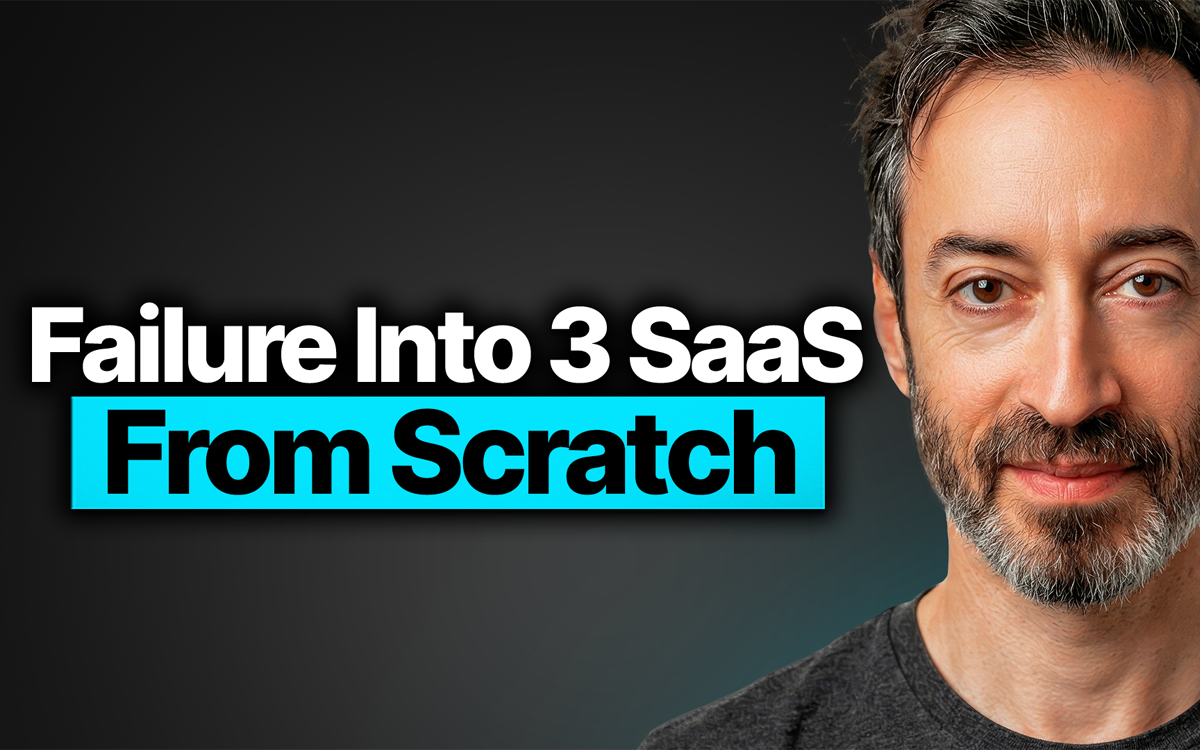
In the high-stakes world of Software-as-a-Service (SaaS), the prevailing narrative often focuses on "hockey-stick" growth, venture capital infusions, and explosive exits. However, a more durable, albeit quieter, success story is emerging from the trenches of the SEO industry. François Mommens, the founder behind a trio of SEO-focused tools—Linkody, IndexChecker, and LinkStorm—recently joined the Niche Pursuits podcast to dismantle the myths of startup culture and share the reality of building a sustainable, multi-product software business over the course of 13 years.
Mommens’ journey is not one of overnight success, but rather a masterclass in organic growth, strategic pivoting, and the disciplined maintenance of work-life balance.
The Chronology of a Founder: From Failure to Portfolio
The narrative of François Mommens’ career is characterized by iterative learning. His path began with a failed business venture—a common rite of passage for many successful entrepreneurs—that provided the crucial lessons needed to launch his first enduring product, Linkody, over a decade ago.
The Inception of Linkody (2011–2014)
Linkody was born out of a specific need for a backlink-tracking solution. In its infancy, the platform was a "crude MVP" (Minimum Viable Product) developed during evenings and weekends while Mommens maintained a full-time job. He recalls the pivotal moment when strangers began paying for his software; this validation provided the psychological safety net required to transition from a side hustle to a full-time commitment.
The Maturation and Diversification (2015–2020)
As Linkody matured, Mommens focused on refining the product and establishing a foothold in the competitive SEO landscape. By 2020, however, he hit a plateau. The market had become saturated with 40 to 50 direct competitors, including industry titans like Ahrefs and Semrush. This reality forced a strategic pivot: rather than attempting to force Linkody to be an all-in-one suite, he looked for ways to spin off specialized tools from the friction points he encountered in his daily operations.
The Rise of IndexChecker and LinkStorm (2021–Present)
The birth of IndexChecker was an exercise in data-driven product development. Initially a minor feature within Linkody—designed to check if a backlink was indexed by Google—it was spun out into a standalone product when Mommens realized it attracted a specific audience looking for a surgical, rather than comprehensive, solution.
His third venture, LinkStorm, addressed the perennial pain point of internal linking. Recognizing that site owners constantly struggle with broken links and the labor-intensive nature of cross-linking content, Mommens partnered with Shyam Verma, a developer who had previously been his hire, to scale this new ambition.
Supporting Data: The Mechanics of Growth
What separates Mommens’ model from many of his contemporaries is his unwavering reliance on organic traffic. Despite testing paid acquisition channels like Facebook and Google Ads, Mommens found that the math rarely favored the expense.
The 100% Organic Strategy
For all three of his SaaS products, 100% of his customer acquisition has been driven by organic traffic. This was not a passive outcome; it was the result of a deliberate, long-term investment in SEO fundamentals. Content strategy, site architecture, internal linking, and consistent backlink development formed the engine of his growth. Mommens suggests that in an era of skyrocketing Customer Acquisition Costs (CAC), the compounding nature of organic search remains the most reliable lever for a solo or small-team founder.
Pricing Experiments
Mommens’ approach to pricing is a testament to the power of courage in business. After years of keeping prices low, he performed a bold experiment: he doubled the cost of his plans. The result? Conversions remained steady, proving that the product’s value proposition far exceeded its price point. Today, Linkody’s tiered structure caters to a spectrum of users, ranging from hobbyists paying $15 a month to enterprise-level clients managing thousands of links, who pay significantly higher premiums.
Official Insights: Challenging the "Fake Truths" of SaaS
During his conversation on Niche Pursuits, Mommens introduced the concept of "fake truths"—common axioms in the founder community that he believes are often detrimental to actual business health.
The Fallacy of the "Rapid MVP"
Many startup gurus preach the gospel of shipping as fast as possible. Mommens offers a nuanced rebuttal: a rapid launch is useless if you lack a distribution channel. He argues that if you release a product into a void, you cannot distinguish between a bad product idea and a good idea that simply failed to reach the right audience. Without distribution, the feedback loop is effectively broken.
The Reality of Operational Load
Mommens pushes back against the fantasy that SaaS becomes "passive income" once the product is live. He emphasizes that the operational burden—maintaining third-party data integrations, handling customer support, and managing infrastructure—is a constant drain on a founder’s energy. For solo founders, this leads to both "decision fatigue" and "implementation fatigue."
Implications: Managing Three Businesses Without Burnout
How does one run three SaaS companies without sacrificing personal health or family life? Mommens is explicit about his boundaries: he rejects the "hustle culture" that demands 80-hour work weeks.
Structured Prioritization
Mommens utilizes rigid structure and project management tools like Workflowy to manage the competing demands of his three businesses. His workday follows a disciplined rhythm:
- Morning: Checking Slack and addressing customer support queries originating from his team in India.
- Mid-day: Identifying one "needle-moving" task—be it coding, SEO strategy, or product testing.
- Evening: Strict separation of work and personal time.
He argues that the statistical likelihood of achieving a "unicorn" exit is so low that trading one’s life away for a marginal increase in monthly revenue is a poor investment. He prioritizes a stable, profitable business over the pursuit of a massive, high-risk buyout.
The Role of AI in the Modern Stack
While search is evolving, Mommens remains bullish on the fundamentals of SEO. However, he has fully embraced the "AI revolution" to maintain his lean operations. He utilizes AI for a vast array of technical and administrative tasks, including:
- Coding: Assisting in feature development and debugging.
- Support: Drafting and refining responses to customer inquiries.
- Documentation: Streamlining the creation of release notes and GitHub changelogs.
The Future of SEO and SaaS
As AI-driven search results threaten the traditional "blue link" traffic model, Mommens is pragmatic. He anticipates a shift in how users discover brands, suggesting that while volume may fluctuate, the traffic that does arrive via citations will likely be more qualified and further along the customer journey.
His story serves as a vital reminder that the most durable businesses are often those built on the boring, consistent, and necessary resolution of user pain points. By avoiding the hype cycle and focusing on the relationship between product utility and organic distribution, Mommens has created a sustainable ecosystem that provides both income and independence.
For aspiring entrepreneurs, the takeaway is clear: success in SaaS is not about the next viral feature or a massive funding round. It is about patience, the courage to test pricing, the wisdom to diversify when a market hits a ceiling, and the discipline to build a business that serves your life, rather than forcing your life to serve the business.
For those interested in the full technical breakdown of his strategies, including his approach to internal linking and SEO-specific tools, the full episode of the Niche Pursuits podcast provides a comprehensive look at the tools and frameworks discussed.