ATLANTA — The global marketing landscape is undergoing its most profound transformation in decades. Driven by rapid technological disruption, shifting consumer loyalties, and an intensifying mandate to balance purpose with profitability, modern brand builders find themselves navigating a profession in a state of perpetual flux.
To help industry leaders decode these complex shifts, ADWEEK’s flagship event, Brandweek, is returning to Atlanta from September 15–17. Convening the brightest minds and most influential practitioners in the corporate world, the three-day summit promises to unpack the forces reshaping modern marketing, offering a roadmap for reinvention, artificial intelligence integration, and purpose-driven growth.
This year’s conference arrives at a critical juncture. As generative artificial intelligence reshapes content creation, programmatic media, and consumer data analysis, and as cultural volatility forces legacy brands to pivot overnight, the traditional marketing playbook has become obsolete. Brandweek 2026 aims to provide the clarity, practical frameworks, and high-level networking required to survive and thrive in this high-stakes environment.
Main Facts
- Event Details: ADWEEK’s Brandweek 2026 takes place from September 15 to September 17 in Atlanta, Georgia.
- Core Themes: The three-day event focuses on three main pillars: reinvention, artificial intelligence, and purpose-driven growth.
- High-Profile Brands Attending: The conference draws heavy hitters from across the global corporate landscape, including executives from Coca-Cola, Starbucks, Crocs, Mattel, Ben & Jerry’s, State Farm, Adobe, American Express, Delta Air Lines, Meta, Target, and JPMorgan Chase.
- Featured Sessions and Keynotes:
- Crocs’ Heidi Reilly on unexpected partnerships and social commerce.
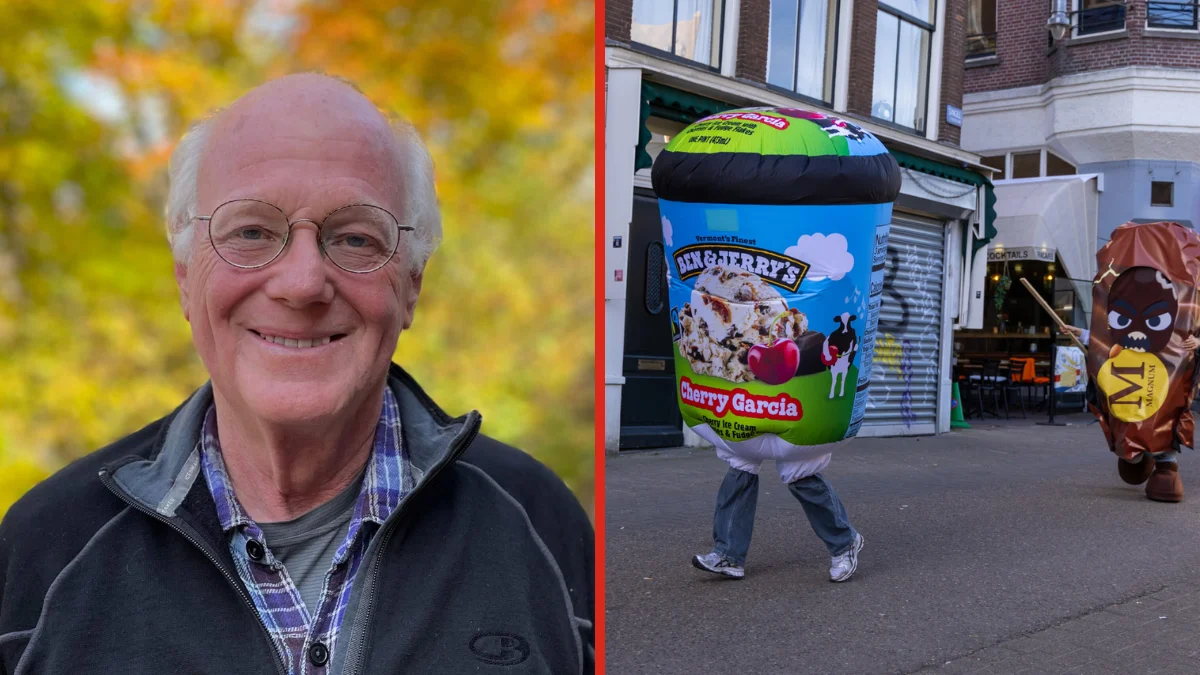
- Ben & Jerry’s co-founder Ben Cohen on maintaining brand integrity and prioritizing purpose over pure profit.
- Starbucks’ leadership unpacking massive internal business transformations.
- Dedicated AI Programming: Brandweek will dedicate a full day of sessions exclusively to artificial intelligence, equipping marketing teams with the technical literacy and strategic vision needed to leverage machine learning and automation.
- Audience Demographics: The event boasts a high-level, practitioner-focused crowd, with 75% representing brand-side professionals and 67% holding director-level titles or above.
- Registration Incentive: Tickets are currently available via the official Brandweek portal, with a 30% discount offered using the promotional code BRANDWEEK30.
Chronology of an Industry in Flux: How We Got Here
To understand why a summit like Brandweek is essential for today’s marketers, one must look at the rapid evolution of the profession over the past decade.
Phase 1: The Digital Migration (Early to Mid-2010s)
For decades, marketing was anchored in predictable mediums—television, print, radio, and out-of-home advertising. The mid-2010s marked the great migration of ad dollars to digital and social platforms. Brands rushed to build audiences on Facebook, Twitter, and Instagram, treating digital spaces as digital billboards. However, as audiences fragmented, engagement models broke down, requiring brands to transition from broadcasting messages to fostering two-way conversations.
Phase 2: The Data Privacy Reckoning (Late 2010s to 2022)
As digital spending matured, regulatory shifts—such as Europe’s GDPR and the California Consumer Privacy Act (CCPA)—alongside Apple’s App Tracking Transparency updates, threw the digital ecosystem into chaos. Third-party cookies began crumbling, forcing marketers to rethink data collection, first-party strategies, and consumer trust. The era of unchecked hyper-targeting was replaced by a demand for transparent, consent-driven customer relationships.
Phase 3: The AI Revolution and Cultural Volatility (2023–Present)
The public debut of advanced generative artificial intelligence in late 2022 acted as a massive catalyst. Suddenly, marketing teams faced the dual challenge of harnessing AI to scale content production while grappling with ethical concerns around authenticity, copyright, and brand safety. Simultaneously, cultural polarization accelerated, making corporate social responsibility a tightrope walk. Brands discovered that taking a stand could alienate core demographics just as quickly as it could attract loyal advocates.
It is against this historical backdrop that Brandweek 2026 has curated an agenda specifically designed to address these compounding pressures.
Supporting Data: Who Is in the Room?
One of Brandweek’s primary differentiators from other large-scale industry festivals is its strict adherence to attracting decision-makers rather than passive spectators. The event’s demographic metrics underscore its heavyweight status in the corporate marketing ecosystem:
- 75% Brand-Side Representation: Unlike agency-heavy conferences, the vast majority of attendees work directly inside the corporate walls of the world’s leading brands, ensuring that discussions center on real-world execution, budget allocation, and internal corporate politics.
- 67% Director-Level and Above: The audience is deeply senior. Attendees include Vice Presidents of Marketing, Chief Marketing Officers, Brand Directors, and Digital Innovation Leads who hold the authority to approve budgets and pivot corporate strategy.
A Cross-Industry Footprint
The roster of participating companies reads like a cross-section of the Fortune 500 and the most dynamic consumer-facing innovators. Confirmed attendees and contributing organizations span nearly every major industry vertical:
- Retail & Consumer Goods: Target, The Home Depot, Kimberly-Clark, Land O’Lakes, Etsy.
- Food & Beverage: Coca-Cola, Starbucks, Ben & Jerry’s, Mars, Chick-fil-A, Heineken.
- Financial Services & Insurance: JPMorgan Chase, American Express, State Farm.
- Technology & Platforms: Adobe, Meta, Zoom.
- Travel & Hospitality: Delta Air Lines, Expedia Group, IHG Hotels & Resorts, Sony Pictures.
- Lifestyle & Entertainment: Crocs, Mattel, Hinge.
This diverse gathering ensures that cross-pollination of ideas occurs not just within silos, but across entire sectors, allowing a marketer from a financial institution to learn digital transformation tactics from a heritage footwear brand.
Official Responses and Key Agenda Highlights
Industry leaders participating in Brandweek 2026 have emphasized the urgent need for peer-to-peer collaboration and practical skill-building. While high-level vision is crucial, this year’s programming leans heavily into tactical execution.
Reinventing Heritage Through Culture: The Crocs Playbook
Few brands have undergone as radical a cultural rehabilitation as Crocs. Once dismissed as a polarizing novelty, the footwear brand has transformed into a high-fashion collaborator and a social commerce titan through unexpected partnerships with luxury designers, musicians, and pop-culture phenomena.
At Brandweek, Crocs’ Heidi Reilly will lead a deep-dive session unpacking how the brand harnessed social commerce and disruptive collaborations to redefine its equity. By meeting consumers in unexpected digital spaces and turning its divisive product design into a blank canvas for self-expression, Crocs proved that heritage brands do not need to abandon their core identity to reinvent themselves—they simply need to amplify it through a modern cultural lens.

Purpose Over Profit: The Ben & Jerry’s Philosophy
In an era where consumers increasingly demand that corporations align with their personal values, the tension between commercial growth and authentic social impact has never been higher. Ben & Jerry’s, long recognized as a pioneer in values-led business models, continues to challenge conventional corporate orthodoxy.
Renowned co-founder Ben Cohen takes the Brandweek stage to unpack a provocative thesis: that treating the immediate sale of a business as the ultimate corporate goal is fundamentally flawed. Cohen’s session will explore how businesses can build enduring equity by standing for something greater than quarterly earnings, arguing that authentic purpose is not a marketing overlay, but an operational imperative that protects long-term brand health.
Enterprise-Wide Transformation: The Starbucks Journey
Transformation is rarely easy, particularly for massive global footprints with complex supply chains and localized customer expectations. Starbucks’ Lieberman will take attendees behind the scenes of the coffee giant’s ongoing business transformation.
The session will explore how enterprise-level reinvention requires total alignment across digital app infrastructure, in-store customer experience, supply chain transparency, and brand messaging. For marketers operating within legacy enterprises, the Starbucks case study offers a masterclass in orchestrating large-scale operational shifts without alienating a loyal global customer base.
Mastering the Machine: A Full Day Dedicated to AI
Perhaps the most anticipated component of Brandweek 2026 is its dedicated AI curriculum. Recognizing that artificial intelligence has moved past the experimental phase into core operational infrastructure, ADWEEK has carved out an entire day of programming focused exclusively on machine learning, predictive analytics, and generative tools.
The AI sessions are designed to move beyond high-level theory. They will provide marketing teams with actionable frameworks for:
- Workflow Automation: Streamlining asset creation and localization without sacrificing brand voice.
- Data-Driven Personalization: Leveraging AI algorithms to parse first-party consumer data in real-time while maintaining strict privacy compliance.
- Creative Augmentation: Using generative models to test thousands of variations of ad copy, video creative, and visual assets before deploying capital into paid media campaigns.
Implications for the Future of Marketing
The conversations taking place in Atlanta this September carry significant implications for the broader economic and cultural landscape of the advertising industry. As brands prepare to close out 2026 and look toward the horizon, several critical trends are crystallizing:
1. The Death of the "One-Size-Fits-All" Campaign
The days of pushing a single, monolithic television spot across mass media channels are officially over. Driven by hyper-fragmented media consumption and the targeting capabilities unlocked by AI, marketers must now orchestrate fluid, multi-channel ecosystems. Brandweek’s focus on social commerce and unexpected partnerships highlights that modern relevance requires agility—meeting consumers in niche digital communities with bespoke, culturally resonant messaging.
2. AI Literacy as a Core Competency
Artificial intelligence is no longer the exclusive domain of the IT department or specialized tech startups. Brandweek’s dedicated AI day underscores a fundamental shift: marketing practitioners at every level must develop basic technical literacy. The marketers who succeed in the next five years will not be those replaced by AI, but those who learn to orchestrate AI tools to amplify their strategic and creative output.
3. The Accountability of Corporate Purpose
As consumer skepticism reaches all-time highs, "purpose-washing"—brands adopting superficial social causes purely for marketing gain—is swiftly punished by digital communities. Sessions featuring leaders like Ben Cohen remind the industry that purpose must be baked into the DNA of the enterprise. Brand builders must evaluate whether their corporate values can withstand intense public scrutiny; if they cannot, the risk of consumer backlash far outweighs the short-term promotional gain.
4. The Elevation of the Practitioner
Ultimately, Brandweek 2026 reflects an industry maturing past empty buzzwords. With three-quarters of attendees sitting directly on the brand side, the focus has shifted sharply toward measurable ROI, operational efficiency, and sustainable growth. The insights shared in Atlanta will directly influence how billions of dollars in global ad spend are deployed over the coming year.
How to Attend
Industry professionals interested in joining the conversation in Atlanta can secure their passes now by visiting the official ADWEEK Brandweek portal.
To support professional development and team attendance, ADWEEK is offering a 30% discount on passes for readers using the exclusive promotional code BRANDWEEK30 at checkout.
As the marketing profession continues to navigate uncharted territory, gatherings like Brandweek remain vital proving grounds—places where the industry’s top builders come together not just to analyze the future, but to write it.