By [Your News Agency] Technology Desk
The landscape of paid search is undergoing its most significant transformation since the introduction of Smart Bidding. Google’s aggressive rollout of "AI Max"—a comprehensive suite of artificial intelligence-driven features integrated into the Search ecosystem—has reached a critical juncture. As the September deadline for forced migration approaches, the digital marketing community finds itself deeply divided. While Google positions the tool as the ultimate efficiency engine, veteran PPC (Pay-Per-Click) professionals warn that without meticulous preparation, the "amplifier" effect of AI Max could just as easily scale account inefficiencies as it could success.
Main Facts: Understanding the AI Max Architecture
Contrary to some industry misconceptions, AI Max for Search is not a standalone campaign type in the vein of Performance Max. Rather, it is a sophisticated overlay consisting of three core features activated within existing Search campaigns. These features represent a fundamental shift in how keywords are targeted and how creative assets are deployed.
The "Broad Match Plus" Reality
At its technical core, enabling AI Max effectively transitions all account keywords into a broad match environment. However, it goes a step further by implementing "keywordless targeting." This allows Google’s algorithms to bypass traditional keyword lists entirely, matching ads to user queries based on website content and real-time intent signals.

Generative Creative via Gemini
Perhaps the most significant departure from previous iterations like Dynamic Search Ads (DSA) is the integration of Gemini, Google’s multimodal large language model. While DSA allowed advertisers to maintain control over description lines and used website headers for titles, AI Max grants the AI the authority to assemble the entire ad dynamically. This includes headlines and descriptions generated in real-time, tailored to the specific context of the user’s search.
The Migration Mandate
The upcoming September deadline is not a suggestion but a structural pivot. Google has confirmed that three specific legacy configurations—Dynamic Search Ads (DSA), Automatically Created Assets (ACA), and campaign-level broad match settings—will be forcibly migrated or integrated into the AI Max framework.
Chronology: The Road to AI Max
The path to the current AI-centric Search environment has been a multi-year journey, characterized by quiet testing followed by rapid global scaling.
- Early 2025: The Search Max Beta. What is now known as AI Max began its life under the moniker "Search Max." It was initially spotted in a restricted, private beta, where Google tested the viability of combining keywordless targeting with traditional search structures.
- May 2025: The Rebrand and Official Launch. At Google Marketing Live (GML) 2025, the tech giant officially rebranded the tool as "AI Max," signaling a broader commitment to generative AI integration across its advertising stack.
- Summer 2025: Global Expansion. The tool moved from private to global beta. During this period, Google’s sales representatives began an intensive push to encourage agency adoption, often framing it as a prerequisite for maintaining competitive "Optimization Scores."
- April 30, 2026: Expansion into Retail. Google expanded the AI Max umbrella by launching "AI Max for Shopping" in closed beta. This iteration utilizes Merchant Center feeds to generate dynamic shopping ads for long-tail and conversational queries, further cementing the "AI-first" direction of the platform.
- Present Day: The industry is currently in the final "signposting" phase, with the September migration deadline serving as the final transition point for legacy search features.
Supporting Data: The Efficiency Gap and Case Study Discrepancies
While Google’s internal data highlights significant uplifts in conversion value for early adopters, independent audits and third-party analyses reveal a more nuanced story. The performance of AI Max appears to be highly contingent on the "cleanliness" of the data it inherits.

The "Amplifier" Effect
Data from account audits suggests that AI Max acts as a performance multiplier. In accounts with strong conversion tracking, clear keyword intent, and high-quality landing pages, AI Max has shown the ability to find "hidden" pockets of inventory that traditional keyword targeting missed. Conversely, in accounts plagued by "mixed match types" (e.g., running exact and phrase match versions of the same keyword in the same ad group), the AI often struggles. The resulting "signal noise" leads to overlapping bids and internal competition, often driving up Cost Per Acquisition (CPA) without a corresponding increase in lead quality.
The Mid-Market Absence
A critical observation made by industry analysts is the profile of Google’s publicized case studies. The vast majority of success stories feature enterprise-level brands with massive data sets and significant monthly spends. There is a noticeable lack of data regarding how AI Max performs for:
- Small to Mid-Market Businesses (SMBs): Those spending under $5,000 per month.
- B2B Lead Generation: Specifically those with long sales cycles where conversion data is sparse.
- Local Services: Where geographic precision is often more important than broad reach.
This "data gap" suggests that the algorithm’s efficacy is heavily reliant on high conversion volumes to "train" the model—a luxury many smaller advertisers do not possess.
Official Responses: Google’s Stance on Automation
In public statements and documentation provided during Google Marketing Live, the company has maintained that the move to AI Max is a response to the changing nature of consumer search behavior. Google argues that with the rise of conversational AI and more complex user journeys, traditional keyword-based systems are no longer sufficient to capture intent.

"The goal of AI Max is to move from ‘matching’ to ‘predicting,’" one Google product lead noted during a recent industry summit. The company asserts that by removing the manual burden of keyword expansion and ad copy testing, marketers are freed to focus on higher-level strategy and creative direction.
Regarding the loss of control—a primary concern for advertisers in regulated industries—Google points to "Text Guidelines" and "Negative Keyword Themes" as the primary levers for human intervention. However, they emphasize that the "most successful advertisers will be those who provide the AI with the widest possible field of operation."
Implications: Preparing for a Post-Keyword World
The transition to AI Max carries profound implications for the role of the PPC manager and the structural integrity of digital marketing departments.
The Compliance Risk in Regulated Sectors
For industries such as financial services, legal, and healthcare, the dynamic nature of AI Max presents a unique challenge. In these sectors, ad copy and landing page combinations must often pass rigorous legal scrutiny. If AI Max’s "Final URL Expansion" directs a user to a page lacking the necessary disclaimers, or if Gemini generates an ad headline that makes an unapproved claim, the advertiser could face significant regulatory penalties.

The Necessity of "Signal Health"
The shift to AI Max elevates "Signal Health" to the top priority for account managers. This includes:
- Conversion Accuracy: Moving beyond basic "thank you" page tracking to server-side GTM (Google Tag Manager) or Enhanced Conversions to ensure the AI is learning from high-quality data.
- Micro-Conversions: For accounts with low primary conversion volume, tracking "progression signals" (e.g., brochure downloads or pricing page views) becomes essential to provide the algorithm with enough data points to optimize.
Strategic Recommendations Before the September Deadline
To avoid a performance "cliff" in September, experts recommend a proactive four-step audit:
- Structural Cleanup: Eliminate internal competition by pausing duplicate keywords across different match types. The AI requires a singular, unambiguous signal per ad group.
- Landing Page Depth: Since AI Max "crawls" the site to determine relevance, landing pages must evolve from thin, keyword-stuffed templates to content-rich resources that address broad user intent.
- Selective Testing: Rather than a global rollout, advertisers should identify a "mid-tier" campaign—one with sufficient volume but not the business’s primary revenue driver—to serve as a testbed for AI Max features.
- Guardrail Implementation: Advertisers must utilize account-level negative keywords and brand exclusions to prevent the AI from bidding on irrelevant or sensitive terms, a common pitfall of keywordless targeting.
Conclusion: The New Mandate for PPC Professionals
The arrival of AI Max signifies the end of the "tinkering" era of PPC. The value of a digital marketer is no longer found in the manual adjustment of bids or the exhaustive expansion of keyword lists. Instead, the role has shifted to that of a "Data Steward" and "Strategic Pilot."
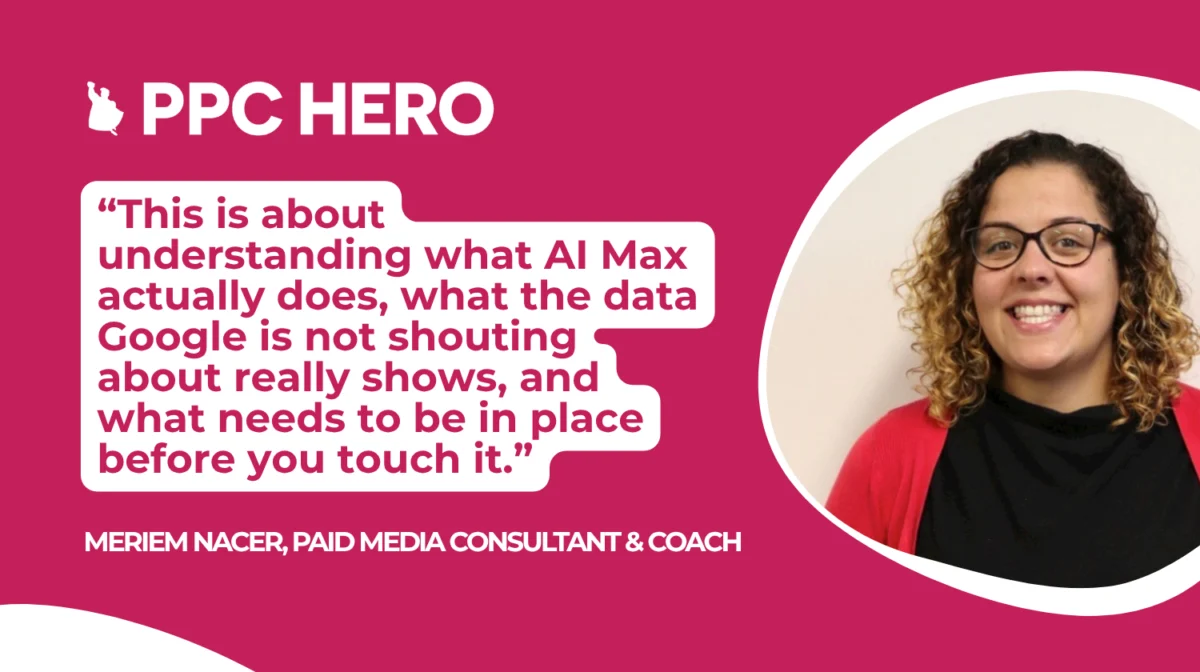
As the September deadline looms, the message from the community is clear: Don’t panic, but don’t remain idle. The migration is inevitable, but its success depends entirely on the foundation laid in the months prior. AI Max is an amplifier—whether it amplifies growth or waste is a choice made by the human behind the dashboard.